Culinary Advisor
A cooking platform built around craft, culture, and the stories behind what we eat.
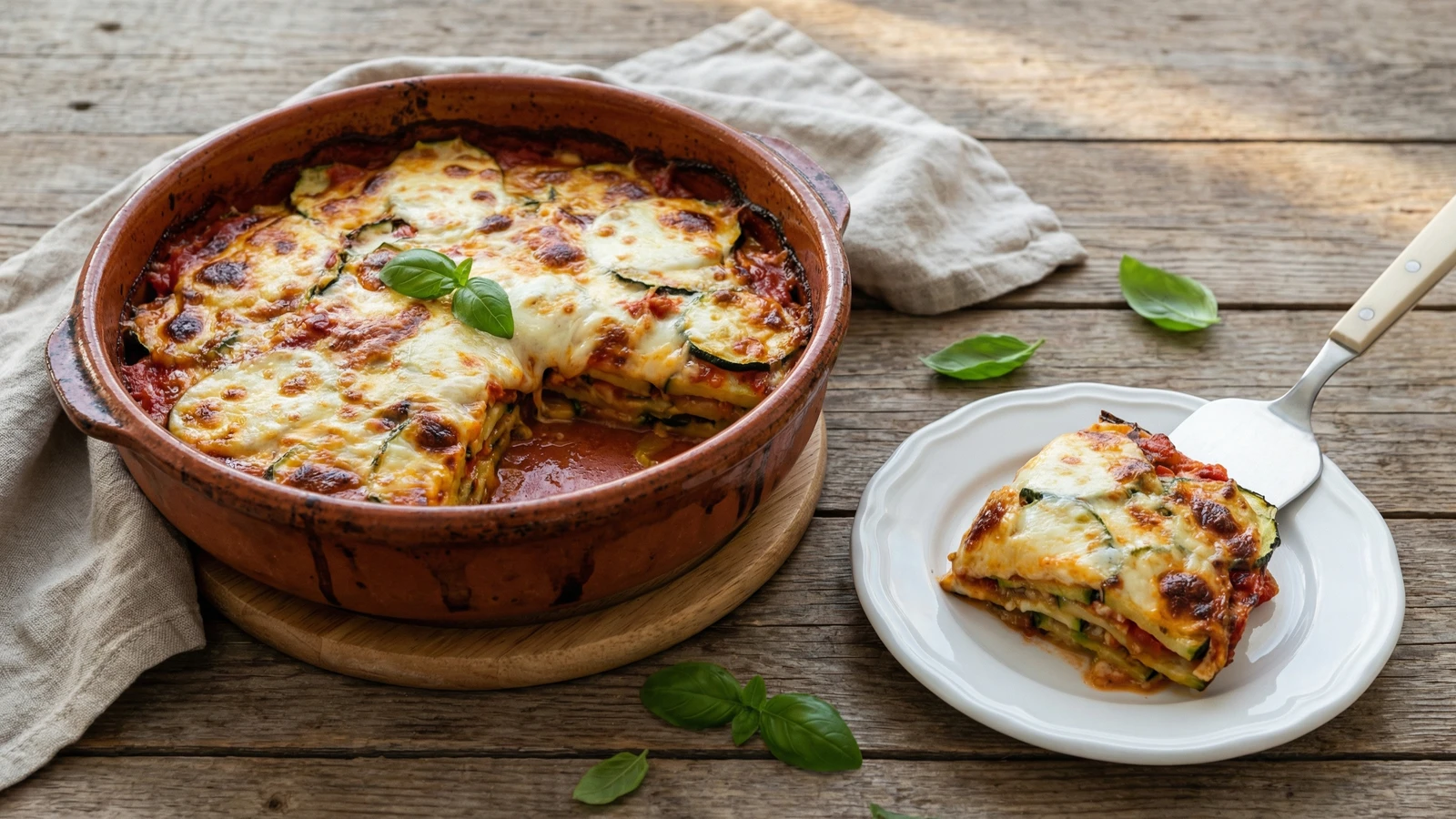
Zucchine alla Parmigiana
Created by Chef Graziella
Summer zucchini layered with simple tomato sauce and fresh mozzarella, baked until the cheese bubbles and the edges turn golden. What eggplant parmigiana becomes when you crave something lighter.
This is not eggplant parmigiana with zucchini substituted. It is its own dish, born from the same impulse but requiring different technique. Zucchini contains more water than eggplant. If you ignore this fact, you will produce a soggy mess swimming in liquid. The dish will taste of nothing but disappointment.
You must draw the water out. Salt the slices and let them weep. Then fry them until golden, which drives off more moisture and creates flavor. Only then do you layer. The tomato sauce should be light, barely there. The mozzarella fresh, not the rubbery blocks that melt into plastic. The Parmigiano generous on top, where it can form a proper crust.
Southern Italian cooks have made this for generations as a way to use the zucchini that threaten to overwhelm every summer garden. It is a contorno, a vegetable side dish, though I have seen Americans eat it as a main course. I do not object to this. A well-made vegetable dish deserves respect.
Zucchine alla parmigiana emerged in the kitchens of Campania and Sicily, where summer gardens overflow with squash. The dish follows the same logic as its eggplant cousin but arrived later, as zucchini became common in Southern Italian cooking only in the 19th century. Neapolitan home cooks perfected the technique of managing zucchini's excess moisture.
The technique, the tradition, and the story behind every dish.
Discover Culinary AdvisorIngredients
medium zucchini
Quantity
2 pounds (about 6)
kosher salt
Quantity
for salting and seasoning
San Marzano tomatoes
Quantity
1 can (28 ounces)
whole peeled
extra virgin olive oil
Quantity
3 tablespoons, plus more for frying
garlic cloves
Quantity
2
lightly crushed
fresh basil leaves
Quantity
8
torn
fresh mozzarella
Quantity
1 pound
sliced 1/4 inch thick
Parmigiano-Reggiano
Quantity
1 cup
freshly grated
black pepper
Quantity
to taste
freshly ground
olive oil or vegetable oil
Quantity
for frying
| Ingredient | Quantity |
|---|---|
| medium zucchini | 2 pounds (about 6) |
| kosher salt | for salting and seasoning |
| San Marzano tomatoeswhole peeled | 1 can (28 ounces) |
| extra virgin olive oil | 3 tablespoons, plus more for frying |
| garlic cloveslightly crushed | 2 |
| fresh basil leavestorn | 8 |
| fresh mozzarellasliced 1/4 inch thick | 1 pound |
| Parmigiano-Reggianofreshly grated | 1 cup |
| black pepperfreshly ground | to taste |
| olive oil or vegetable oil | for frying |
Equipment Needed
- •9-by-13-inch baking dish
- •Large skillet for frying
- •Paper towel-lined baking sheets for draining
Instructions
- 1
Salt the zucchini
Trim the ends from the zucchini and slice lengthwise into planks about one-quarter inch thick. Arrange in a single layer on baking sheets lined with paper towels. Salt generously on both sides. Let stand for 30 minutes. The salt draws out moisture. You will see beads of liquid forming on the surface. This is essential.
Medium zucchini work best. Very large ones have too many seeds and a spongy texture. Small ones are acceptable but tedious to slice. - 2
Make the tomato sauce
While the zucchini drain, crush the tomatoes by hand into a bowl. In a saucepan, heat three tablespoons olive oil over medium heat. Add the crushed garlic and cook until fragrant, about one minute. The garlic must not brown. Remove and discard the garlic. Add the crushed tomatoes, a pinch of salt, and half the torn basil. Simmer gently for 20 minutes, stirring occasionally. The sauce should be light, not thick.
You remove the garlic after infusing the oil. What remains is a whisper of flavor, not a shout. This is the Italian way. - 3
Fry the zucchini
Pat the zucchini slices thoroughly dry with paper towels. They must be dry or the oil will splatter and the slices will steam rather than fry. Pour oil into a large skillet to a depth of one-quarter inch. Heat over medium-high until the oil shimmers. Fry the zucchini in batches, without crowding, until golden on both sides, about two minutes per side. Transfer to paper towels to drain. Do not skip this step.
You may grill the zucchini instead of frying if you prefer. Brush with oil and grill over high heat until charred. The flavor will be different but equally valid. - 4
Assemble the layers
Heat the oven to 375 degrees. Spread a thin layer of tomato sauce on the bottom of a 9-by-13-inch baking dish. Arrange a layer of fried zucchini over the sauce, overlapping slightly. Top with mozzarella slices, a few torn basil leaves, a spoonful of sauce, and a scattering of Parmigiano. Repeat the layers until all ingredients are used, finishing with sauce and a generous covering of Parmigiano. You should have three or four layers.
- 5
Bake until bubbling
Bake uncovered until the cheese is melted and bubbling and the top is golden brown in spots, 25 to 30 minutes. The edges should be caramelized. Let rest for 10 minutes before serving. The dish needs time to set, or it will fall apart when you cut it.
If the top is not golden enough for your taste, run it under the broiler for one or two minutes. Watch it constantly. Cheese goes from golden to burnt in seconds. - 6
Serve properly
Cut into squares and serve warm, not hot. This is not pizza. The flavors emerge more fully when the dish has cooled slightly. Many prefer it at room temperature, which is how it is often served in Southern Italy.
Chef Tips
- •The salting and draining step is not optional. Zucchini is mostly water. Skip this step and you will have soup with melted cheese on top.
- •Fresh mozzarella is essential. The pre-shredded bags of mozzarella contain anti-caking agents that prevent proper melting. The texture will be wrong.
- •This dish is excellent at room temperature the next day. Italians often serve it as part of an antipasto spread. It travels well to picnics and potlucks.
- •Choose zucchini that feel heavy for their size with taut, glossy skin. Avoid any that are soft, wrinkled, or have dark spots. The flesh should be firm when you slice it.
Advance Preparation
- •The tomato sauce can be made up to three days ahead and refrigerated.
- •The zucchini can be fried several hours ahead and held at room temperature.
- •The assembled dish can be refrigerated overnight before baking. Add 10 minutes to the baking time if cold from the refrigerator.
- •The baked dish keeps well for three days refrigerated. Reheat in a 325-degree oven until warmed through, or serve at room temperature.
Frequently Asked Questions
Nutrition Information
1 serving (about 320g)
Where cooking meets culture.
Culinary mentorship, cultural storytelling, and the editorial depth that makes cooking meaningful.
Explore Culinary Advisor