Culinary Advisor
A cooking platform built around craft, culture, and the stories behind what we eat.
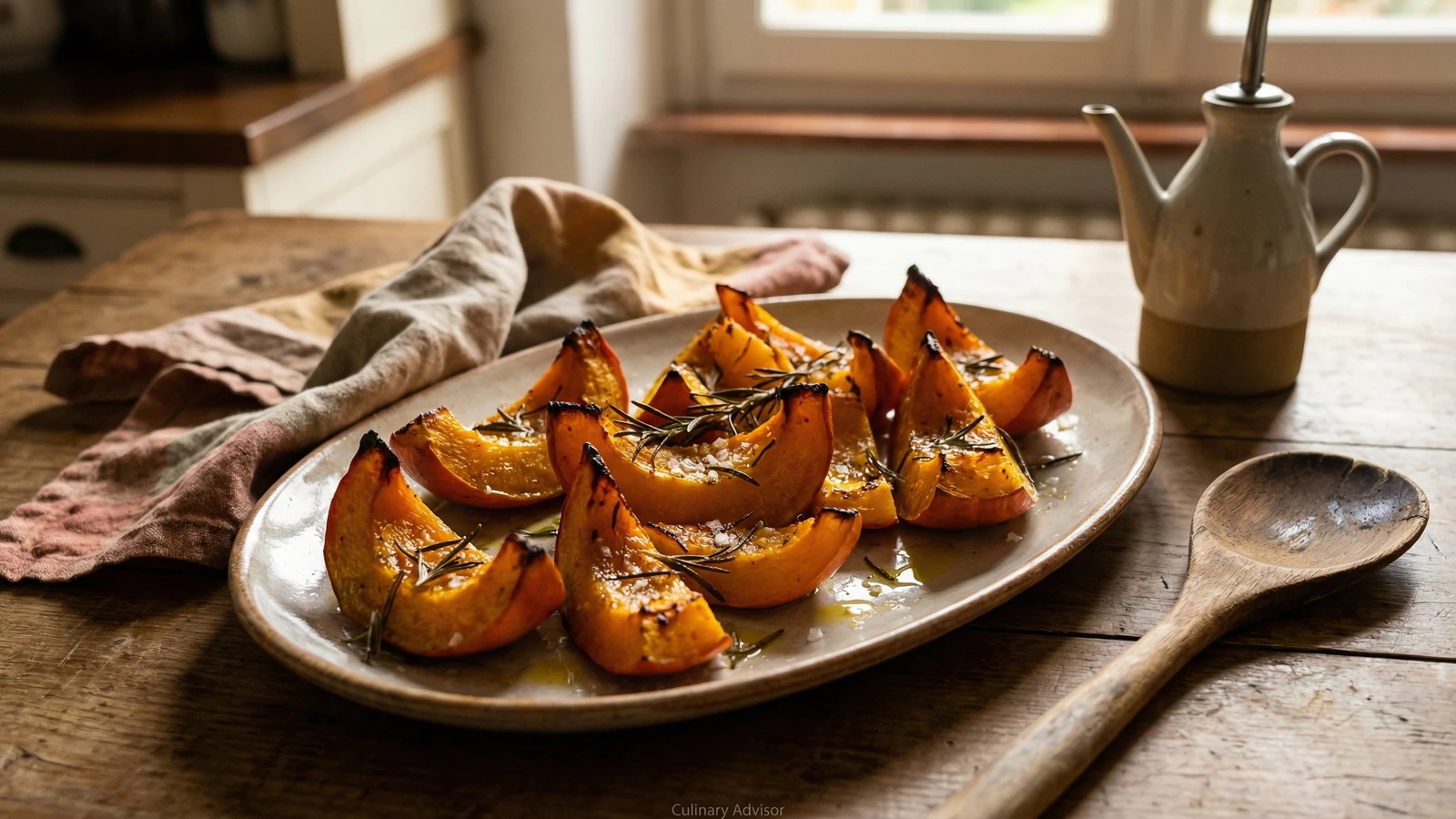
Zucca al Forno con Rosmarino
Created by Chef Graziella
Winter squash roasted simply with rosemary and garlic, caramelized at the edges and yielding within. Northern Italian restraint that lets the vegetable reveal its own sweetness.
In the fall markets of Emilia-Romagna, you find zucca everywhere. Great orange wedges wrapped in newspaper, smaller squash sold whole. The farmers' wives roast them simply because that is all they need. High heat, good olive oil, a branch of rosemary from the garden. Nothing else.
Americans want to add things. Maple syrup. Brown sugar. Cinnamon and nutmeg and whatever else sits in the spice drawer. They do not trust the squash to taste good on its own. But winter squash, properly caramelized, develops sweetness that no added sugar can match. The Maillard reaction at the edges creates complexity. The flesh turns silken.
This is a contorno, a vegetable dish meant to accompany meat or fish. It requires only that you cut the squash properly, that you heat the pan before the squash touches it, and that you leave it alone long enough to brown. Simple does not mean easy. It means every step must be correct because there is nowhere to hide mistakes.
Winter squash arrived in Italy from the Americas in the 16th century and found particular favor in the north, where the climate suited its cultivation. The Mantovani of Lombardy stuff tortelli with it; the Venetians pair it with bitter radicchio. In farmhouse kitchens across Emilia-Romagna, roasting it simply with herbs has been the default preparation for centuries, requiring nothing more than a hot oven and patience.
The technique, the tradition, and the story behind every dish.
Discover Culinary AdvisorIngredients
winter squash
Quantity
2 pounds
peeled, seeded, and cut into 1-inch wedges
extra virgin olive oil
Quantity
3 tablespoons
fresh rosemary
Quantity
3 sprigs
garlic cloves
Quantity
2
smashed and left whole
flaky sea salt
Quantity
to taste
black pepper
Quantity
to taste
freshly ground
| Ingredient | Quantity |
|---|---|
| winter squashpeeled, seeded, and cut into 1-inch wedges | 2 pounds |
| extra virgin olive oil | 3 tablespoons |
| fresh rosemary | 3 sprigs |
| garlic clovessmashed and left whole | 2 |
| flaky sea salt | to taste |
| black pepperfreshly ground | to taste |
Equipment Needed
- •Large rimmed baking sheet (at least 18 by 13 inches)
- •Sharp heavy knife for cutting squash
Instructions
- 1
Prepare the squash
Cut the squash into wedges of uniform thickness, about one inch. Uniform pieces roast evenly. Irregular pieces give you some burnt, some raw. Take the time to cut properly. The garlic is smashed but left whole; it will be discarded before serving. We want its perfume, not its bite.
- 2
Heat the pan
Place a large rimmed baking sheet in the oven and heat to 425 degrees Fahrenheit. The pan must be hot when the squash meets it. This is how you get caramelization without steaming. A cold pan produces limp, pale squash that no amount of additional roasting will rescue.
Use the largest pan that fits your oven. Crowded squash steams rather than roasts. Each piece needs contact with hot metal. - 3
Toss with oil and aromatics
In a large bowl, toss the squash wedges with the olive oil, rosemary sprigs, and smashed garlic. Season generously with salt and pepper. The oil should coat every surface. Use your hands. You will feel when it is right.
- 4
Roast until caramelized
Carefully remove the hot pan from the oven. Arrange the squash in a single layer, cut sides down. The sizzle tells you the pan is hot enough. Return to the oven and roast for 25 minutes without touching. Then flip each piece and roast another 15 to 20 minutes. The squash is done when the edges are deeply caramelized, almost charred in spots, and a knife slides through the flesh without resistance.
Resist the urge to move the squash during the first 25 minutes. Caramelization requires uninterrupted contact with heat. Fidgeting produces pallid results. - 5
Finish and serve
Transfer the squash to a warm serving platter. Discard the garlic cloves; they have given what they had to give. Leave the rosemary sprigs for appearance. Taste and adjust salt. Serve warm, not hot. The flavor develops as the squash cools slightly from oven temperature.
Chef Tips
- •Butternut and delicata squash roast beautifully. Acorn squash works but is more watery. Avoid kabocha here; its drier flesh is better suited to soups and purées.
- •The garlic cloves are smashed but left whole, then discarded after roasting. This gives you the fragrance without the harsh bite that overwhelms when garlic is minced and roasted until bitter.
- •Cut the squash no thinner than one inch. Thinner pieces dry out before they caramelize. Thicker pieces take longer but remain more succulent.
- •This dish is best served within an hour of roasting. It can sit at room temperature but should not be refrigerated and reheated; the texture suffers.
Advance Preparation
- •The squash can be cut and held at room temperature for up to two hours before roasting. Do not refrigerate cut squash; it absorbs off-flavors.
- •This dish does not improve with time. Roast it while your main course rests, and serve them together.
Frequently Asked Questions
Nutrition Information
1 serving (about 115g)
Where cooking meets culture.
Culinary mentorship, cultural storytelling, and the editorial depth that makes cooking meaningful.
Explore Culinary Advisor