Culinary Advisor
A cooking platform built around craft, culture, and the stories behind what we eat.
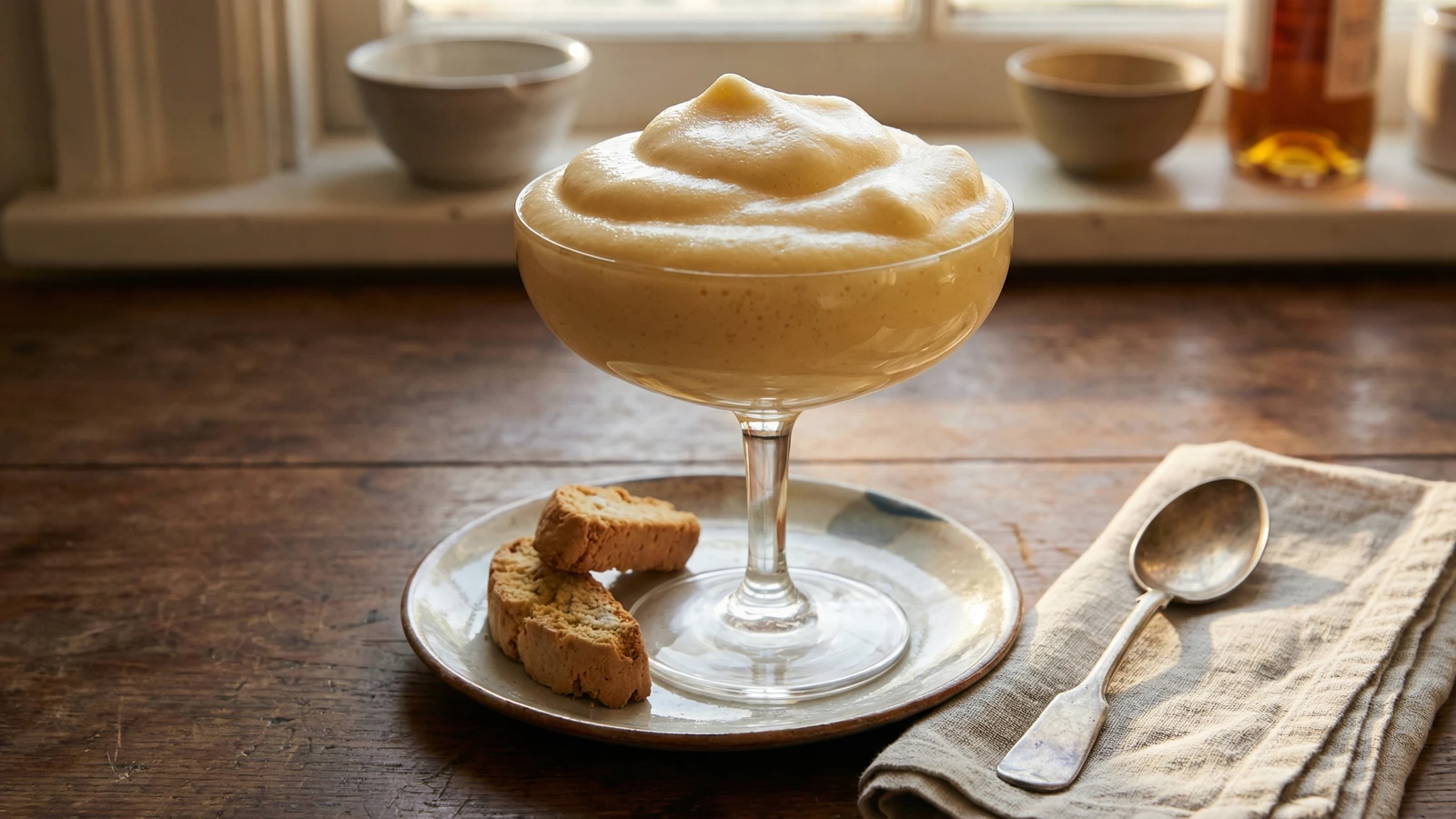
Zabaglione al Marsala
Created by Chef Graziella
Three ingredients whisked over gentle heat until they become something greater than their parts. This is Italian dessert making stripped to its essence, where technique is everything.
Zabaglione requires three ingredients and one skill: the patience to whisk without stopping. There is no cream to add body, no starch to provide stability, no gelatin to forgive your timing. Egg yolks, sugar, and Marsala. That is all. What you keep out is as significant as what you put in.
The technique is not complicated, but it demands your full attention. You whisk the yolks and sugar until pale and thick. You set the bowl over barely simmering water. You add the Marsala and whisk constantly, never stopping, never walking away, until the mixture swells to four times its original volume and holds soft peaks. This takes eight to ten minutes. It will feel longer.
The moment you stop whisking, zabaglione begins to fall. It waits for no one. Your guests must be seated, their glasses ready, before you begin. This is not a dessert for the hesitant or the easily distracted. It rewards those who commit.
Zabaglione likely originated in the courts of 16th-century Turin, where Piedmontese cooks had access to fine Marsala from Sicily and the eggs of well-fed hens. Legend attributes its invention to a Franciscan friar named Pasquale de Baylon, patron saint of cooks, whose name was corrupted into 'zabaglione' through the Piedmontese dialect. The French later adopted it as sabayon, adding their own variations.
The technique, the tradition, and the story behind every dish.
Discover Culinary AdvisorIngredients
large egg yolks
Quantity
6
at room temperature
granulated sugar
Quantity
6 tablespoons
dry Marsala wine
Quantity
3/4 cup
| Ingredient | Quantity |
|---|---|
| large egg yolksat room temperature | 6 |
| granulated sugar | 6 tablespoons |
| dry Marsala wine | 3/4 cup |
Equipment Needed
- •Medium saucepan for water bath
- •Large heatproof bowl (copper zabaglione pot if available)
- •Large balloon whisk
- •4 serving glasses or coupes, warmed
Instructions
- 1
Prepare the water bath
Fill a medium saucepan with two inches of water and bring it to a gentle simmer. The water should produce small bubbles, not a rolling boil. Violent heat scrambles the eggs. You want steam, not disaster. Have your serving glasses ready and your guests seated.
- 2
Beat yolks and sugar
In a heatproof bowl that will sit comfortably over the saucepan without touching the water, combine the egg yolks and sugar. Whisk vigorously until the mixture becomes pale yellow and thick enough to fall from the whisk in a slowly dissolving ribbon. This takes three to four minutes of steady whisking. Your arm may tire. Continue.
Room temperature eggs whip to greater volume. Remove them from the refrigerator at least thirty minutes before you begin. - 3
Add the Marsala
Add the Marsala to the egg mixture and whisk briefly to combine. The mixture will thin considerably. This is correct. The transformation happens over heat.
- 4
Whisk over heat
Set the bowl over the simmering water. The bottom of the bowl must not touch the water. Begin whisking immediately and do not stop. Whisk in a circular motion, reaching the sides and bottom of the bowl where eggs can overcook. The mixture will begin to foam after two minutes. It will continue to expand, becoming lighter in color and dramatically increasing in volume. After eight to ten minutes, the zabaglione should be thick, foamy, and hold soft mounds when the whisk is lifted.
If you see the mixture beginning to curdle at the edges, the heat is too high. Lift the bowl off the water for a moment, whisk vigorously, then return it to the heat. Reduce the flame. - 5
Serve immediately
Remove the bowl from the heat and spoon the zabaglione into warmed glasses or coupes at once. Do not wait. Do not admire your work. Zabaglione begins to deflate the moment you stop whisking. It must reach the table within minutes. Serve with biscotti for dipping or spoon it warm over fresh berries.
Chef Tips
- •Use dry Marsala, never sweet. The sugar in the recipe provides sufficient sweetness. Sweet Marsala makes the dessert cloying.
- •A copper zabaglione pot, if you have one, conducts heat more evenly than a standard metal bowl. It is traditional but not essential. A wide stainless steel bowl works adequately.
- •The proportion is simple to remember: one egg yolk, one tablespoon sugar, two tablespoons Marsala. Scale up or down as needed.
- •Zabaglione cannot wait. If you are not prepared to serve it the moment it is ready, do not begin. There is no keeping it warm, no reheating, no second chances.
Advance Preparation
- •There is no advance preparation for zabaglione. It is made and served in the same breath.
- •You may measure your ingredients beforehand and have everything ready, but the whisking happens when your guests are ready to eat.
- •If you require a make-ahead dessert, choose something else. Zabaglione does not compromise.
Frequently Asked Questions
Nutrition Information
1 serving (about 80g)
Where cooking meets culture.
Culinary mentorship, cultural storytelling, and the editorial depth that makes cooking meaningful.
Explore Culinary Advisor