Culinary Advisor
A cooking platform built around craft, culture, and the stories behind what we eat.
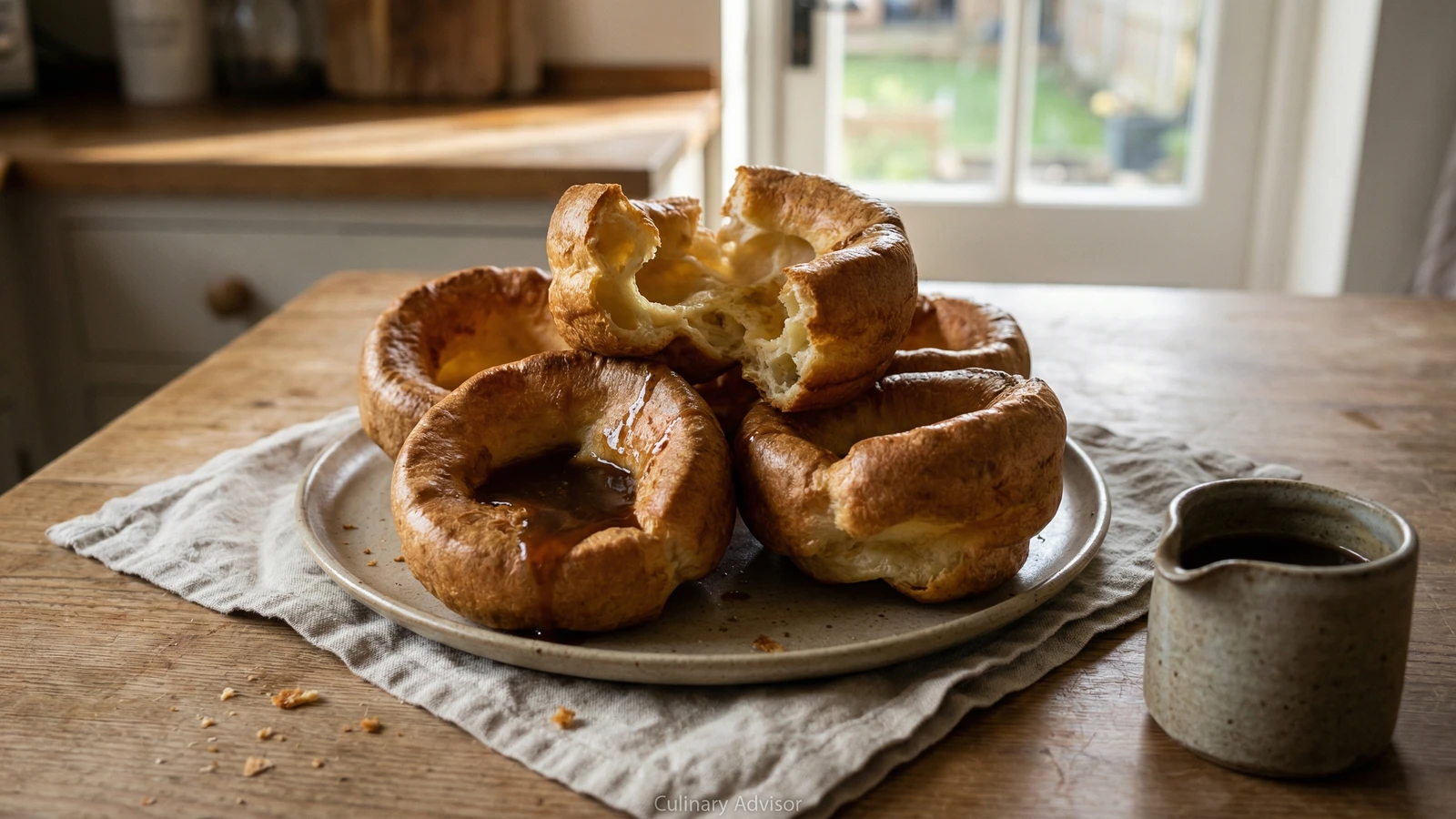
Yorkshire Pudding
Created by Chef Thomas
Four ingredients, a screaming hot oven, and the nerve to leave the door shut. These rise tall, crisp at the edges, soft in the centre, built for catching gravy and making a Sunday feel like it means something.
The oven has to be furious. That's the first thing. Not warm, not moderately hot, furious. The kind of heat that hits you in the face when you open the door and makes you step back half a pace. Without that, nothing else matters.
A Yorkshire pudding is an act of faith. You make a batter so thin it looks like it can't possibly work. You pour it into a tin so hot the fat is hazing. You shut the oven door, and then you do the hardest thing any cook can do: you leave it alone. No peeking. No checking. You trust the heat and the batter and the time, and twenty minutes later you open the door to something that has risen beyond all reasonable expectation, golden and puffed and hollow, with crisp edges that shatter and a soft centre that exists for one purpose only: to catch the gravy.
This is a winter thing. A Sunday thing. The kitchen smells of roasting beef, the windows are fogged, someone has laid the table without being asked. The puddings come out and there's that brief, satisfying moment when everyone leans in to look at them. We're only making dinner. But this is the part of dinner that people remember.
I wrote it down in the notebook years ago: four ingredients, no margin for error, all courage. I still think that's about right. A recipe is a conversation, not a contract, but this one asks you to hold up your end of it. Get the tin hot. Pour fast. Shut the door. Trust the oven.
The technique, the tradition, and the story behind every dish.
Discover Culinary AdvisorIngredients
plain flour
Quantity
140g
large eggs
Quantity
4
whole milk
Quantity
200ml
fine sea salt
Quantity
pinch
beef dripping or sunflower oil
Quantity
about 1 teaspoon per hole
| Ingredient | Quantity |
|---|---|
| plain flour | 140g |
| large eggs | 4 |
| whole milk | 200ml |
| fine sea salt | pinch |
| beef dripping or sunflower oil | about 1 teaspoon per hole |
Equipment Needed
- •12-hole muffin tin or deep bun tin
- •Large jug for pouring
- •Whisk
Instructions
- 1
Make the batter
Tip the flour and salt into a bowl. Make a well in the centre. Crack in the eggs and start whisking, pulling the flour in from the edges as you go. Add the milk gradually, whisking until the batter is smooth and about the consistency of single cream. No lumps. It should pour freely from a jug. If it feels thick, add a splash more milk. Now leave it alone. Set it aside for at least thirty minutes at room temperature. The resting matters. Gluten needs time to relax, and a rested batter rises better. Don't skip this.
Room temperature is important. Cold batter hitting hot fat doesn't rise the same way. Take your eggs and milk out of the fridge well ahead of time. - 2
Heat the tin
Set the oven to 230C/210C fan. It needs to be properly, furiously hot. Put a scant teaspoon of dripping or oil into each hole of a twelve-hole muffin tin and slide it into the oven. Leave it there for at least ten minutes. When you open the oven door, the fat should be shimmering and just starting to haze. If it isn't smoking slightly, it isn't ready. This is the single most important step. Everything that follows depends on it.
Beef dripping gives you the flavour that belongs with a roast. Sunflower oil works if you'd rather keep things lighter or serve alongside something that isn't beef. Both will do the job if the temperature is right. - 3
Pour and don't look back
Give the batter a final stir. Pour it into a jug if it isn't in one already. Open the oven door, pull the tin out swiftly, and pour batter into each hole, filling them about a third of the way. Work quickly. The batter should sizzle and spit the moment it hits the fat. If it sits there quietly, your tin wasn't hot enough. Slide the tin back in and shut the door. Do not open it for at least twenty minutes. Not to check. Not to peek. The rise depends on the trapped heat, and every time you open that door, you lose it.
A jug is easier than a ladle here. Speed is everything. The longer the tin sits out of the oven, the more heat you lose, and the less your puddings will rise. - 4
Wait, then serve immediately
After twenty to twenty-five minutes, look through the oven glass. They should have risen dramatically, tall and puffed and golden, with crisp edges that have gone a deep, burnished brown. The centres will be lighter, slightly soft, ready to cradle gravy. Take them out. They'll deflate a little, that's fine, they're supposed to. Serve them immediately, straight from the tin to the plate, while the roast rests and the gravy finishes. A Yorkshire pudding that waits is a Yorkshire pudding that sags. There are few better feelings than putting these on the table while they're still crackling.
Chef Tips
- •The ratio is simple enough to memorize: equal weight of eggs, flour, and milk. Four eggs, weigh them, match the flour and milk to that weight. Once you know this, you'll never need the recipe again. Your kitchen, your rules.
- •Beef dripping from the roasting tin is the thing, if you've got it. Save a few spoonfuls of fat from the joint before it rests and use that to grease the tin. The puddings will taste of the roast itself, which is exactly the point.
- •If you've a mind to make one large pudding instead of twelve small ones, use a roasting tin and pour the batter into the smoking fat in one go. It wants thirty to thirty-five minutes and it'll rise like a landscape. Cut it into rough squares at the table. Less tidy, more generous. I prefer it, honestly.
- •Don't be tempted to add anything to the batter. No herbs, no mustard, no cheese. A Yorkshire pudding is itself and doesn't need improving. The flavour comes from the dripping, the crispness, and what you pour over it.
Advance Preparation
- •The batter can be made up to twenty-four hours ahead and kept covered in the fridge. Bring it back to room temperature before using, and give it a good stir. Cold batter won't rise properly.
- •Yorkshire puddings do not wait, do not reheat well, and do not improve with age. Make them last, serve them first. This is the one part of a roast dinner that cannot be done in advance.
Frequently Asked Questions
Nutrition Information
1 serving (about 40g)
Where cooking meets culture.
Culinary mentorship, cultural storytelling, and the editorial depth that makes cooking meaningful.
Explore Culinary Advisor