Culinary Advisor
A cooking platform built around craft, culture, and the stories behind what we eat.
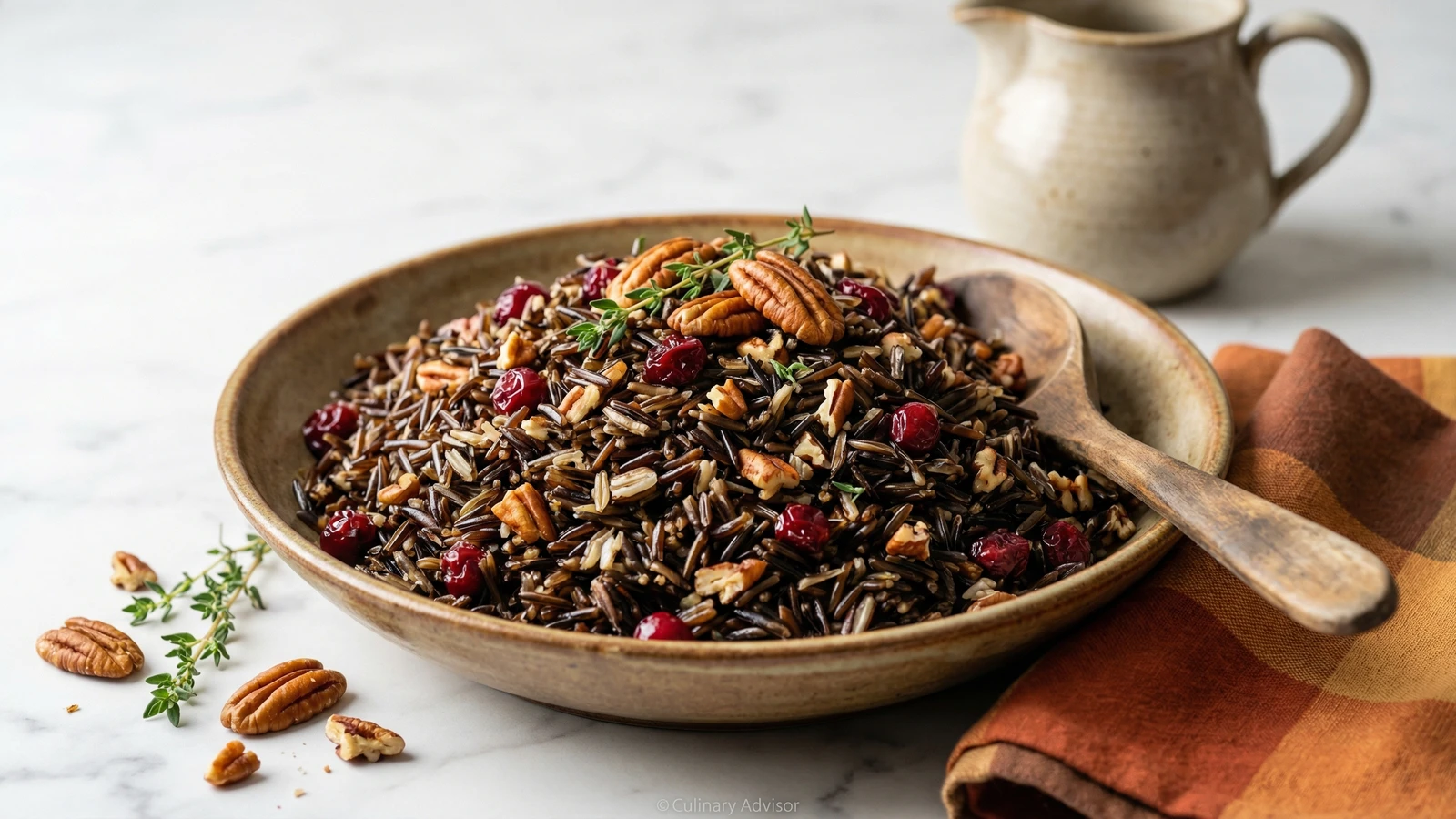
Wild Rice with Cranberries and Pecans
Created by
The nutty, chewy grain of the Great Lakes meets tart cranberries and buttery pecans in a dish that belongs on every holiday table. This is indigenous American cooking at its most satisfying.
Wild rice is not rice at all. It is the seed of an aquatic grass native to the Great Lakes and the upper Mississippi River, harvested by Ojibwe and Menominee peoples for centuries before Europeans arrived. They called it manoomin, the good berry. When you cook it properly, you understand why.
The grains should burst open during cooking, revealing their pale, starchy interiors while maintaining that distinctive chew. Too many cooks treat wild rice like its domesticated cousin, expecting it to turn soft and fluffy. It won't. It shouldn't. That textural resistance is the whole point.
I've served this dish at more Thanksgiving tables than I can count. The cranberries provide tartness that cuts through rich gravies and butter-laden sides. The pecans add richness and crunch. Fresh thyme ties everything to the season. Make it once and it becomes permanent repertoire.
The technique, the tradition, and the story behind every dish.
Discover Culinary AdvisorIngredients
wild rice
Quantity
1 1/2 cups
rinsed
low-sodium chicken stock or vegetable stock
Quantity
4 cups
kosher salt
Quantity
1 teaspoon, plus more to taste
bay leaf
Quantity
1
pecan halves
Quantity
1 cup
unsalted butter
Quantity
3 tablespoons
large shallot
Quantity
1
minced (about 1/4 cup)
celery stalks
Quantity
2
finely diced
dried cranberries
Quantity
3/4 cup
fresh thyme leaves
Quantity
2 tablespoons
fresh parsley
Quantity
1 tablespoon
chopped
freshly ground black pepper
Quantity
1/2 teaspoon
apple cider vinegar
Quantity
2 teaspoons
toasted pecans
Quantity
1/4 cup
roughly chopped, for garnish
| Ingredient | Quantity |
|---|---|
| wild ricerinsed | 1 1/2 cups |
| low-sodium chicken stock or vegetable stock | 4 cups |
| kosher salt | 1 teaspoon, plus more to taste |
| bay leaf | 1 |
| pecan halves | 1 cup |
| unsalted butter | 3 tablespoons |
| large shallotminced (about 1/4 cup) | 1 |
| celery stalksfinely diced | 2 |
| dried cranberries | 3/4 cup |
| fresh thyme leaves | 2 tablespoons |
| fresh parsleychopped | 1 tablespoon |
| freshly ground black pepper | 1/2 teaspoon |
| apple cider vinegar | 2 teaspoons |
| toasted pecansroughly chopped, for garnish | 1/4 cup |
Equipment Needed
- •Medium saucepan with tight-fitting lid
- •Large skillet (12-inch)
- •Rimmed baking sheet
- •Fine-mesh strainer
Instructions
- 1
Toast the pecans
Preheat your oven to 350°F. Spread the pecan halves in a single layer on a rimmed baking sheet. Toast for 8 to 10 minutes, shaking the pan halfway through, until fragrant and slightly darkened. You'll smell them before you see the color change. Transfer immediately to a plate to stop the cooking. Nuts go from toasted to burnt in moments.
Toast extra pecans while you're at it. They keep for weeks in a sealed jar and improve everything from salads to oatmeal. - 2
Cook the wild rice
Combine the rinsed wild rice, stock, one teaspoon salt, and bay leaf in a medium saucepan. Bring to a boil over high heat, then reduce to a gentle simmer. Cover and cook for 45 to 55 minutes, checking at 40 minutes. The rice is done when most grains have split open to reveal their lighter interior and the texture is chewy but not crunchy. Some grains will curl. This is correct.
True wild rice, hand-harvested from lakes, cooks faster than cultivated paddy rice. Taste as you go rather than trusting the clock. - 3
Drain and dry
Drain any excess liquid through a fine-mesh strainer. Discard the bay leaf. Spread the rice on a rimmed baking sheet and let it sit for five minutes. This dries the surface and prevents the finished dish from becoming gummy. The grains should look distinct, not clumped.
- 4
Sauté aromatics
Melt the butter in a large skillet over medium heat. When it foams, add the minced shallot and diced celery. Cook, stirring occasionally, until softened and the shallot turns translucent, about 4 minutes. The kitchen will smell like the beginning of something good.
- 5
Combine and season
Add the drained wild rice to the skillet. Toss to coat with the butter and aromatics. Roughly chop the toasted pecans, reserving a quarter cup of the prettiest pieces for garnish. Add the chopped pecans, dried cranberries, thyme leaves, and parsley. Fold everything together gently. The cranberries will soften slightly from the residual heat.
- 6
Finish and adjust
Add the black pepper and apple cider vinegar. Toss once more. Taste carefully. The vinegar should brighten without announcing itself. Add more salt if needed. Wild rice can handle aggressive seasoning. Transfer to a warm serving bowl and scatter the reserved pecan pieces over the top.
Chef Tips
- •Seek out hand-harvested wild rice from Minnesota or Wisconsin if you can find it. The paddy-grown California varieties are fine, but the true lake rice has deeper flavor and better texture. It costs more. It's worth it.
- •This dish improves as it sits. The flavors meld and the cranberries soften further. Make it the morning of your gathering and reheat gently with a splash of stock.
- •For a vegetarian table, use vegetable stock and finish with a drizzle of good olive oil instead of butter. The dish stands on its own.
- •Leftover wild rice makes an excellent addition to soups and salads. It keeps refrigerated for five days and freezes well for three months.
Advance Preparation
- •Wild rice can be cooked, drained, and refrigerated up to three days ahead. Bring to room temperature before continuing with the recipe.
- •The complete dish can be made up to two days ahead. Reheat gently in a covered baking dish at 325°F for 20 minutes, adding a few tablespoons of stock to prevent drying.
- •Toast pecans up to a week ahead and store in an airtight container at room temperature. Add fresh pecans for garnish just before serving for maximum crunch.
- •For potluck transport, keep the dish warm in a slow cooker on the lowest setting. Add the garnish pecans after arrival.
Frequently Asked Questions
Nutrition Information
1 serving (about 200g)
Where cooking meets culture.
Culinary mentorship, cultural storytelling, and the editorial depth that makes cooking meaningful.
Explore Culinary Advisor