Culinary Advisor
A cooking platform built around craft, culture, and the stories behind what we eat.
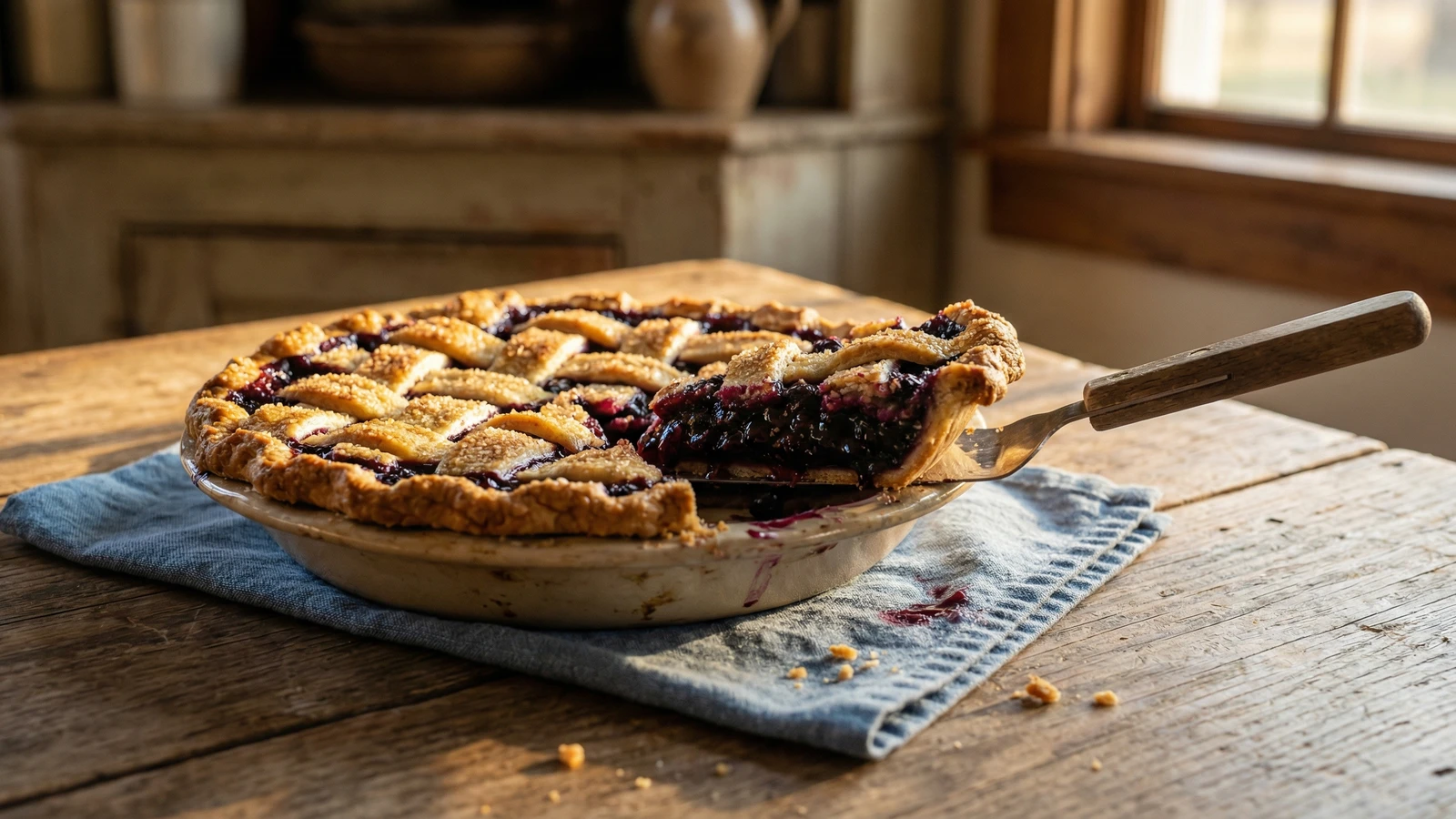
Wild Blueberry Pie
Created by Chef Ally
Tiny wild blueberries, no bigger than peas, tumble beneath a golden lattice in this Fourth of July classic. The berries burst with concentrated sweetness that cultivated fruit cannot touch.
Wild blueberries are a different creature entirely. Half the size of their cultivated cousins, twice as intense, and impossible to farm at scale. They grow low to the ground in the glacial soils of Maine and Eastern Canada, ripening in late July when the sun is high and the days stretch long. If you have never tasted them, you have never really tasted blueberry.
This pie asks very little of you beyond patience. The filling is simple: sugar, a squeeze of lemon, just enough cornstarch to bind the juices. The crust is all butter, worked cold and baked hot. What makes it extraordinary is what you put inside. Those tiny berries collapse into something almost jammy, their skins bursting to release a flavor so deep and true that one bite can bring you back to every summer you have ever known.
Find wild blueberries at farmers markets in August, or in the frozen aisle year-round. The frozen ones work beautifully here, picked and flash-frozen at peak ripeness. Do not thaw them. Tumble them straight into the filling, coated in sugar and cornstarch, and let the oven do the rest. Your choices shape the food system. Buying wild blueberries supports small-scale harvesters working the barrens by hand, the way their families have for generations.
The technique, the tradition, and the story behind every dish.
Discover Culinary AdvisorIngredients
all-purpose flour
Quantity
2 1/2 cups (315g)
granulated sugar (for crust)
Quantity
1 tablespoon
fine sea salt (for crust)
Quantity
1 teaspoon
cold unsalted butter (for crust)
Quantity
1 cup (2 sticks/226g)
cut into 1/2-inch cubes
ice water
Quantity
6-8 tablespoons
wild blueberries
Quantity
6 cups
fresh or frozen
granulated sugar (for filling)
Quantity
3/4 cup (150g)
cornstarch
Quantity
3 tablespoons
fresh lemon juice
Quantity
1 tablespoon
lemon zest
Quantity
1 teaspoon
fine sea salt (for filling)
Quantity
1/4 teaspoon
cold unsalted butter (for filling)
Quantity
2 tablespoons
cut into small pieces
large egg
Quantity
1
heavy cream or milk
Quantity
1 tablespoon
turbinado sugar
Quantity
1 tablespoon
for finishing
| Ingredient | Quantity |
|---|---|
| all-purpose flour | 2 1/2 cups (315g) |
| granulated sugar (for crust) | 1 tablespoon |
| fine sea salt (for crust) | 1 teaspoon |
| cold unsalted butter (for crust)cut into 1/2-inch cubes | 1 cup (2 sticks/226g) |
| ice water | 6-8 tablespoons |
| wild blueberriesfresh or frozen | 6 cups |
| granulated sugar (for filling) | 3/4 cup (150g) |
| cornstarch | 3 tablespoons |
| fresh lemon juice | 1 tablespoon |
| lemon zest | 1 teaspoon |
| fine sea salt (for filling) | 1/4 teaspoon |
| cold unsalted butter (for filling)cut into small pieces | 2 tablespoons |
| large egg | 1 |
| heavy cream or milk | 1 tablespoon |
| turbinado sugarfor finishing | 1 tablespoon |
Equipment Needed
- •9-inch pie dish (glass or ceramic)
- •Pastry cutter or two forks
- •Rolling pin
- •Rimmed baking sheet
- •Wire cooling rack
Instructions
- 1
Make the dough
Whisk flour, sugar, and salt in a large bowl. Add the cold butter cubes and work them into the flour using your fingertips or a pastry cutter, pressing and flattening each piece until the mixture resembles coarse meal with some pea-sized butter pieces remaining. These irregular butter bits are your friends. They create the flaky layers.
Cold butter is essential. If your kitchen runs warm, freeze the cubes for ten minutes before starting. - 2
Add water and form disks
Drizzle six tablespoons of ice water over the flour mixture. Toss with a fork until the dough just begins to clump. Squeeze a handful. If it holds together, you have enough water. If it crumbles, add another tablespoon. Divide the dough in half, shape each into a flat disk about one inch thick, wrap in plastic, and refrigerate for at least one hour.
- 3
Prepare the filling
Place the wild blueberries in a large bowl. If using frozen berries, do not thaw them. In a small bowl, whisk together the sugar, cornstarch, and salt. Add this mixture to the blueberries along with the lemon juice and zest. Fold gently with a spatula until every berry is coated. The mixture will look dusty. That is correct.
Wild blueberries release more juice than cultivated ones. The cornstarch catches that liquid and turns it into a glossy filling that slices cleanly. - 4
Roll the bottom crust
On a lightly floured surface, roll one disk of dough into a circle about twelve inches across and an eighth of an inch thick. Work from the center outward, rotating the dough a quarter turn after every few strokes. Transfer to a nine-inch pie dish, letting the dough settle into the corners without stretching. Trim the overhang to one inch and refrigerate while you roll the top.
- 5
Roll and cut the lattice
Roll the second disk to the same thickness and size. Cut into strips about three-quarters of an inch wide. You will have ten to twelve strips. Keep them on a baking sheet in the refrigerator until ready to weave. Cold dough handles better and bakes flakier.
- 6
Fill the pie
Pour the blueberry filling into the chilled bottom crust, mounding it slightly higher in the center. The berries will settle as they cook. Scatter the small pieces of cold butter over the top. They will melt into the filling and add richness.
- 7
Weave the lattice
Lay half the strips across the filling, spacing them about an inch apart. Fold back every other strip halfway. Lay a cross-strip perpendicular to the others, then unfold the folded strips over it. Repeat, folding back alternate strips each time, until the lattice is complete. Trim the strips and press the edges together with the bottom crust. Fold the overhang under itself and crimp with your fingers or a fork.
- 8
Apply the egg wash
Beat the egg with the cream until smooth. Brush this wash over the entire lattice and crimped edge with a light hand. The wash gives the crust its golden shine. Sprinkle the turbinado sugar over the top. The coarse crystals catch the light and add gentle crunch.
- 9
Bake low then high
Place the pie on a rimmed baking sheet to catch drips. Bake at 425°F for twenty minutes. The high heat sets the crust. Reduce the temperature to 375°F and continue baking for thirty-five to forty-five minutes more, until the crust is deeply golden and the filling bubbles thickly through the lattice. If the edges brown too quickly, shield them with foil.
Thick, lazy bubbles mean the filling has thickened. Thin, watery bubbles mean it needs more time. Trust the bubbles. - 10
Cool completely
Transfer the pie to a wire rack and let it cool for at least three hours, preferably four. This is the hardest part. Cutting too soon means runny filling that pools on the plate instead of holding its shape. The filling needs time to set. Your patience will be rewarded with clean, glistening slices.
Chef Tips
- •Wild blueberries are smaller and more fragile than cultivated berries. Handle them gently, and do not rinse unless absolutely necessary. Water dilutes their flavor and washes away the natural bloom.
- •If you cannot find wild blueberries, seek out the smallest cultivated berries you can find at the farmers market. Ask the grower which variety has the deepest flavor. Avoid the giant, watery berries bred for shipping.
- •An all-butter crust demands cold hands and a cool kitchen. If your dough starts to soften while you work, slide it back into the refrigerator for ten minutes. Warm dough makes tough crust.
- •A slice of this pie with cold heavy cream poured over the top is better than any scoop of ice cream. The cream mingles with the warm filling in a way that feels inevitable.
Advance Preparation
- •Pie dough can be made three days ahead and refrigerated, or frozen for up to three months. Thaw overnight in the refrigerator before rolling.
- •The assembled, unbaked pie can be frozen for up to two months. Bake directly from frozen, adding fifteen to twenty minutes to the total baking time.
- •Baked pie keeps at room temperature, loosely covered, for two days. After that, refrigerate and rewarm slices gently in a low oven.
Frequently Asked Questions
Nutrition Information
1 serving (about 190g)
Where cooking meets culture.
Culinary mentorship, cultural storytelling, and the editorial depth that makes cooking meaningful.
Explore Culinary Advisor