Culinary Advisor
A cooking platform built around craft, culture, and the stories behind what we eat.
Wienerschnitzel med Drenge
Created by Chef Freja Lund
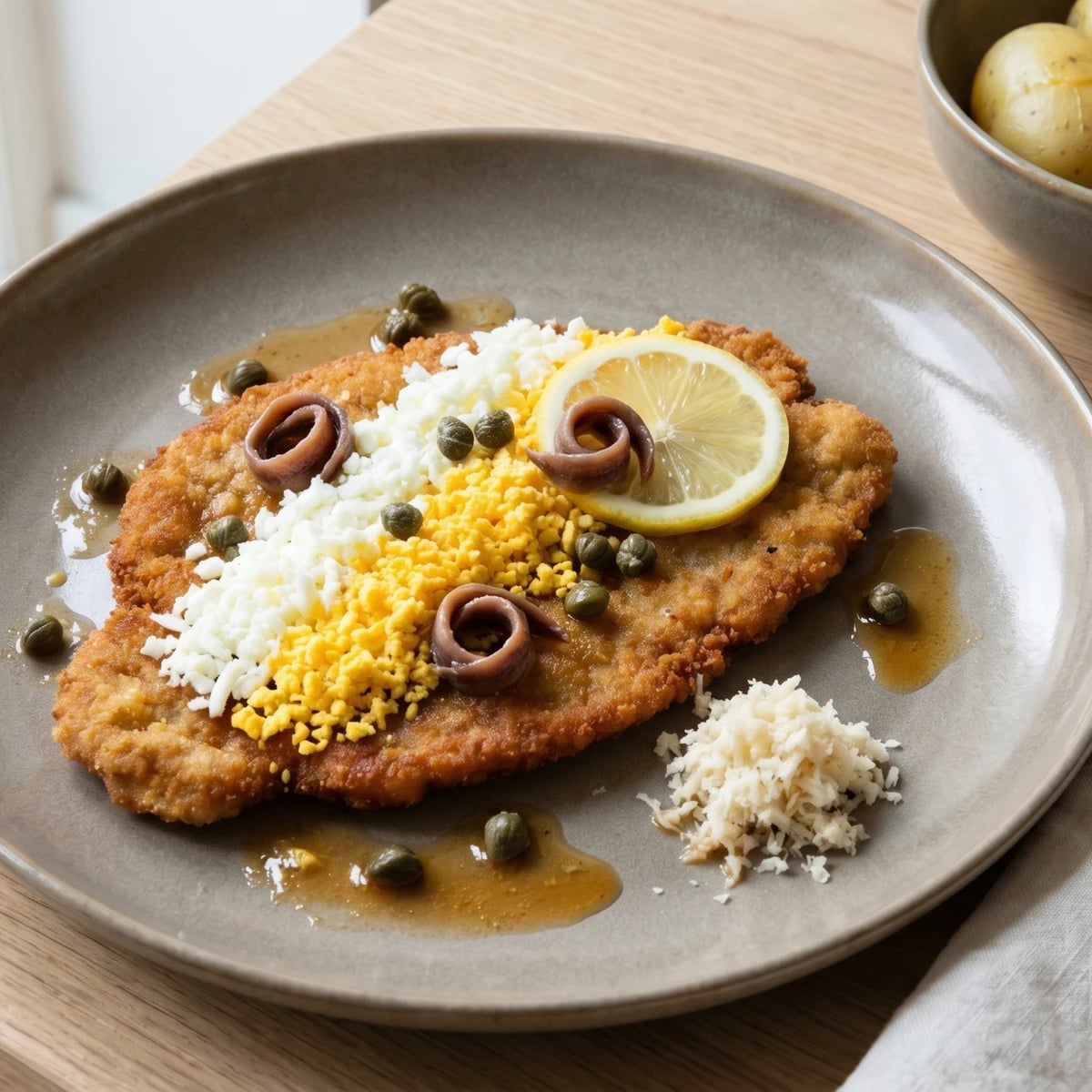
Breaded veal pounded thin, fried golden in clarified butter, and crowned with the Danish drenge: stripes of grated egg, anchovy, capers, lemon, and horseradish, all finished with warm browned butter. This is Sunday.
Sunday in Denmark has a particular rhythm. The morning is slow. Coffee, the newspaper, a walk if the weather allows. Then the question that shapes the rest of the day: what are we eating tonight? When the answer is wienerschnitzel, the kitchen shifts. This is not a Tuesday meal. This is the meal you make when the table is set with care and the people you love are on their way.
The schnitzel itself is honest work. You pound the veal thin, bread it in flour, egg, and fine breadcrumbs, and fry it in clarified butter until the crust turns deep golden and cracks at the first cut of the knife. The technique is not difficult, but it rewards your full attention. Pound the meat evenly or it cooks unevenly. Dry it well or the flour won't hold. Let the butter get properly hot or the crust absorbs fat and goes limp. I'll tell you exactly what to watch for at every step, so you're never left guessing.
But the dish is not the schnitzel alone. It's the drenge. In Danish, drenge means boys: the little garnishes that ride on top in neat stripes. Grated egg white, grated egg yolk, a curl of anchovy, a scatter of capers, a slice of lemon, a wisp of freshly grated horseradish. Each one is placed with intention, and together they turn a fried cutlet into something that looks like a celebration and tastes like one too. Warm browned butter goes over the top at the last moment, pooling on the plate, carrying everything together. You'll know when it's right.
Ingredients
veal cutlets from the topside
Quantity
4, about 150g each
plain flour
Quantity
80g
large eggs (for breading)
Quantity
2
beaten
| Ingredient | Quantity |
|---|---|
| veal cutlets from the topside | 4, about 150g each |
| plain flour | 80g |
| large eggs (for breading)beaten | 2 |