Culinary Advisor
A cooking platform built around craft, culture, and the stories behind what we eat.
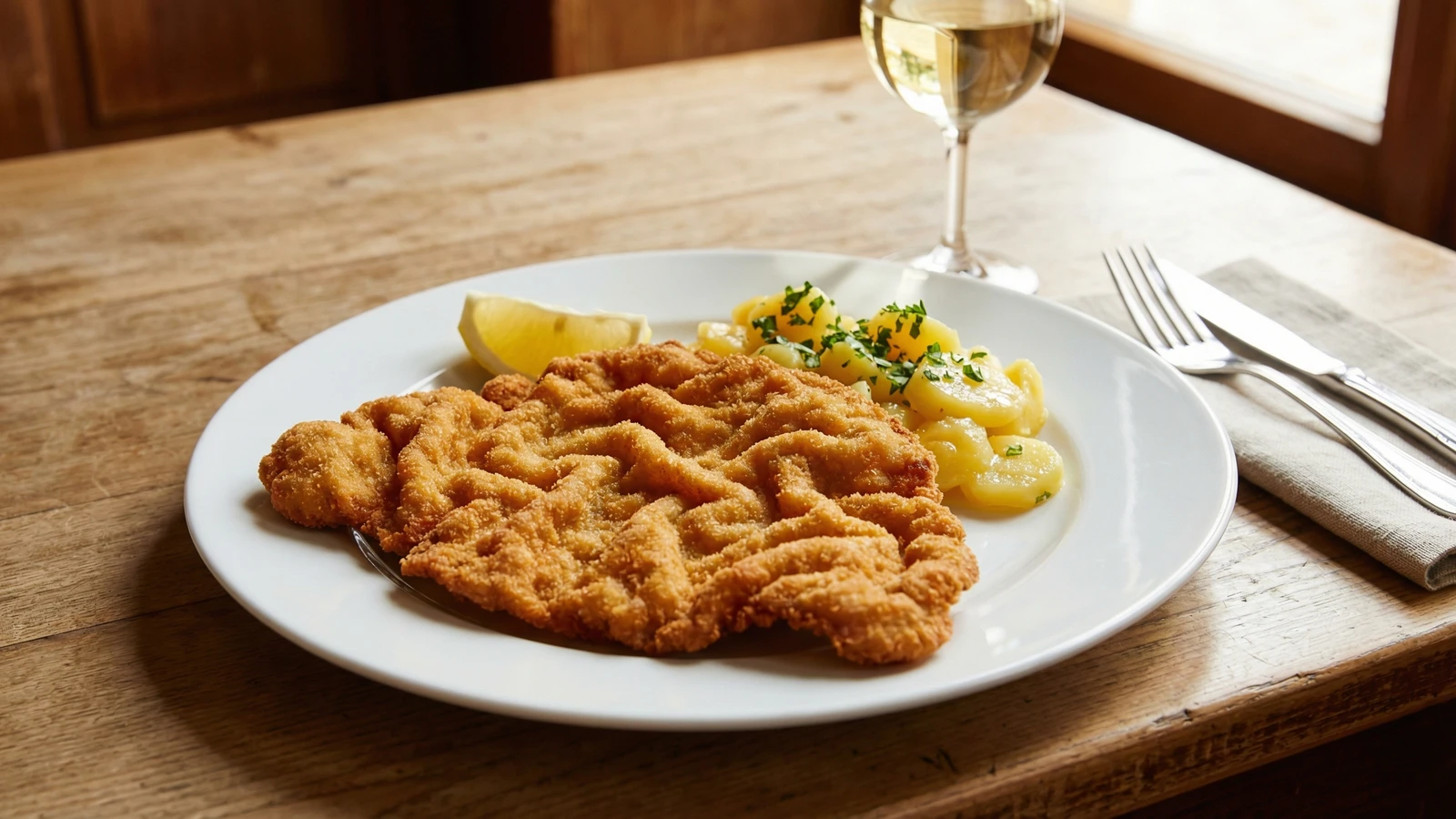
Wiener Schnitzel
Created by Chef Elsa
Vienna's signature veal, hammered thin and coated in crumbs so fine they turn to gold in shimmering clarified butter, the crust puffing and rippling away from the meat. A lemon wedge is all it asks for.
The sound gives it away before anything else. That first fizz when the breaded veal hits the hot clarified butter, the crumbs crackling and spitting, the kitchen filling with a smell somewhere between toast and hazelnuts. Three minutes, maybe four. You lift the edge with a fork and the underside has gone a deep, even gold, the coating already starting to ripple and puff away from the meat. This is the moment that makes Wiener Schnitzel worth the business of setting out three bowls and getting butter on your sleeves.
This is not my tradition. I'll say that plainly. I ate my first proper one at a wooden table in a Viennese Gasthaus, with a glass of cold Grüner Veltliner and a warm potato salad dressed in vinegar and seed oil. It was, I think, one of the more perfect things I've eaten. Four ingredients, barely five if you count the lemon. The veal was so thin it draped over the edge of the plate. The crust was golden, wavy, almost separate from the meat, and shattered when you pressed a fork through it. No sauce. No garnish. A wedge of lemon and nothing else. I understood, in that meal, what the Viennese have always known: the fewer the ingredients, the more each one matters.
I've made it at home many times since, and what I scribbled in the notebook hasn't changed. The principles are simple and non-negotiable: good veal from a butcher you trust, pounded between sheets of cling film until it's almost translucent. Clarified butter, what the Austrians call Butterschmalz, heated until it shimmers. Fine, dry breadcrumbs, traditionally made from stale Kaisersemmel rolls, pressed on loosely so the coating can breathe and puff in the hot fat. The Viennese call this soufflieren, that gentle billowing of the crust. It happens because the coating isn't clamped tight to the meat, and because there's enough butter in the pan for the schnitzel to float. We're only making dinner. But this is dinner that deserves your full attention.
The technique, the tradition, and the story behind every dish.
Discover Culinary AdvisorIngredients
veal escalopes
Quantity
4 (about 150g each)
from the leg, pounded thin
plain flour
Quantity
enough for dredging
large eggs
Quantity
2
beaten with a splash of cold water
fine dry breadcrumbs
Quantity
150g
ideally from stale Kaisersemmel rolls
clarified butter (Butterschmalz)
Quantity
200g
fine sea salt
Quantity
to taste
lemon
Quantity
1
cut into wedges
| Ingredient | Quantity |
|---|---|
| veal escalopesfrom the leg, pounded thin | 4 (about 150g each) |
| plain flour | enough for dredging |
| large eggsbeaten with a splash of cold water | 2 |
| fine dry breadcrumbsideally from stale Kaisersemmel rolls | 150g |
| clarified butter (Butterschmalz) | 200g |
| fine sea salt | to taste |
| lemoncut into wedges | 1 |
Equipment Needed
- •Meat mallet or heavy rolling pin
- •Large heavy frying pan, at least 28cm
- •Three shallow dishes or plates for breading
- •Wire rack and kitchen paper for draining
Instructions
- 1
Pound the veal thin
Place each escalope between two sheets of cling film. Using a meat mallet or the base of a heavy pan, pound them out evenly until they are about 3-4mm thick. Work from the centre outward. You want them thin enough that the meat cooks through in the time it takes the crumbs to turn gold. If they tear slightly at the edges, don't worry. Season both sides with fine salt.
Ask your butcher to cut the escalopes from the topside of the leg, the traditional cut for Wiener Schnitzel. Good butchers will pound them for you if you ask, but doing it yourself lets you judge the thickness. - 2
Set up the breading
Arrange three shallow dishes in a row. Flour in the first, beaten egg in the second, breadcrumbs in the third. The breadcrumbs should be fine and dry, not coarse or fresh. If you can find Kaisersemmel rolls, dry them out in a low oven and blitz them to an even powder. This is what gives the crust its delicate, shattering texture. Supermarket dried breadcrumbs will work, but the difference is real.
- 3
Bread the schnitzels
Dust each escalope lightly in flour, shaking off any excess. The flour is the glue; too much and the coating slides off in the pan. Dip through the beaten egg, letting the surplus drip away. Finally, lay it in the breadcrumbs and press them on gently. Gently. This matters. You want the crumbs to adhere but stay loose, not packed tight. The air between the coating and the meat is what allows the crust to puff and ripple during frying. If you press too hard, the coating stays flat and tight against the veal, and you lose the best part of the dish.
A splash of cold water in the beaten egg thins it slightly and helps the coating puff more dramatically during frying. A small thing, but the Viennese swear by it. - 4
Fry in clarified butter
Heat the clarified butter in a large, heavy frying pan over a medium-high heat. You need enough butter that the schnitzel can float, at least a centimetre deep, and this is not negotiable. When the butter shimmers and a breadcrumb dropped in sizzles immediately and turns gold in seconds, it's ready. Lay in one or two schnitzels, no more, and swirl the pan gently so the butter washes over the top of the coating. This is how the crust puffs and goes wavy. Fry for two to three minutes on the first side, until deep gold. Turn once, carefully, and fry the second side for another two minutes or so. The colour you want is the gold of a church dome, not pale, not brown. Lift out onto kitchen paper set over a wire rack. Don't cover them or the steam trapped underneath will soften the crust you just spent your attention building.
Clarified butter matters because regular butter burns at these temperatures. If you don't have Butterschmalz, clarify your own: melt unsalted butter over a low heat, skim the foam, and pour off the clear golden liquid, leaving the milk solids behind. It keeps for weeks in the fridge and is worth making in a large batch. - 5
Serve immediately
Transfer each schnitzel to a warm plate. Warm, not hot. You don't want the crust to keep cooking. Place a wedge of lemon alongside and nothing else on the schnitzel itself. No sauce. The Viennese are firm on this point and they are right: sauce softens the crust, and the crust is everything. If you want to serve it with the traditional Erdäpfelsalat, a warm Viennese potato salad dressed with white wine vinegar and oil, put it alongside. A spoonful of Preiselbeeren, lingonberry jam, on the side of the plate is proper too. But the schnitzel itself is complete. Squeeze the lemon over it at the table. The acid cuts through the richness of the butter and makes you want the next bite before you've finished the first.
Chef Tips
- •The veal is the dish. Everything else is technique. Find a butcher who sells rose veal from the leg and ask for escalopes cut against the grain. This isn't the place to economise. A schnitzel made with good veal, pounded thin and fried properly, is a different thing entirely from one made with a cheap cut.
- •Clarified butter is not a suggestion. Regular butter burns. Oil doesn't taste right. A mixture of the two is a compromise, and this dish doesn't reward compromise. Make your own Butterschmalz or buy it from a good delicatessen. The flavour is clean, nutty, and specific to this dish.
- •The breading must be loose. This is the single most important technique in the whole recipe. Press the crumbs on with an open hand, almost patting rather than pressing. When the loose coating hits the hot butter, steam from the meat pushes the crust outward, creating that wavy, puffed surface the Viennese call soufflieren. A tight coating stays flat. A loose coating breathes.
- •Never, under any circumstances, put sauce on a Wiener Schnitzel. Not gravy. Not mushroom sauce. The lemon is there for a reason. It is the only condiment the dish needs. This is a hill the Austrians will die on, and having eaten it done properly, I understand why.
- •If you want a side, make an Erdäpfelsalat: warm waxy potatoes sliced while still hot and dressed with white wine vinegar, a little mustard, mild oil, and finely sliced white onion. Served barely warm, it cuts the richness of the fried crust and belongs alongside a schnitzel the way bread belongs alongside soup.
Advance Preparation
- •The veal can be pounded thin, seasoned, and refrigerated between cling film for up to four hours before breading.
- •Clarified butter can be made well in advance and stored in a sealed jar in the fridge for several weeks. Worth making a large batch while you're at it.
- •Bread the schnitzels no more than ten minutes before frying. The crumbs absorb moisture from the egg if they sit too long, and the coating turns heavy instead of shattering.
Frequently Asked Questions
Nutrition Information
1 serving (about 200g)
Where cooking meets culture.
Culinary mentorship, cultural storytelling, and the editorial depth that makes cooking meaningful.
Explore Culinary Advisor