Culinary Advisor
A cooking platform built around craft, culture, and the stories behind what we eat.
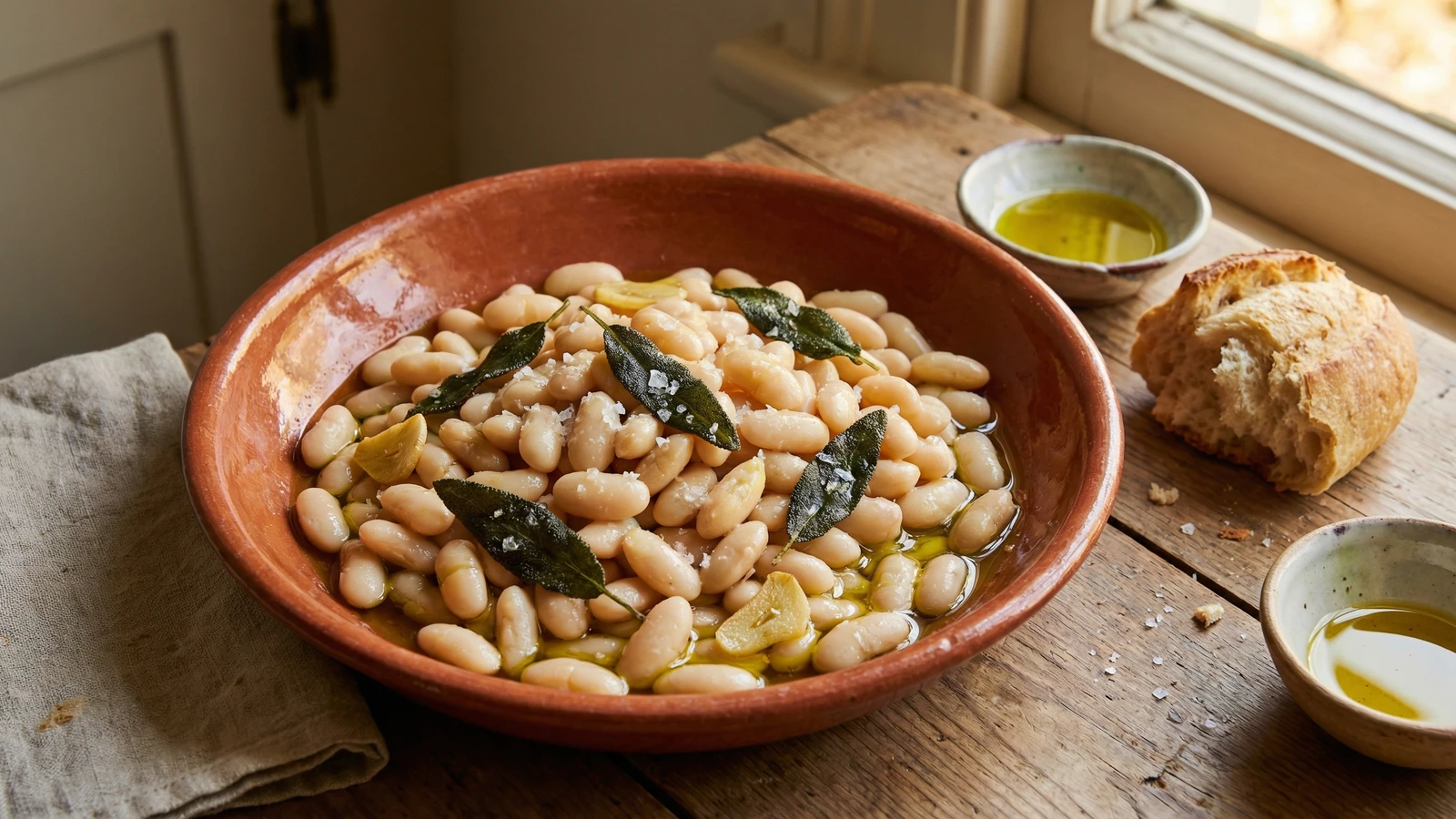
White Beans with Sage and Olive Oil
Created by Chef Ally
Tuscan simplicity at its finest: creamy cannellini beans, your best olive oil, and sage leaves fried until shatteringly crisp. Nothing more, nothing less, nothing hidden.
This is the dish that taught me what Tuscan cooking really means. In a farmhouse outside Florence, an elderly woman served me a bowl of white beans dressed in nothing but olive oil, with a few fried sage leaves scattered on top. I kept waiting for more to arrive. Nothing did. The beans were the meal, and they were extraordinary.
The secret is not technique. It is sourcing. The beans came from her garden, dried on the vine, stored in glass jars. The olive oil was pressed from trees on the property, so fresh it burned the back of your throat. The sage grew by the kitchen door. When ingredients are this alive, cooking becomes an act of restraint.
At the market, look for dried beans with tight, unbroken skins and a slight sheen. They should feel heavy for their size. Beans that have sat too long look dusty and faded. They will never cook evenly, no matter how long you simmer them. Ask when they were harvested. Last season is acceptable. Last year is not.
Your olive oil matters more here than in almost any other dish. This is not the moment for the bottle you keep next to the stove for sautéing onions. Find an oil you would happily drink from a spoon. Grassy, peppery, fresh. It should taste like olives, not like nothing.
The technique, the tradition, and the story behind every dish.
Discover Culinary AdvisorIngredients
dried cannellini beans
Quantity
1 pound
soaked overnight
head of garlic (for cooking beans)
Quantity
1
halved crosswise
fresh rosemary
Quantity
2 sprigs
bay leaf
Quantity
1
fine sea salt
Quantity
to taste
best-quality extra-virgin olive oil
Quantity
1/2 cup
divided
fresh sage leaves
Quantity
20-24 leaves
garlic (for finishing)
Quantity
2 cloves
thinly sliced
black pepper
Quantity
to taste
freshly cracked
flaky sea salt
Quantity
for finishing
| Ingredient | Quantity |
|---|---|
| dried cannellini beanssoaked overnight | 1 pound |
| head of garlic (for cooking beans)halved crosswise | 1 |
| fresh rosemary | 2 sprigs |
| bay leaf | 1 |
| fine sea salt | to taste |
| best-quality extra-virgin olive oildivided | 1/2 cup |
| fresh sage leaves | 20-24 leaves |
| garlic (for finishing)thinly sliced | 2 cloves |
| black pepperfreshly cracked | to taste |
| flaky sea salt | for finishing |
Equipment Needed
- •Heavy-bottomed pot or Dutch oven
- •Small skillet for frying sage
- •Slotted spoon
- •Wide shallow serving bowl
Instructions
- 1
Soak the beans
Cover dried beans with several inches of cold water the night before. They will double in size. In the morning, drain and rinse them. This is not optional. Soaking softens the skins, starts the hydration that leads to creamy interiors, and cuts your cooking time nearly in half.
If you forgot to soak, cover beans with water, bring to a boil for one minute, then let stand covered for one hour. Not as good as overnight, but it works. - 2
Cook the beans gently
Place soaked beans in a heavy pot. Add the halved garlic head, rosemary sprigs, and bay leaf. Cover with fresh cold water by three inches. Bring to a gentle simmer over medium heat. The moment you see bubbles, reduce the heat until you see only the occasional lazy bubble rising to the surface. A rolling boil breaks beans apart and toughens their skins.
- 3
Season at the right moment
After forty-five minutes of simmering, add a generous pinch of salt. Not before. Salt added too early toughens the skins. The beans need time to absorb water first. Continue simmering until completely tender, another thirty to forty-five minutes. They should yield entirely when pressed between your fingers, creamy all the way through with no chalky center.
Taste a few beans from different parts of the pot. They cook unevenly. All of them should be soft before you stop. - 4
Rest the beans in their liquid
Turn off the heat and let the beans rest in their cooking liquid for at least fifteen minutes. This is when they finish absorbing seasoning and become truly creamy. Drain, reserving a cup of the cooking liquid. Discard the garlic head, rosemary, and bay leaf.
- 5
Fry the sage leaves
Pour a quarter cup of olive oil into a small skillet over medium heat. When the oil shimmers, add sage leaves in a single layer. They will sputter and hiss. Fry for thirty seconds to one minute until the sputtering stops and leaves turn darker green with crisp edges. They go from perfect to burnt in seconds. Watch them. Transfer to a paper towel. They will crisp further as they cool.
- 6
Infuse the oil with garlic
Add sliced garlic to the sage-infused oil remaining in the pan. Cook over low heat, stirring, until the garlic turns pale gold and fragrant, about one minute. Remove from heat immediately. Garlic should never brown or it turns bitter.
- 7
Dress the beans
Place warm beans in a wide serving bowl. Pour the garlic and oil over them. Add the remaining quarter cup of fresh olive oil. This is your finishing oil, the one you bought because you loved how it tasted on bread. Toss gently. Add a splash of the reserved cooking liquid if the beans seem dry. Season with salt and pepper. Taste. Adjust.
Use two different olive oils if you have them: a good everyday oil for frying, your best oil for finishing raw. The finishing oil should taste like something. - 8
Finish and serve
Scatter crispy sage leaves over the beans. Finish with flaky salt and another crack of black pepper. Serve warm or at room temperature. These beans taste even better the next day, dressed again with a little fresh oil before serving.
Chef Tips
- •Seek out Rancho Gordo or similar heirloom bean suppliers. Their cannellini and other Italian varieties have flavor that supermarket beans cannot match. The difference is the same as between a farmers market tomato and a winter grocery store tomato.
- •Buy sage with leaves that are silvery-green and slightly fuzzy, not limp or blackened at the edges. If it does not smell intensely of sage when you rub a leaf, it has been sitting too long.
- •These beans improve overnight. The olive oil soaks in, the flavors meld. Make them a day ahead for a dinner party and dress with a splash of fresh oil before serving.
- •A squeeze of lemon over the finished beans brightens everything without adding obvious citrus flavor. Add it at the table, not to the pot.
- •In winter, add a handful of bitter greens like escarole or lacinato kale, wilted into the warm beans. It becomes a different dish entirely, just as good.
Advance Preparation
- •Beans can be cooked up to three days ahead and refrigerated in their cooking liquid. Reheat gently and dress just before serving.
- •Sage can be fried up to four hours ahead and kept at room temperature. It will stay crisp if stored uncovered.
- •The fully dressed beans taste even better the next day. Add a splash of fresh olive oil and a few more crispy sage leaves before serving.
Frequently Asked Questions
Nutrition Information
1 serving (about 250g)
Where cooking meets culture.
Culinary mentorship, cultural storytelling, and the editorial depth that makes cooking meaningful.
Explore Culinary Advisor