Culinary Advisor
A cooking platform built around craft, culture, and the stories behind what we eat.
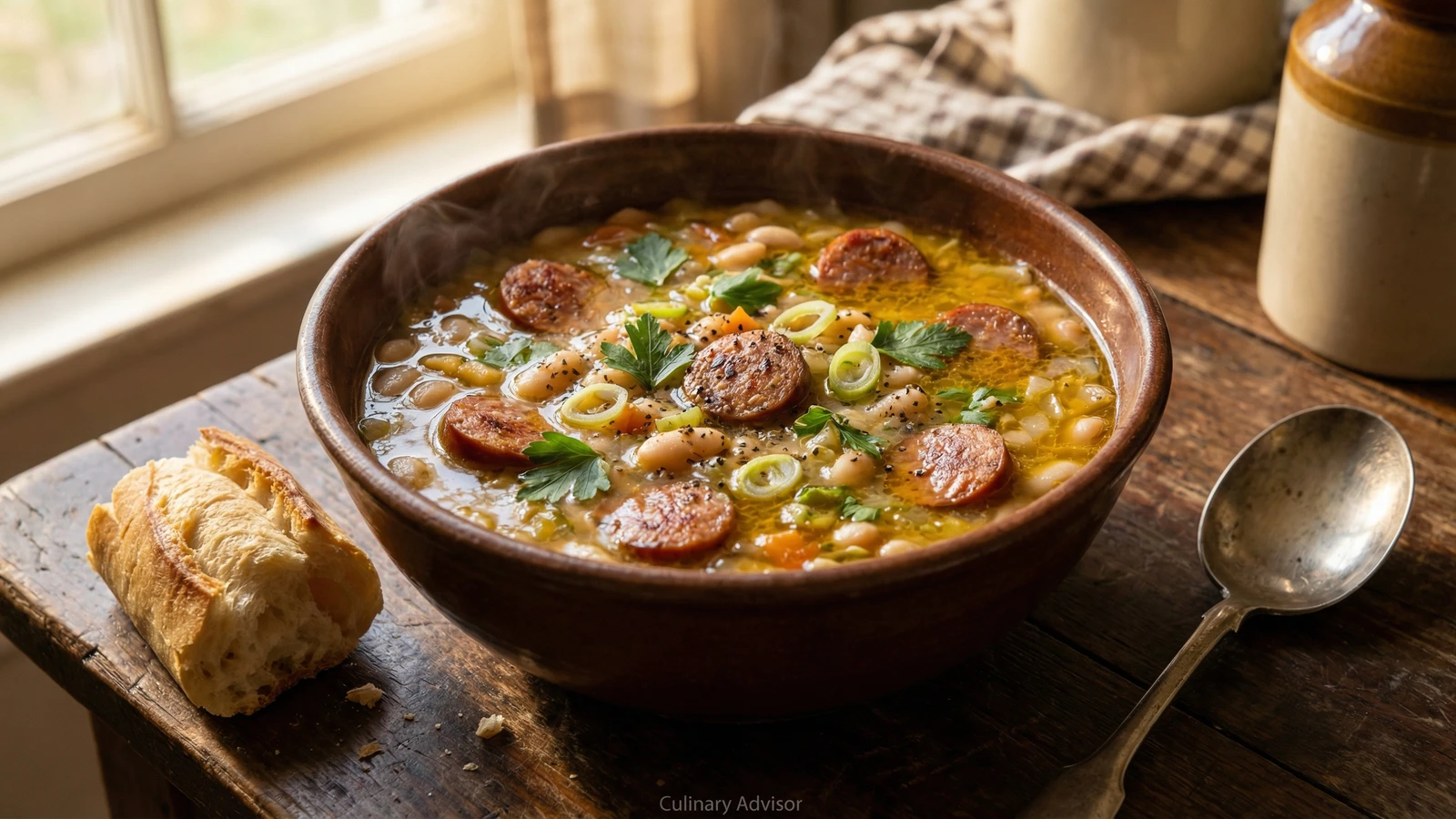
White Bean Soup with Andouille
Created by Chef Remy
Creamy white beans slow-simmered with smoky andouille and the holy trinity, a one-pot Louisiana classic that warms your soul from the first spoonful to the last bite of bread soaked in that seasoned broth.
White bean soup isn't fancy. It never pretended to be. This is the kind of cooking that fed generations of Louisiana families through hard winters and harder times. A pot of beans, good sausage, the holy trinity, and enough seasoning to make it worth eating. That's the bayou way.
My grandmother Evangeline made a pot of white beans every Monday without fail. She'd put them on in the morning, let them simmer all day while she did the wash, and by suppertime the whole house smelled like heaven. The beans would be creamy, the andouille giving up its smoke to the broth, and we'd gather around that table like it was a feast. Because it was.
The secret here is patience and layered seasoning. You season the sausage as it browns. You season the trinity as it softens. You season the broth as it simmers. And then you taste at the end and season again. Every stage builds on the last. By the time this soup hits your bowl, it should have depth that makes you close your eyes and wonder how something so simple can taste so complex.
At Lagniappe, we serve this soup when the weather turns cool. It's honest food, the kind that makes people feel embraced. You don't need a silver fork to eat good food, and you don't need culinary school to make it. Just a heavy pot, good ingredients, and the willingness to stand at the stove and let it happen.
The technique, the tradition, and the story behind every dish.
Discover Culinary AdvisorIngredients
dried great northern beans
Quantity
1 pound
soaked overnight and drained
andouille sausage
Quantity
1 pound
sliced into 1/4-inch rounds
vegetable oil
Quantity
2 tablespoons
yellow onion
Quantity
1 large
diced
celery stalks
Quantity
3
diced
green bell pepper
Quantity
1
diced
garlic
Quantity
6 cloves
minced
chicken stock
Quantity
8 cups
bay leaves
Quantity
2
dried thyme
Quantity
1 teaspoon
cayenne pepper
Quantity
1/2 teaspoon, plus more to taste
smoked paprika
Quantity
1 teaspoon
kosher salt
Quantity
1 teaspoon, plus more to taste
black pepper
Quantity
1/2 teaspoon
freshly ground
fresh parsley
Quantity
2 tablespoons
chopped
green onion tops
Quantity
3
thinly sliced
hot sauce (optional)
Quantity
for serving
| Ingredient | Quantity |
|---|---|
| dried great northern beanssoaked overnight and drained | 1 pound |
| andouille sausagesliced into 1/4-inch rounds | 1 pound |
| vegetable oil | 2 tablespoons |
| yellow oniondiced | 1 large |
| celery stalksdiced | 3 |
| green bell pepperdiced | 1 |
| garlicminced | 6 cloves |
| chicken stock | 8 cups |
| bay leaves | 2 |
| dried thyme | 1 teaspoon |
| cayenne pepper | 1/2 teaspoon, plus more to taste |
| smoked paprika | 1 teaspoon |
| kosher salt | 1 teaspoon, plus more to taste |
| black pepperfreshly ground | 1/2 teaspoon |
| fresh parsleychopped | 2 tablespoons |
| green onion topsthinly sliced | 3 |
| hot sauce (optional) | for serving |
Equipment Needed
- •Large Dutch oven or heavy-bottomed pot (6-quart minimum)
- •Wooden spoon
- •Ladle
Instructions
- 1
Brown the andouille
Heat a large Dutch oven or heavy-bottomed pot over medium-high heat. Add the andouille slices in a single layer, working in batches if needed. Let them sizzle undisturbed for two to three minutes until the bottoms develop deep brown edges and the fat starts to render. Flip and brown the other side. The kitchen should smell like a Louisiana smokehouse. Transfer the sausage to a plate, but leave every drop of that rendered fat in the pot. That fat is flavor you're building.
Don't crowd the pan. Crowded sausage steams instead of browns, and you lose all that beautiful caramelization. - 2
Build the trinity foundation
Add the vegetable oil to the rendered andouille fat. Reduce heat to medium. Add the onion, celery, and bell pepper (that's the holy trinity, the backbone of Louisiana cooking). Season with half the salt, pepper, and a pinch of the cayenne right now. Sauté for eight to ten minutes, stirring occasionally, until the vegetables soften and the onions turn translucent with golden edges. The smell will change from raw to sweet and savory. That's what you're looking for.
Seasoning the vegetables as they cook builds flavor in layers. This is fundamental to Cajun cooking. Don't wait until the end to season. - 3
Add garlic and spices
Push the vegetables to the sides and add the garlic to the center of the pot. Let it sizzle for thirty seconds until fragrant, then stir it into the trinity. Add the thyme, smoked paprika, and remaining cayenne. Stir constantly for one minute to bloom the spices in the fat. You'll smell the paprika open up, turning smoky and rich. This step wakes up dried spices and makes them sing.
- 4
Add beans and stock
Add the soaked and drained beans to the pot, stirring to coat them in the seasoned vegetables. Pour in the chicken stock, add the bay leaves, and bring everything to a boil over high heat. Once you see those big rolling bubbles, reduce to a gentle simmer. You want lazy bubbles, not a vigorous boil. A hard boil breaks the beans apart before they're tender.
- 5
Simmer until tender
Let the soup simmer uncovered for one hour to one hour and fifteen minutes. Stir every fifteen minutes to prevent sticking. The beans are ready when they're completely tender and creamy inside, with no chalky core. Take one out, let it cool, and taste it. The liquid will reduce and thicken naturally as the beans release their starch.
If the liquid level drops too low before the beans are tender, add hot stock or water a cup at a time. Cold liquid shocks the beans and extends cooking time. - 6
Create the creamy base
Using the back of a wooden spoon or a potato masher, crush about a quarter of the beans against the side of the pot. This releases their starch and creates that silky, creamy texture without adding any cream. Stir well to incorporate. The soup should coat a spoon but still be brothy, not thick like paste.
- 7
Return the andouille
Add the browned andouille back to the pot. Simmer for another ten minutes to let the sausage warm through and share its smoky essence with the broth. Remove the bay leaves. Now taste. Taste, taste, taste. Adjust salt, add more cayenne if you want heat, more black pepper if you want bite. The soup should be boldly seasoned, not timid.
- 8
Finish and serve
Ladle generous portions into deep bowls. Scatter fresh parsley and sliced green onion tops over each serving. Set the hot sauce on the table for those who want extra heat. Serve with crusty French bread for sopping up every last drop of that seasoned broth.
This soup is even better the next day after the flavors have had time to get properly acquainted. Reheat gently over medium-low, adding a splash of stock if it's thickened overnight.
Chef Tips
- •If you forgot to soak your beans overnight, use the quick-soak method: cover beans with water, bring to a boil for two minutes, remove from heat, cover, and let sit for one hour. Drain and proceed with the recipe.
- •Andouille is non-negotiable for authentic flavor. If you can't find real Louisiana andouille, kielbasa is a distant second choice, but add extra cayenne and smoked paprika to compensate.
- •For a richer soup, use ham hock stock instead of chicken stock. Simmer a smoked ham hock in water for two hours, strain, and use that liquid. Pure Louisiana gold.
- •The soup thickens considerably as it sits. When reheating, add stock or water to reach your desired consistency. At Lagniappe, we thin it with a splash of stock right before service.
Advance Preparation
- •Beans must be soaked overnight in cold water, at least 8 hours. This cuts cooking time in half and ensures even texture.
- •The soup can be made up to 3 days ahead and refrigerated. The flavor deepens overnight as the spices meld with the beans.
- •Freeze for up to 3 months in airtight containers. Thaw overnight in the refrigerator and reheat gently, adding stock to thin.
Frequently Asked Questions
Nutrition Information
1 serving (about 450g)
Where cooking meets culture.
Culinary mentorship, cultural storytelling, and the editorial depth that makes cooking meaningful.
Explore Culinary Advisor