Culinary Advisor
A cooking platform built around craft, culture, and the stories behind what we eat.
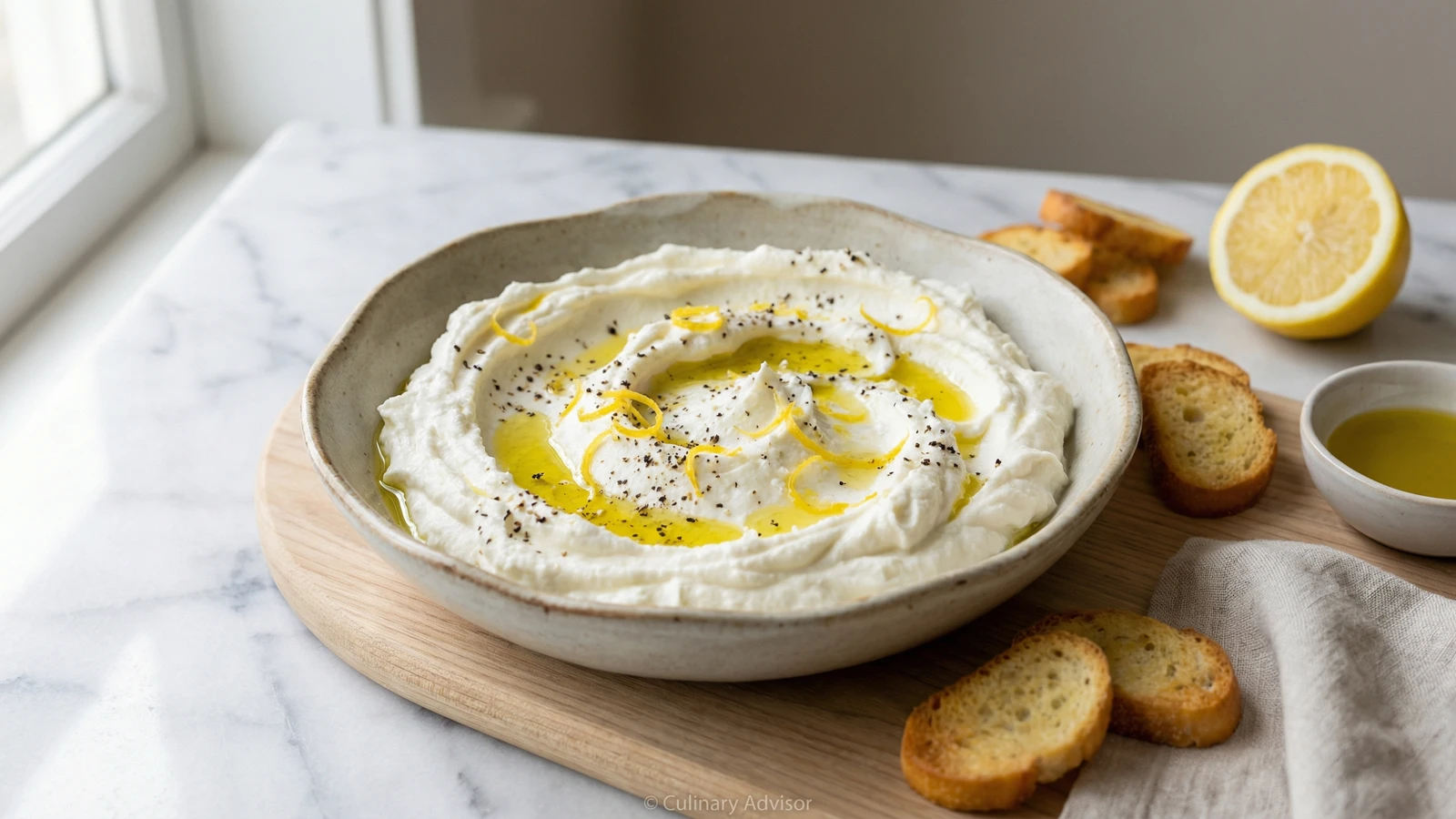
Whipped Ricotta with Lemon and Black Pepper
Created by
Pillowy ricotta whipped until impossibly light, brightened with lemon zest and finished with a generous grinding of black pepper. This is the appetizer that makes guests ask for the recipe while reaching for another crostini.
The Italians understood something about ricotta that Americans are only now discovering. Fresh, quality ricotta is not merely an ingredient. It is a canvas. Whip it properly and you transform humble curds into something approaching ethereal.
This dip went viral for good reason, but most recipes fail to explain the technique that makes it work. The secret is time in the food processor. Not thirty seconds. Not a minute. You need three full minutes of processing to break down the curds completely and incorporate enough air to achieve that cloud-like texture. Stop too soon and you have gritty cheese. Push through and you get silk.
I've served this at dinner parties where it disappeared before the main course emerged from the oven. It requires almost nothing from you: quality ricotta, good olive oil, a lemon, and the patience to let your machine do its job. The result tastes like you've been cooking all afternoon.
The technique, the tradition, and the story behind every dish.
Discover Culinary AdvisorIngredients
whole milk ricotta
Quantity
2 cups (16 ounces)
extra-virgin olive oil
Quantity
3 tablespoons, plus more for drizzling
fresh lemon juice
Quantity
1 tablespoon
lemon zest
Quantity
1 tablespoon (from 1 large lemon)
fine sea salt
Quantity
3/4 teaspoon
black pepper
Quantity
1/2 teaspoon, plus more for finishing
freshly cracked
flaky sea salt
Quantity
for finishing
crostini, crackers, or crudités
Quantity
for serving
| Ingredient | Quantity |
|---|---|
| whole milk ricotta | 2 cups (16 ounces) |
| extra-virgin olive oil | 3 tablespoons, plus more for drizzling |
| fresh lemon juice | 1 tablespoon |
| lemon zest | 1 tablespoon (from 1 large lemon) |
| fine sea salt | 3/4 teaspoon |
| black pepperfreshly cracked | 1/2 teaspoon, plus more for finishing |
| flaky sea salt | for finishing |
| crostini, crackers, or crudités | for serving |
Equipment Needed
- •Food processor (preferred) or stand mixer with paddle attachment
- •Fine-mesh strainer and cheesecloth (if draining ricotta)
- •Shallow serving bowl or rimmed plate
- •Microplane or fine grater for zest
Instructions
- 1
Drain the ricotta
If your ricotta seems wet or watery, line a fine-mesh strainer with cheesecloth or a clean kitchen towel and set it over a bowl. Spoon the ricotta into the strainer and let it drain for fifteen to thirty minutes. Excess moisture dilutes flavor and prevents that luscious, spreadable texture you're after. Well-drained ricotta should hold its shape when pressed with a spoon.
Premium ricotta from specialty shops or Italian markets often needs no draining. Mass-market supermarket ricotta almost always does. Taste before you drain and trust your judgment. - 2
Whip until transformed
Transfer the ricotta to a food processor. Add the olive oil, lemon juice, fine sea salt, and black pepper. Process continuously for two and a half to three minutes, stopping once at the halfway point to scrape down the sides. The ricotta will progress through stages: first grainy, then smoother, finally achieving a texture that resembles thick Greek yogurt with a satiny sheen. When you lift a spoonful, it should fall in soft ribbons.
No food processor? A stand mixer with the paddle attachment works beautifully. Beat on medium-high for four to five minutes. A hand mixer requires patience but manages the job in six to seven minutes. - 3
Season and adjust
Taste the whipped ricotta carefully. The salt should brighten the dairy without making it taste salty. The lemon should whisper, not shout. Add the lemon zest and pulse just three or four times to incorporate, preserving those flecks of yellow throughout. Adjust salt and pepper to your preference. The mixture should taste clean and bright with a gentle peppery finish.
- 4
Transfer and finish
Spoon the whipped ricotta into a shallow serving bowl, using the back of the spoon to create gentle swoops and valleys across the surface. These ridges catch olive oil and create visual interest. Drizzle generously with your best olive oil, letting it pool in the hollows. Scatter additional lemon zest across the top, add a few grinds of black pepper, and finish with a pinch of flaky sea salt.
- 5
Serve properly
Bring the ricotta to room temperature before serving if made ahead. Cold dulls the flavors and stiffens the texture. Surround with toasted crostini, sturdy crackers, or a selection of raw vegetables. Radishes, endive leaves, and celery hearts make particularly fine companions. Encourage guests to load their bread with abandon.
Chef Tips
- •The quality of your ricotta determines everything. Seek out fresh ricotta from Italian markets, specialty cheese shops, or the deli counter. The plastic tubs in the dairy aisle will work but cannot compete with the real thing. If you can find sheep's milk ricotta, you're in for a treat.
- •Extra-virgin olive oil does double duty here: it enriches the whipped texture and provides the finishing drizzle. Use something you'd be proud to dip bread into. A grassy Tuscan oil or peppery Sicilian variety both shine.
- •For parties, prepare the base ricotta mixture up to three days ahead, but add the finishing flourishes just before serving. The lemon zest, olive oil drizzle, and fresh pepper should look vibrant, not tired.
- •To scale up: this recipe doubles and triples without adjustment. For a crowd of twenty, make three batches and spread across two or three shallow dishes rather than one massive bowl. Presentation matters.
- •Variations abound once you've mastered the base. Stir in roasted garlic for depth. Top with hot honey for a sweet-heat contrast. Fold in fresh herbs like thyme or basil. Add a spoonful of pesto or sun-dried tomato paste. The whipped base is your starting point, not your destination.
Advance Preparation
- •The whipped ricotta base can be made up to 3 days ahead. Store covered in the refrigerator. The texture may thicken slightly; a tablespoon of olive oil stirred in before serving restores the silky consistency.
- •Remove from refrigerator 30 minutes before serving. Cold ricotta tastes flat and spreads poorly.
- •Add finishing touches (olive oil drizzle, fresh zest, pepper, flaky salt) just before guests arrive. These elements should look fresh and glistening.
Frequently Asked Questions
Nutrition Information
1 serving (about 133g)
Where cooking meets culture.
Culinary mentorship, cultural storytelling, and the editorial depth that makes cooking meaningful.
Explore Culinary Advisor