Culinary Advisor
A cooking platform built around craft, culture, and the stories behind what we eat.
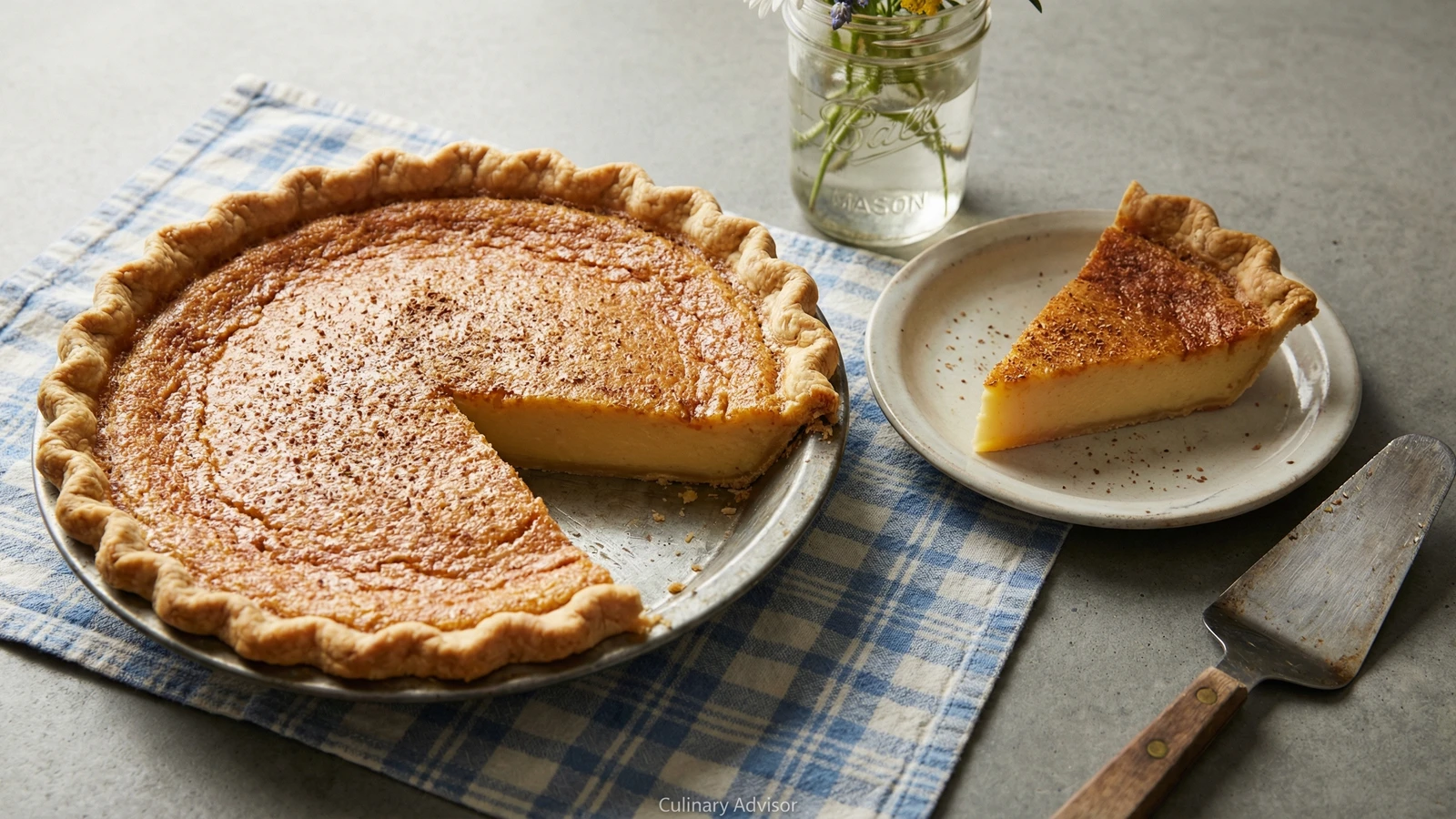
West Virginia Vinegar Pie
A custardy, golden-topped testament to Appalachian ingenuity, this tangy pie proves that hardship breeds creativity. Made from nothing more than eggs, sugar, butter, and vinegar, it delivers a lemon-like brightness that fooled plenty of mountain families who'd never tasted the real thing.
When the coal company store ran out of lemons, which was most of the time, Appalachian cooks reached for what they had. Vinegar. It sounds improbable, I know. But desperation has always been the mother of invention in American cookery, and this pie proves it.
The women who developed this recipe understood chemistry before anyone called it that. Apple cider vinegar, when balanced properly with eggs and sugar, produces a filling remarkably similar to lemon curd. Tangy. Custardy. Golden on top where the oven's heat kissed it. Their children grew up thinking this was what all pies tasted like, and many preferred it even after lemons became affordable.
This is not poverty food in the diminishing sense. This is food that transcends its origins. I've served vinegar pie to pastry chefs trained in Paris, and watched them ask for the recipe with genuine admiration. The technique is sound. The proportions are precise. What these mountain women created out of necessity stands alongside any French tart you'd care to name.
Bake this pie to understand something essential about American cooking: we have always made beauty from what others overlooked.
The technique, the tradition, and the story behind every dish.
Discover Culinary AdvisorIngredients
all-purpose flour (for crust)
Quantity
1 1/4 cups (155g)
fine sea salt (for crust)
Quantity
1/2 teaspoon
cold lard or vegetable shortening
Quantity
1/2 cup (95g)
ice water
Quantity
3-4 tablespoons
large eggs
Quantity
4
at room temperature
granulated sugar
Quantity
1 1/2 cups (300g)
all-purpose flour (for filling)
Quantity
3 tablespoons
fine sea salt (for filling)
Quantity
1/4 teaspoon
unsalted butter
Quantity
1/4 cup (60g)
melted and cooled slightly
apple cider vinegar
Quantity
1/4 cup
pure vanilla extract
Quantity
1 teaspoon
whole milk
Quantity
1 1/4 cups
freshly grated nutmeg
Quantity
1/4 teaspoon
| Ingredient | Quantity |
|---|---|
| all-purpose flour (for crust) | 1 1/4 cups (155g) |
| fine sea salt (for crust) | 1/2 teaspoon |
| cold lard or vegetable shortening | 1/2 cup (95g) |
| ice water | 3-4 tablespoons |
| large eggsat room temperature | 4 |
| granulated sugar | 1 1/2 cups (300g) |
| all-purpose flour (for filling) | 3 tablespoons |
| fine sea salt (for filling) | 1/4 teaspoon |
| unsalted buttermelted and cooled slightly | 1/4 cup (60g) |
| apple cider vinegar | 1/4 cup |
| pure vanilla extract | 1 teaspoon |
| whole milk | 1 1/4 cups |
| freshly grated nutmeg | 1/4 teaspoon |
Equipment Needed
- •9-inch pie plate (metal or glass)
- •Pastry blender or two forks
- •Rolling pin
- •Wire cooling rack
- •Microplane or nutmeg grater
Instructions
- 1
Make the lard crust
Whisk the flour and salt together in a large bowl. Add the cold lard in tablespoon-sized pieces. Using a pastry blender or your fingertips, work the fat into the flour until the mixture resembles coarse cornmeal with some pea-sized lumps remaining. Those lumps are your future flakiness. Sprinkle three tablespoons of ice water over the mixture and stir with a fork until the dough just begins to clump. Add another tablespoon of water only if needed. The dough should hold together when pressed but not feel sticky or wet.
Lard makes the most tender, flaky crust. Appalachian bakers knew this. If you cannot find good lard, use cold vegetable shortening or a mix of half shortening, half cold butter. - 2
Chill and roll the dough
Gather the dough into a flat disk, wrap tightly in plastic, and refrigerate for at least thirty minutes. Cold fat is the secret to flaky pastry. Roll the chilled dough on a lightly floured surface into a circle roughly twelve inches across and about one-eighth inch thick. Drape it over a nine-inch pie plate, pressing gently into the corners without stretching. Trim the edges to leave a one-inch overhang, then fold that overhang under itself and crimp decoratively. Refrigerate the shell while you prepare the filling.
- 3
Prepare your oven
Position a rack in the lower third of the oven and preheat to 350 degrees Fahrenheit. The lower position ensures the bottom crust cooks through before the filling overcooks. Place a rimmed baking sheet on the rack below to catch any drips.
- 4
Build the filling base
Crack the eggs into a large bowl and whisk until the yolks and whites are completely combined. In a separate bowl, whisk together the sugar, flour, and salt. This dry mixture prevents lumps when you add it to the wet ingredients. Add the sugar mixture to the eggs in three additions, whisking thoroughly after each. The mixture should become pale and slightly thickened.
- 5
Add the liquid ingredients
Pour in the melted butter and whisk until fully incorporated. Add the vinegar and vanilla, whisking steadily. The vinegar smell will be pronounced now. Do not worry. Finally, pour in the milk and whisk until the filling is smooth and uniform. The consistency should be thinner than you expect, almost like heavy cream. It will set in the oven.
Use real apple cider vinegar with the mother if you can find it. The complexity is noticeable. Plain white vinegar works but produces a sharper, less nuanced tartness. - 6
Fill and season the pie
Remove the pie shell from the refrigerator and place it on the baking sheet already in the oven, pulling the rack out partway. Pour the filling directly into the cold shell. This method prevents spillage. Grate fresh nutmeg evenly over the surface. The nutmeg is traditional and essential. It bridges the sweet and sour notes in a way ground spice cannot replicate.
- 7
Bake until set
Carefully slide the rack back and bake for forty-five to fifty minutes. The filling is done when the edges are puffed and set but the center still has a gentle wobble, like gelatin, when you nudge the pan. The top will develop patches of golden brown, particularly around the edges. A knife inserted two inches from the edge should come out clean. Do not overbake. The center will continue to set as it cools.
- 8
Cool completely
Transfer the pie to a wire rack and let it cool at room temperature for at least three hours before slicing. I know this tests your patience. The filling needs this time to set properly. If you slice too early, you'll have a soupy mess. After cooling, the texture should be silky and custardy, slicing cleanly with a slight jiggle. Refrigerate any leftovers, but serve slices at room temperature for the best flavor.
The pie tastes even better the next day. The tartness mellows and the custard firms to the perfect consistency.
Chef Tips
- •Seek out apple cider vinegar from a local orchard if your region produces apples. West Virginia vinegar pie would have been made with whatever vinegar the family produced or traded for. That terroir matters.
- •If the filling seems too tart after your first bite, you've done it right. The tartness fades as the pie rests and the sweetness comes forward. By day two, the balance is perfect.
- •Serve with unsweetened whipped cream. The richness tempers the tang without masking it. Sweetened cream fights the pie for attention.
- •This pie travels well and actually improves after a day in the refrigerator, making it ideal for church suppers, reunions, and potlucks. The traditions that birthed it were built around sharing.
- •For a more pronounced vinegar flavor closer to the original Depression-era versions, increase the vinegar to five tablespoons. Modern palates often prefer the slightly milder version given here.
Advance Preparation
- •The pie dough can be made up to three days ahead and refrigerated, or frozen for up to three months. Thaw overnight in the refrigerator before rolling.
- •The finished pie keeps refrigerated for up to five days. The texture and flavor actually improve after the first day.
- •Bring refrigerated slices to room temperature for thirty minutes before serving. Cold mutes the custard's delicate tang.
Frequently Asked Questions
Nutrition Information
1 serving (about 240g)
Where cooking meets culture.
Culinary mentorship, cultural storytelling, and the editorial depth that makes cooking meaningful.
Explore Culinary Advisor