Culinary Advisor
A cooking platform built around craft, culture, and the stories behind what we eat.
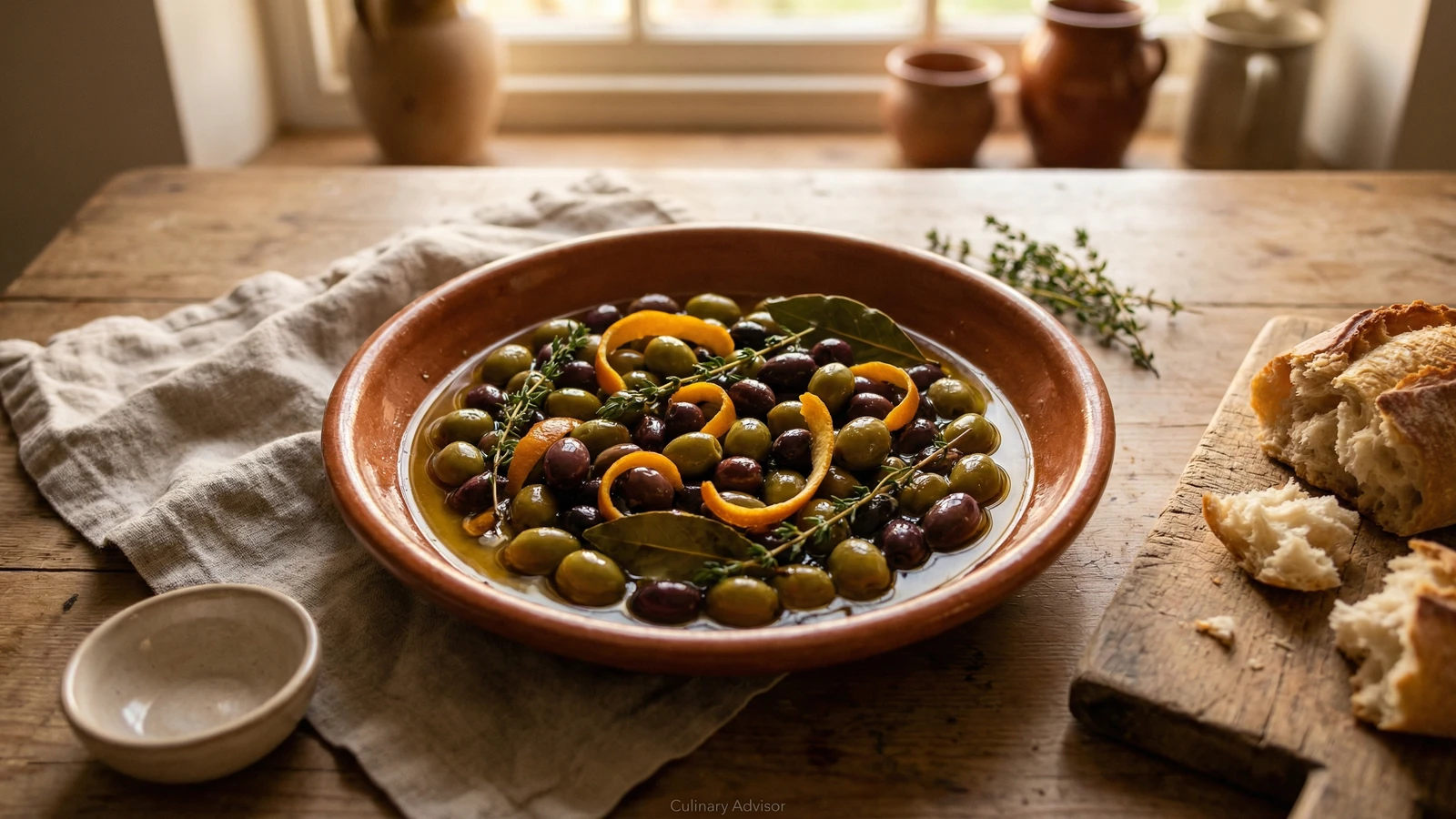
Warm Marinated Olives with Orange and Herbs
Created by Chef Ally
A bowl of good olives gently warmed in fruity olive oil with strips of orange peel, sprigs of thyme, and bay leaves, filling your kitchen with the scent of a Mediterranean afternoon.
Start with the olives. Not the canned ones that taste of tin and salt, but real olives from a market or a good grocer's olive bar. Kalamatas with their wine-dark flesh. Bright green Castelvetranos that pop between your teeth. Oil-cured Moroccan olives, wrinkled and intense. The variety matters less than the quality. Taste before you buy.
This is not a recipe so much as an act of warming. Good olives need almost nothing done to them. You are simply releasing their flavor and introducing them to a few companions: orange peel for brightness, thyme and bay for depth, garlic and fennel for warmth. The olive oil becomes the medium that carries everything together.
I learned to warm olives in the south of France, where they appear on every table before dinner. The bowl sits there while you pour wine and catch up with friends. You eat them slowly, one at a time, and you use good bread to soak up the fragrant oil at the bottom. Every meal is a meaningful choice. This one says: slow down, the evening is just beginning.
The technique, the tradition, and the story behind every dish.
Discover Culinary AdvisorIngredients
mixed olives with pits
Quantity
2 cups (about 12 ounces)
extra-virgin olive oil
Quantity
1/2 cup
orange peel
Quantity
3 strips (about 3 inches each)
fresh thyme
Quantity
4 sprigs
bay leaves
Quantity
2
preferably fresh
garlic cloves
Quantity
3
lightly crushed
red pepper flakes
Quantity
1/4 teaspoon
fennel seeds
Quantity
1/2 teaspoon
| Ingredient | Quantity |
|---|---|
| mixed olives with pits | 2 cups (about 12 ounces) |
| extra-virgin olive oil | 1/2 cup |
| orange peel | 3 strips (about 3 inches each) |
| fresh thyme | 4 sprigs |
| bay leavespreferably fresh | 2 |
| garlic cloveslightly crushed | 3 |
| red pepper flakes | 1/4 teaspoon |
| fennel seeds | 1/2 teaspoon |
Equipment Needed
- •Small saucepan or 8-inch skillet
- •Vegetable peeler
- •Shallow serving bowl
Instructions
- 1
Select your olives
Start with olives that have character. You want a mix: some briny Kalamatas, some meaty Castelvetranos, perhaps a few wrinkled oil-cured beauties. Buy them from the olive bar, not the can. Taste one before you commit. If the olive is dull or mushy, nothing you do here will save it.
Olives with pits hold their texture better when warmed. The pit protects the flesh from becoming soft. - 2
Prepare the aromatics
Use a vegetable peeler to strip three wide ribbons of orange peel, avoiding the bitter white pith beneath. The oils live in that bright outer layer. Crush the garlic cloves with the flat of your knife, just enough to crack them open and release their fragrance. Leave them whole.
- 3
Warm the oil gently
Pour the olive oil into a small saucepan or skillet over low heat. Add the orange peel, thyme sprigs, bay leaves, crushed garlic, red pepper flakes, and fennel seeds. Let everything warm together for two to three minutes until you smell the perfume rising. The oil should be warm to the touch, not hot. You are coaxing flavor, not frying.
Good olive oil has a low smoke point. If it starts to shimmer or smoke, pull it from the heat immediately. You have gone too far. - 4
Add olives and infuse
Add the olives to the warm oil, stirring gently to coat. Keep the heat low and let them warm through for ten to twelve minutes, stirring occasionally. The olives will plump slightly and absorb the flavors of the herbs and citrus. The kitchen will fill with the scent of the Mediterranean.
- 5
Rest and serve
Remove from heat and let the olives rest in the oil for at least five minutes. They are best served warm, not hot. Transfer to a shallow bowl with all the aromatics visible. Provide a small dish for pits and good bread for soaking up the fragrant oil.
These olives improve as they sit. Make them in the morning and rewarm gently before guests arrive.
Chef Tips
- •Buy olives from a source that moves inventory. Olives sitting in brine for months lose their aliveness. Ask when they were packed, and look for firmness and sheen.
- •The best olive oil you can afford goes here. You will taste it directly, unmasked by cooking. This is where quality shows.
- •Winter citrus is ideal for this preparation. Navel oranges and blood oranges are at their peak from December through March. The peel is thick, oily, and deeply fragrant.
- •Serve these with a crisp white wine or a light red. They want something that will not overpower their subtlety.
Advance Preparation
- •Olives can be warmed up to four hours ahead and left at room temperature in their oil. Rewarm gently before serving.
- •Stored in their oil in a sealed container, these keep refrigerated for up to two weeks. Bring to room temperature or warm gently before serving.
Frequently Asked Questions
Nutrition Information
1 serving (about 75g)
Where cooking meets culture.
Culinary mentorship, cultural storytelling, and the editorial depth that makes cooking meaningful.
Explore Culinary Advisor