Culinary Advisor
A cooking platform built around craft, culture, and the stories behind what we eat.
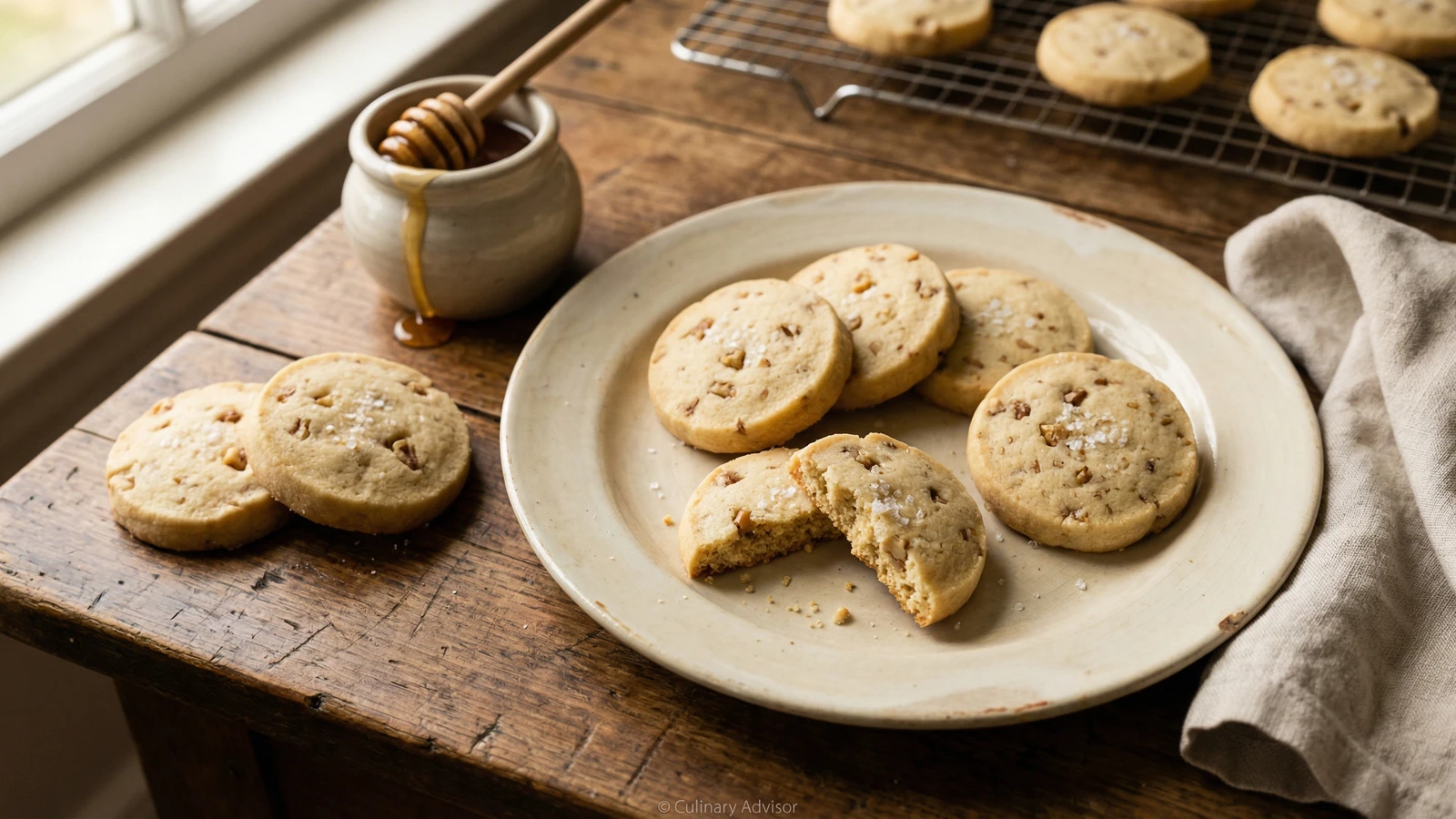
Walnut Shortbread with Local Honey
Created by Chef Ally
Buttery shortbread studded with toasted California walnuts and sweetened with wildflower honey from a beekeeper you might know, the kind of cookie that disappears from the tin before you can hide it.
Start with the butter. Good butter, from cows that grazed on real pasture. This is shortbread, and butter is nearly half of what you are eating. If the butter is not worth spreading on bread by itself, it is not worth baking into cookies.
The walnuts should smell like walnuts. California grows most of the country's crop, and fresh ones have an almost sweet, faintly tannic fragrance. Stale walnuts taste like cardboard and disappointment. Toast them until they perfume your kitchen, then let them cool before folding them into the dough.
Local honey is not a romantic notion. It is a practical one. Honey from a beekeeper at your farmers market tastes like the flowers those bees visited. Wildflower, orange blossom, sage, each carries the terroir of where it was made. Industrial honey tastes like sugar water because that is essentially what it is.
Shortbread asks almost nothing of you except restraint. Do not overmix. Do not overbake. Let the butter and honey and walnuts taste of what they are.
The technique, the tradition, and the story behind every dish.
Discover Culinary AdvisorIngredients
unsalted butter
Quantity
1 cup (2 sticks/226g)
at cool room temperature
powdered sugar
Quantity
1/3 cup (40g)
local wildflower honey
Quantity
3 tablespoons
pure vanilla extract
Quantity
1 teaspoon
all-purpose flour
Quantity
2 cups (250g)
fine sea salt
Quantity
1/2 teaspoon
walnut halves
Quantity
1 cup (120g)
toasted and roughly chopped
flaky sea salt (optional)
Quantity
for finishing
| Ingredient | Quantity |
|---|---|
| unsalted butterat cool room temperature | 1 cup (2 sticks/226g) |
| powdered sugar | 1/3 cup (40g) |
| local wildflower honey | 3 tablespoons |
| pure vanilla extract | 1 teaspoon |
| all-purpose flour | 2 cups (250g) |
| fine sea salt | 1/2 teaspoon |
| walnut halvestoasted and roughly chopped | 1 cup (120g) |
| flaky sea salt (optional) | for finishing |
Equipment Needed
- •Stand mixer or wooden spoon
- •Rimmed baking sheet
- •Parchment paper
- •Wire cooling rack
- •Sharp knife for slicing
Instructions
- 1
Toast the walnuts
Spread walnut halves on a rimmed baking sheet and toast in a 325°F oven for eight to ten minutes, stirring once halfway through. They are ready when they smell rich and nutty and have darkened slightly. Let them cool completely before chopping. Warm nuts will melt the butter in your dough.
Taste a walnut before you begin. If it tastes bitter or stale, find better walnuts. The cookie cannot be better than its ingredients. - 2
Cream butter with sugar and honey
Beat the butter with a wooden spoon or stand mixer until it is smooth and pliable, about one minute. Add the powdered sugar and honey and beat until just combined and creamy. The mixture should look uniform but not fluffy. Shortbread is not a creamed cookie. Mix in the vanilla.
Cool room temperature means the butter yields to pressure but holds its shape. If your kitchen is warm, the butter should still feel slightly cool to the touch. - 3
Add flour and salt
Whisk the flour and fine sea salt together in a separate bowl. Add to the butter mixture in two additions, stirring with a wooden spoon or mixing on low speed just until the flour disappears. The dough will look shaggy and slightly crumbly. This is correct. Overworking develops gluten and toughens the cookies.
- 4
Fold in walnuts
Scatter the cooled, chopped walnuts over the dough and fold them in with your hands or a spatula, pressing gently until they are evenly distributed. The dough should hold together when you squeeze a handful.
- 5
Shape the dough
Turn the dough onto a lightly floured surface and gather it into a cohesive mass. Divide in half and shape each portion into a log about two inches in diameter. Roll each log in parchment paper, twisting the ends like a candy wrapper. Refrigerate until firm, at least one hour or overnight.
For square cookies, press the dough into a parchment-lined 8-inch square pan instead. Chill until firm, then slice into rectangles before baking. - 6
Slice and arrange
Preheat your oven to 325°F. Unwrap the chilled logs and slice into rounds about half an inch thick. Arrange on parchment-lined baking sheets with an inch between cookies. They spread very little. Sprinkle each round with a few flakes of sea salt.
- 7
Bake until pale gold
Bake for twenty to twenty-five minutes, rotating the pan halfway through. The cookies are done when the edges turn the faintest gold and the tops look dry and set. They will still feel soft. Do not wait for deep browning. Shortbread continues to firm as it cools.
Overbaked shortbread loses its tender, sandy texture. When in doubt, pull them a minute early. - 8
Cool completely
Let the cookies rest on the baking sheet for ten minutes. They are fragile when warm. Transfer to a wire rack and cool completely before storing. The flavor improves the next day as the honey and butter meld. If you can wait.
Chef Tips
- •Ask at your farmers market for local honey. The beekeeper can tell you which flowers the bees visited. That conversation alone is worth the trip.
- •California walnuts are harvested in fall. Buy them from a source with good turnover and store extras in the freezer to preserve their freshness.
- •These cookies are meant to be pale. Golden shortbread has lost its delicate crumb. Trust the timing and your nose more than your eyes.
- •A drizzle of the same honey over the finished cookies, just before serving, connects the flavor through. Do this only if the honey is truly special.
Advance Preparation
- •Dough logs can be refrigerated for up to five days or frozen for three months. Slice and bake directly from frozen, adding three to four minutes to baking time.
- •Baked cookies keep in an airtight tin at room temperature for up to two weeks. They actually improve after a day or two as the flavors settle.
- •These ship well. Wrap stacks in parchment and nestle into tins for holiday gifts.
Frequently Asked Questions
Nutrition Information
1 serving (about 27g)
Where cooking meets culture.
Culinary mentorship, cultural storytelling, and the editorial depth that makes cooking meaningful.
Explore Culinary Advisor