Culinary Advisor
A cooking platform built around craft, culture, and the stories behind what we eat.
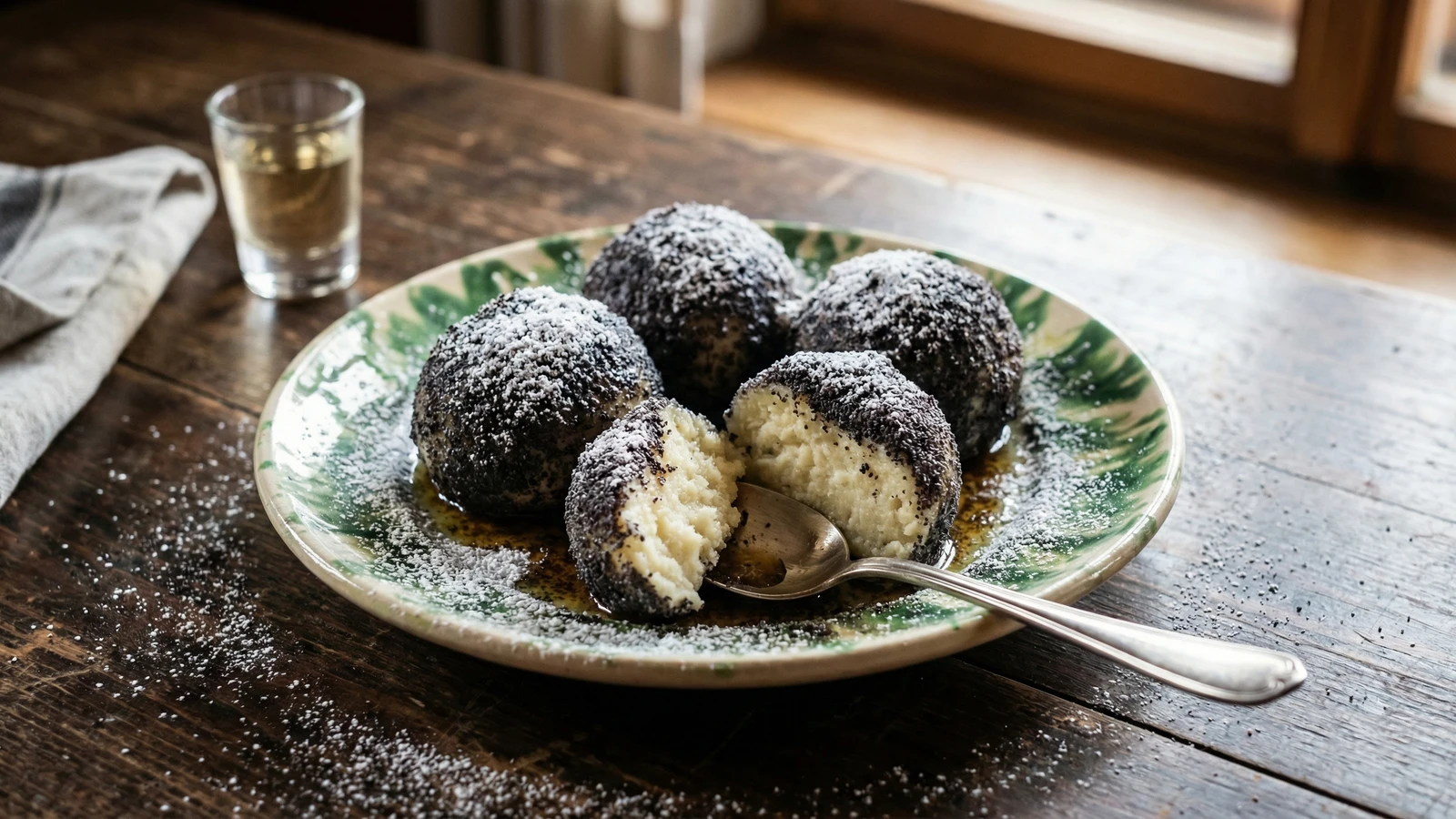
Waldviertler Mohnknödel
Created by Chef Elsa
Soft potato dumplings rolled in freshly ground Waldviertel grey poppy seeds, melted butter, and sugar, the kind of Mehlspeise that makes you understand why Lower Austria guards its poppy fields so fiercely.
The first time I tasted Mohnknödel properly was not in a restaurant. It was in a farmhouse kitchen in the Waldviertel, on one of those childhood trips with Gretel and my grandmother Eva. We had driven up from Vienna through rolling granite hills and fields that in summer turn violet-blue with poppy flowers. The woman who cooked for us ground the seeds fresh at the table using a hand mill that looked older than the house. The smell hit me before the taste did: warm, nutty, almost floral, nothing like the stale poppy seeds sitting in jars at the supermarket. Gretel nodded at me across the table as if to say, now you understand.
Mohnknödel are potato dumplings, soft and tender, boiled until they float, then rolled in a generous coating of freshly ground poppy seeds mixed with melted butter and sugar. The dough is simple. Floury potatoes, a little flour, an egg, a pinch of salt. You work it gently because overhandling makes the Knödel tough and gummy instead of pillowy. The poppy seed coating does all the heavy lifting: rich, aromatic, slightly bitter from the seeds, sweet from the sugar, glossy from the butter. Every bite should give you all three at once.
This is Waldviertel food, and it matters that you know that. The grey poppy seeds from this region, Waldviertler Graumohn, have a depth of flavor that ordinary blue poppy seeds simply cannot match. If you can get them, get them. If you can't, use the freshest poppy seeds you can find and grind them yourself just before cooking. The difference between freshly ground and pre-ground poppy seeds is the difference between coffee beans and instant coffee. Gretel always said Austrian cooking is simple food done well, and Mohnknödel prove her right. Three or four good ingredients, proper technique, and the patience to do it the way the Waldviertel has been doing it for centuries.
The Waldviertel, the 'forest quarter' of Lower Austria along the Czech border, has cultivated grey poppy (Graumohn) since at least the 15th century. Waldviertler Graumohn received EU protected geographical indication status, recognizing the region's unique growing conditions: granite soils, cool nights, and a short growing season that concentrates flavor in the seeds. Poppy seed dishes like Mohnknödel, Mohnnudeln, and Mohnzelten reflect the strong Bohemian influence on Lower Austrian cuisine, a legacy of centuries when the Habsburg lands straddled both cultures.
The technique, the tradition, and the story behind every dish.
Discover Culinary AdvisorIngredients
floury potatoes (Mehlige Kartoffeln)
Quantity
700g
unpeeled
griffiges Mehl (coarse flour)
Quantity
150g
plus extra for dusting
egg
Quantity
1 large
unsalted butter (for dough)
Quantity
30g
melted and cooled slightly
salt
Quantity
1/2 teaspoon
grey poppy seeds (Waldviertler Graumohn)
Quantity
200g
unsalted butter (for coating)
Quantity
80g
granulated sugar
Quantity
60g
Vanillezucker (vanilla sugar)
Quantity
1 packet (8g)
ground cinnamon (optional)
Quantity
pinch
powdered sugar
Quantity
for dusting
| Ingredient | Quantity |
|---|---|
| floury potatoes (Mehlige Kartoffeln)unpeeled | 700g |
| griffiges Mehl (coarse flour)plus extra for dusting | 150g |
| egg | 1 large |
| unsalted butter (for dough)melted and cooled slightly | 30g |
| salt | 1/2 teaspoon |
| grey poppy seeds (Waldviertler Graumohn) | 200g |
| unsalted butter (for coating) | 80g |
| granulated sugar | 60g |
| Vanillezucker (vanilla sugar) | 1 packet (8g) |
| ground cinnamon (optional) | pinch |
| powdered sugar | for dusting |
Equipment Needed
- •Potato ricer (essential, not optional)
- •Poppy seed mill or spice grinder
- •Large wide pot for boiling
- •Slotted spoon
- •Wide shallow bowl for the poppy coating
Instructions
- 1
Boil the potatoes
Put the potatoes in a large pot, cover with cold water, and bring to a boil. Cook them in their skins until a knife slides through without resistance, about 25 to 30 minutes depending on size. Cooking them unpeeled keeps the moisture out. Waterlogged potatoes make gluey dough, and gluey dough makes heavy Knödel. Nobody wants that.
Choose the floury, starchy varieties. In Austria we use Mehlige Kartoffeln. Russets or King Edwards work well outside Austria. Waxy potatoes won't give you the right texture, they hold too much moisture and makethe dough sticky. - 2
Rice the potatoes
Peel the potatoes while they're still hot. Hold them in a kitchen towel if you need to, but work quickly. Press them through a potato ricer onto a clean work surface and spread them out. Let them cool until you can comfortably handle them but they're still warm. You want to work the dough while the potatoes retain some heat because warm potato absorbs flour more evenly. Cold potato resists and you end up adding too much flour to compensate, which makes everything tough.
- 3
Make the dough
Gather the riced potato into a mound. Scatter the flour over the top, make a small well, and add the egg, melted butter, and salt. Work everything together with your hands, folding and pressing, until you have a smooth, soft dough. This should take two or three minutes at most. The dough should feel slightly tacky but not sticky. If it clings to your hands, dust them with a little more flour. Do not knead it the way you'd knead bread. Overworking develops gluten from the flour and activates the starch in the potato, and both of those things turn your light, pillowy Knödel into rubber balls.
Griffiges Mehl, Austrian coarse flour, absorbs liquid more slowly and gives the dough a better structure than fine flour. If you can't find it, use a mix of half plain flour and half semolina as a reasonable substitute. - 4
Shape the Knödel
Dust your work surface lightly with flour. Roll the dough into a log about five centimeters thick. Cut it into roughly equal pieces, about 16 pieces from this amount. Roll each piece gently between your palms into a smooth ball. Don't press hard. You're coaxing, not forcing. If the surface cracks, your dough is too dry, so wet your hands slightly. If it sticks, dust your palms. Line the finished Knödel on a floured tray without touching each other.
- 5
Grind the poppy seeds
Grind the poppy seeds in a poppy seed mill, spice grinder, or powerful blender in short pulses. You want them broken open and fragrant but not turned into paste. The texture should be coarse and slightly gritty, not powdery. If your grinder runs hot, do it in two batches to prevent the oils from turning the seeds into a clump. The moment you grind them, the kitchen will fill with that warm, nutty, almost floral scent. That scent is the whole point of this dish.
In the Waldviertel, every kitchen has a Mohnmühle, a hand-cranked poppy seed mill. If you make Mohnknödel more than once, it's worth buying one. A coffee grinder set coarse works, but pulse it. Continuous grinding turns the seeds oily and bitter. - 6
Prepare the poppy coating
Melt the 80g of butter in a small saucepan over low heat. In a wide, shallow bowl, mix the ground poppy seeds with the granulated sugar, Vanillezucker, and cinnamon if using. Pour the melted butter over the poppy seed mixture and stir until everything is evenly coated and glistening. The butter binds the sugar to the seeds and carries the flavor. Set this bowl aside. It should be warm when the Knödel go in.
- 7
Boil the Knödel
Bring a large, wide pot of salted water to a gentle boil, then reduce the heat until the surface barely trembles. Slide the Knödel in carefully, working in batches if needed so they aren't crowded. They'll sink to the bottom. Don't touch them. After a few minutes they'll float to the surface on their own. Once they float, let them cook for another three to four minutes. The gentle simmer matters. A rolling boil will batter them apart. When they're done, they'll look slightly swollen and feel soft but hold together when you lift them out with a slotted spoon.
Test one Knödel first before you commit the whole batch. Cut it open after cooking. The center should be soft and uniform with no raw, dense core. If it's still heavy in the middle, give the rest another minute. - 8
Coat and serve
Lift the Knödel out of the water with a slotted spoon, let them drain for a moment, then drop them while still hot into the bowl of poppy seed mixture. Roll them gently until they're covered on all sides. The warmth of the dumplings melts the butter and sugar into the coating, creating a fragrant, clinging crust of poppy and sweetness. Pile them onto a warm plate. Dust with powdered sugar at the table. Serve immediately. Mahlzeit!
Chef Tips
- •Buy whole poppy seeds and grind them the day you cook. Pre-ground poppy seeds lose their volatile oils within days and taste like cardboard compared to freshly ground. If you open the bag and the seeds smell like nothing, they're too old for this dish.
- •The potato dough waits for nobody. Once it's made, shape and cook the Knödel within thirty minutes. Potato dough stiffens and becomes harder to work as it cools, and reheating or reworking it only makes the texture worse.
- •Gretel always said the Knödel should be large enough to be generous and small enough to eat three. About the size of a small apricot, or roughly 40 grams each. Too large and the centers stay dense.
- •If you can source Waldviertler Graumohn, the grey poppy seeds from Lower Austria, the flavor difference is remarkable. They're nuttier, more aromatic, and less bitter than ordinary blue poppy seeds. Austrian specialty shops online are your best bet outside of Austria.
Advance Preparation
- •The poppy seed coating can be mixed (without the melted butter) up to a week ahead and stored in an airtight jar. Melt the butter and combine just before serving.
- •The potato dough cannot be made ahead. It must be shaped and cooked while still warm. Plan your time so the poppy coating is ready before the Knödel come out of the water.
- •Leftover cooked Mohnknödel can be reheated gently in a pan with a little butter the next day. They won't be quite as light, but they'll still be good.
Frequently Asked Questions
Nutrition Information
1 serving (about 310g)
Where cooking meets culture.
Culinary mentorship, cultural storytelling, and the editorial depth that makes cooking meaningful.
Explore Culinary Advisor