Culinary Advisor
A cooking platform built around craft, culture, and the stories behind what we eat.
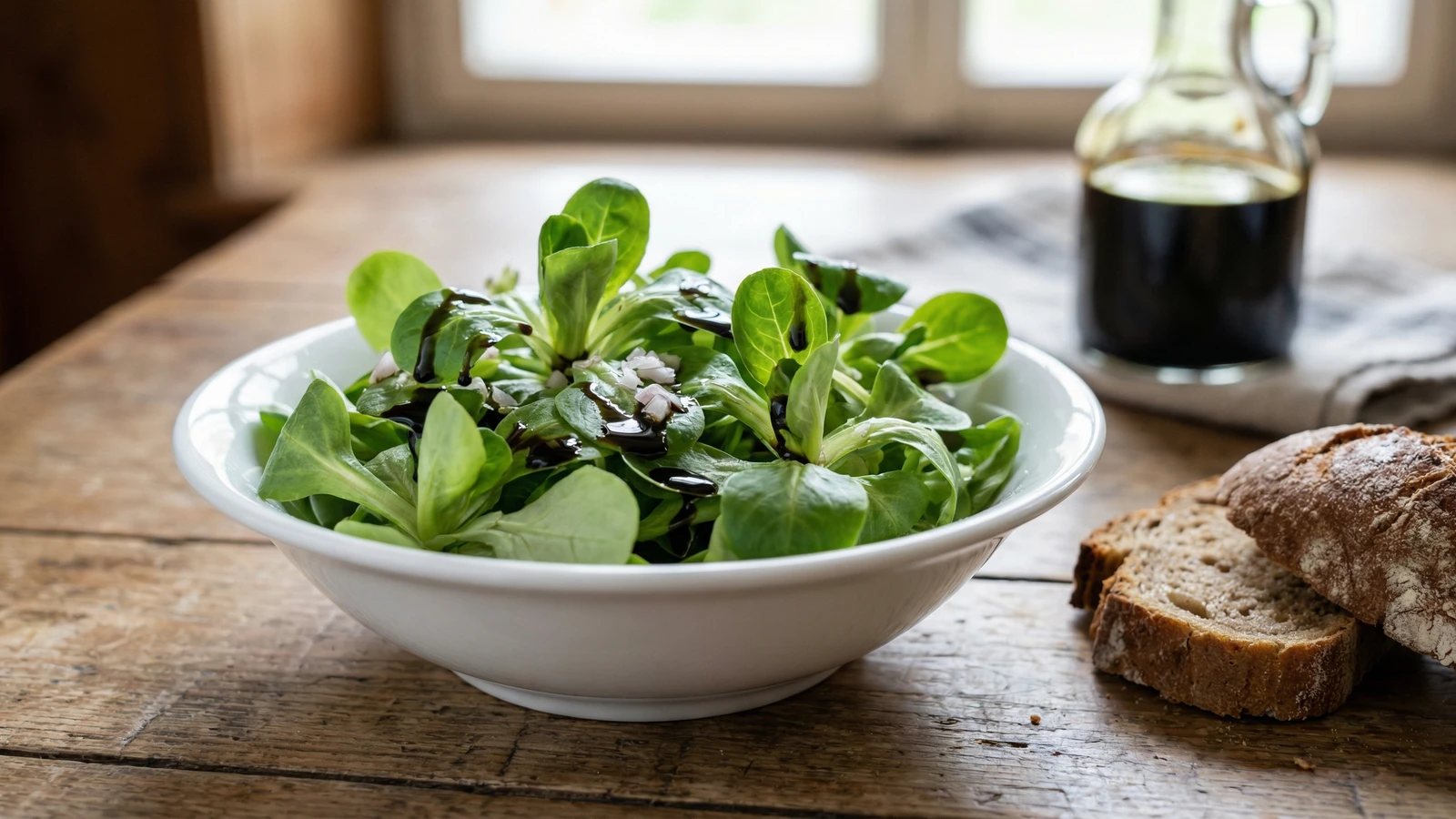
Vogerlsalat mit Kernöl
Created by Chef Elsa
Styria's dark, nutty pumpkin seed oil drizzled over tender rosettes of lamb's lettuce, dressed with sharp cider vinegar and nothing else that doesn't belong.
The first time I really understood Kernöl, I was ten years old, sitting at a Buschenschank in southern Styria with Gretel and my grandmother Eva. A woman brought out a small white bowl of Vogerlsalat, and the oil on top was so dark it looked almost black. I thought something was wrong with it. Gretel dipped a piece of bread into the dressing and handed it to me. That taste, roasted and nutty and unlike anything I'd had before, is the reason I fell in love with Styrian cooking before I even knew what Styria was.
Vogerlsalat is what the Austrians call lamb's lettuce, those small, spoon-shaped rosettes that grow in cool weather and taste like mild hazelnuts crossed with fresh grass. The Viennese name comes from Vogerl, little bird, because the leaves look like tiny green wings. You can find it at every Gasthaus and Heuriger in Austria from October through March, always dressed with Steirisches Kürbiskernöl, the dark pumpkin seed oil that is to Styria what olive oil is to Tuscany.
This salad has three ingredients that matter: the greens, the oil, and the vinegar. That's it. There is no technique to hide behind. If your oil is good and your vinegar is sharp and your lettuce is fresh, you'll have something beautiful. If any one of those three things is wrong, there's nowhere to hide. Gretel always said that the simplest dishes are the hardest to cheat, and she was right.
Steirisches Kürbiskernöl g.g.A. has held Protected Geographical Indication status from the European Union since 1996, meaning only oil pressed from hulless Styrian pumpkin seeds (Cucurbita pepo var. styriaca) grown and processed in designated regions of Styria, southern Burgenland, and parts of Lower Austria can carry the name. The hulless seed mutation was first documented in Styria in the 19th century, and the oil-pressing tradition goes back further. Vogerlsalat dressed with Kernöl became the signature salad of Styrian Buschenschanken (wine tavern farms) and spread to Gasthäuser across Austria, where it appears year-round on menus but is at its honest best during the cool months when the lettuce is in season.
The technique, the tradition, and the story behind every dish.
Discover Culinary AdvisorIngredients
Vogerlsalat (lamb's lettuce)
Quantity
150g
roots trimmed
Steirisches Kürbiskernöl g.g.A. (Styrian pumpkin seed oil)
Quantity
2 tablespoons
Apfelessig (apple cider vinegar)
Quantity
1 tablespoon
shallot
Quantity
1 small
finely diced
Dijon mustard
Quantity
1/2 teaspoon
sugar
Quantity
pinch
flaky sea salt
Quantity
to taste
black pepper
Quantity
to taste
freshly ground
| Ingredient | Quantity |
|---|---|
| Vogerlsalat (lamb's lettuce)roots trimmed | 150g |
| Steirisches Kürbiskernöl g.g.A. (Styrian pumpkin seed oil) | 2 tablespoons |
| Apfelessig (apple cider vinegar) | 1 tablespoon |
| shallotfinely diced | 1 small |
| Dijon mustard | 1/2 teaspoon |
| sugar | pinch |
| flaky sea salt | to taste |
| black pepperfreshly ground | to taste |
Equipment Needed
- •Large bowl for washing
- •Salad spinner
- •Small whisk or fork
Instructions
- 1
Wash the Vogerlsalat
Fill a large bowl with cold water. Submerge the lamb's lettuce and swish it gently with your hands. Vogerlsalat grows close to the ground and holds fine grit between its rosettes, so you need to be thorough without being rough. Lift the greens out, don't pour them through a colander, because the sand sinks to the bottom and you want to leave it there. Repeat with fresh water until no grit settles at the bottom. Two or three washes is normal.
Lift, don't pour. If you dump the lettuce into a colander, you pour the grit right back over the leaves. Lift them out gently with your hands and let the dirty water drain away. - 2
Dry the leaves
Spin the lettuce dry in a salad spinner, working in small batches so the leaves aren't crushed. Vogerlsalat is delicate. If you don't have a spinner, spread the rosettes on a clean kitchen towel and pat them dry very gently. This step matters more than you think. Water on the leaves dilutes the dressing and makes the oil slide off instead of clinging to each little rosette.
- 3
Make the Marinade
In a small bowl, whisk together the cider vinegar, mustard, diced shallot, sugar, salt, and a few grinds of black pepper. Let it sit for two or three minutes. The sugar and salt need to dissolve in the vinegar, and the shallot needs that brief soak to lose its raw bite. Do not add the Kernöl to this bowl. The oil goes on at the very end, at the table, drizzled directly over the dressed greens. Kernöl is never whisked into a vinaigrette. It's never heated, never emulsified, never treated like a neutral cooking oil. It goes on cold and undisturbed so you taste it in its full, roasted intensity.
Austrian Marinade is always vinegar-forward. If you're used to the French three-to-one oil-to-vinegar ratio, reset your expectations. Here the vinegar leads. The oil finishes. - 4
Dress and serve
Place the dry Vogerlsalat in a serving bowl. Spoon the vinegar marinade over the leaves and toss gently with your hands or two spoons, coating every rosette. Now drizzle the Kernöl over the top in a slow, deliberate stream. The oil should pool in dark green rivulets across the pale leaves. Don't toss again. The oil sits on top where you can see it and taste it with every bite. Serve immediately at cool room temperature. This salad does not wait.
Chef Tips
- •Buy real Steirisches Kürbiskernöl g.g.A. Look for the green-and-white Styrian flag on the label and the g.g.A. designation. The genuine oil is dark greenish-black in the bottle but turns deep emerald and ruby-red when you hold it up to light. Cheap imitations taste flat and oily where the real thing is intensely nutty and almost sweet. This is the one ingredient you cannot substitute.
- •Vogerlsalat is a cool-weather green. It's at its best from late autumn through early spring. If you can only find it in summer, it may be hothouse-grown and lack the nutty sweetness of field-grown rosettes. In that case, wait. Make a Gurkensalat instead and come back to this when the weather turns.
- •If you can't find Vogerlsalat, young spinach leaves or a mix of baby arugula and butterhead lettuce will carry the Kernöl well enough. It won't be the same dish, but it will still be good, and the oil will still be the star.
- •Keep your Kernöl in the fridge once opened. It's a fragile oil, high in polyunsaturated fats, and it turns rancid faster than you'd expect if left at room temperature. Cold storage keeps it tasting the way it should for weeks.
Advance Preparation
- •The Vogerlsalat can be washed and dried up to a day ahead. Store it loosely wrapped in a damp kitchen towel inside a container in the fridge.
- •The vinegar marinade can be mixed an hour ahead and left at room temperature. The shallot softens further and the flavor deepens.
- •Do not add the Kernöl until the moment you serve. It belongs on the salad at the table, not sitting in a bowl in the kitchen.
Frequently Asked Questions
Nutrition Information
1 serving (about 115g)
Where cooking meets culture.
Culinary mentorship, cultural storytelling, and the editorial depth that makes cooking meaningful.
Explore Culinary Advisor