Culinary Advisor
A cooking platform built around craft, culture, and the stories behind what we eat.
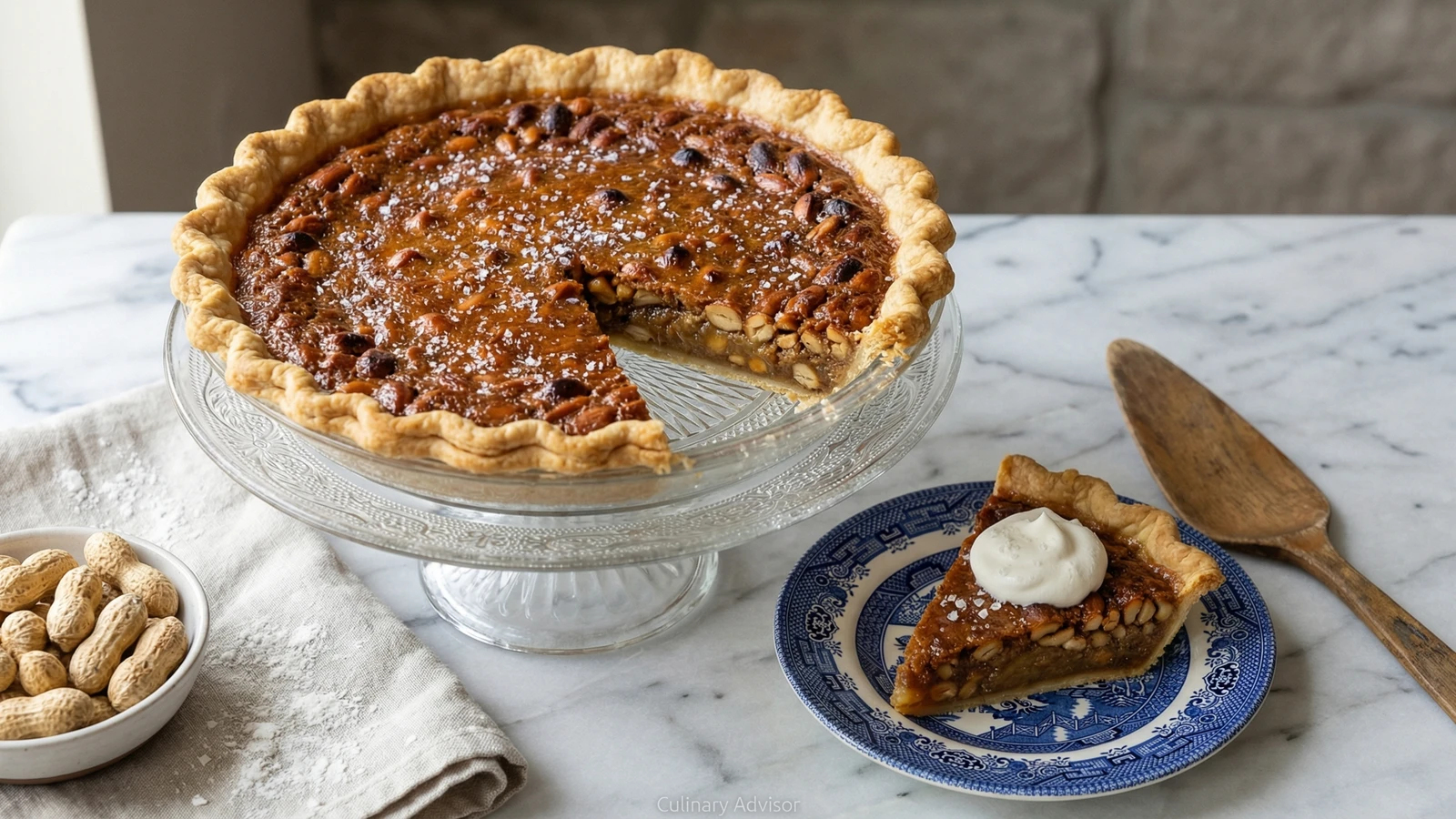
Virginia Peanut Pie
A celebration of Virginia's finest peanuts suspended in amber custard spiked with bourbon, baked in an honest butter crust until the top crackles and the filling sets to silky perfection. The pecan pie's overlooked cousin finally gets its due.
Virginia has grown peanuts since Thomas Jefferson cultivated them at Monticello, yet somehow the peanut pie never achieved the fame of its pecan cousin. This is a culinary injustice I've spent decades trying to correct. The Virginia peanut is larger, crunchier, and more distinctively flavored than varieties grown elsewhere. It deserves a pie that shows it off.
The filling follows the same principle as pecan pie: eggs, sugar, and butter create a custard that sets around the nuts as it bakes. But where pecan pie can veer toward cloying, the earthier flavor of peanuts provides balance. A splash of bourbon cuts the sweetness further and adds complexity that nods to Virginia's distilling traditions.
I first encountered this pie at a roadside stand outside Suffolk, Virginia, in the heart of peanut country. The woman who sold it to me had learned the recipe from her grandmother, who learned it from hers. She told me the secret was using raw Virginia peanuts and letting the oven's heat roast them right in the filling. The technique produces nuts with a texture no store-bought roasted peanut can match: slightly softer, deeply caramelized, married to the custard in a way that makes each bite cohesive rather than a collection of separate elements.
This is honest American baking. No tricks, no shortcuts, just good ingredients treated with respect. The kind of pie that wins blue ribbons at county fairs and ends arguments about which nut makes the best pie.
The technique, the tradition, and the story behind every dish.
Discover Culinary AdvisorIngredients
all-purpose flour
Quantity
1 1/4 cups (155g)
fine sea salt (for crust)
Quantity
1/2 teaspoon
granulated sugar
Quantity
1/2 teaspoon
cold unsalted butter (for crust)
Quantity
8 tablespoons (1 stick/113g)
cut into 1/2-inch cubes
ice water
Quantity
3-4 tablespoons
large eggs
Quantity
3
at room temperature
light brown sugar
Quantity
1 cup (200g)
packed
light corn syrup
Quantity
3/4 cup
unsalted butter (for filling)
Quantity
4 tablespoons (1/2 stick/57g)
melted and cooled slightly
bourbon
Quantity
2 tablespoons
pure vanilla extract
Quantity
1 teaspoon
fine sea salt (for filling)
Quantity
1/4 teaspoon
raw Virginia peanuts
Quantity
1 1/2 cups (200g)
| Ingredient | Quantity |
|---|---|
| all-purpose flour | 1 1/4 cups (155g) |
| fine sea salt (for crust) | 1/2 teaspoon |
| granulated sugar | 1/2 teaspoon |
| cold unsalted butter (for crust)cut into 1/2-inch cubes | 8 tablespoons (1 stick/113g) |
| ice water | 3-4 tablespoons |
| large eggsat room temperature | 3 |
| light brown sugarpacked | 1 cup (200g) |
| light corn syrup | 3/4 cup |
| unsalted butter (for filling)melted and cooled slightly | 4 tablespoons (1/2 stick/57g) |
| bourbon | 2 tablespoons |
| pure vanilla extract | 1 teaspoon |
| fine sea salt (for filling) | 1/4 teaspoon |
| raw Virginia peanuts | 1 1/2 cups (200g) |
Equipment Needed
- •9-inch pie plate (glass or ceramic for even browning)
- •Rolling pin
- •Pastry blender or two forks
- •Rimmed baking sheet
- •Wire cooling rack
Instructions
- 1
Make the pie dough
Combine flour, salt, and sugar in a large bowl. Add the cold butter cubes and work them into the flour using a pastry blender or your fingertips, pressing and smearing until the mixture resembles coarse meal with some pea-sized butter pieces remaining. These larger pieces will create flakiness. Drizzle three tablespoons of ice water over the mixture and stir with a fork until the dough just begins to clump together. Add the remaining tablespoon only if needed. Squeeze a handful: it should hold together without crumbling or feeling sticky.
Cold butter is essential. If your kitchen runs warm, freeze the cubes for ten minutes before starting. - 2
Shape and chill the dough
Turn the shaggy dough onto a lightly floured surface and gather it into a ball. Flatten into a disk about one inch thick, wrap tightly in plastic, and refrigerate for at least one hour or overnight. The rest allows gluten to relax and butter to firm up, both crucial for a tender, flaky crust.
- 3
Roll and fit the crust
On a floured surface, roll the chilled dough into a twelve-inch circle, rotating and flipping occasionally to prevent sticking. Transfer to a nine-inch pie plate by rolling the dough loosely around your rolling pin, then unrolling it over the plate. Ease the dough into the corners without stretching. Trim the edges to leave a one-inch overhang, then fold the excess under itself and crimp decoratively. Refrigerate the lined pie plate for thirty minutes while you prepare the filling.
Stretched dough shrinks during baking. Let the dough fall gently into the plate rather than pulling it. - 4
Preheat and prepare peanuts
Position a rack in the lower third of your oven and preheat to 350°F. Spread the raw Virginia peanuts on a baking sheet and inspect them, removing any shriveled or discolored nuts. Set the peanuts aside. Using raw peanuts rather than roasted allows them to toast in the filling, absorbing flavor from the custard as it bakes.
- 5
Mix the filling
In a large bowl, whisk the eggs until the yolks and whites are fully combined. Add the brown sugar and whisk vigorously until smooth, about one minute. The mixture will be thick and grainy. Pour in the corn syrup, melted butter, bourbon, vanilla, and salt. Whisk until the filling is glossy and uniform. It should flow easily from the whisk in a steady ribbon.
- 6
Assemble the pie
Scatter the raw peanuts evenly across the bottom of the chilled pie crust. Pour the filling slowly over the peanuts, allowing it to seep around and beneath them. The peanuts will float to the surface and distribute themselves. Give the pie plate a gentle shake to level the filling and settle any air bubbles.
- 7
Bake until set
Place the pie on a rimmed baking sheet to catch any drips. Bake in the lower third of the oven for 50 to 55 minutes. The filling will puff slightly around the edges while the center remains jiggly, like gelatin, when you gently shake the pan. The surface should be deep golden brown with darker caramelization on the peanuts. A knife inserted one inch from the center should come out mostly clean, with perhaps a slight coating of custard.
If the crust edges brown too quickly, tent them loosely with strips of foil after thirty minutes. - 8
Cool completely
Transfer the pie to a wire rack and let it cool for at least three hours at room temperature. Patience here is non-negotiable. The filling continues to set as it cools. Cut into a warm pie and you'll have a delicious but runny mess. Cut into a properly cooled pie and you'll have clean slices with a texture somewhere between fudge and caramel.
The pie tastes even better the next day, after the flavors have had time to marry.
Chef Tips
- •Seek out raw Virginia peanuts from specialty grocers or order directly from Virginia producers. The large, oblong shape and distinctive flavor of true Virginia peanuts cannot be replicated with Spanish or Valencia varieties. If you must substitute, use raw unsalted peanuts from your grocery store's bulk section.
- •The bourbon is traditional and adds depth, but if you prefer to omit it, increase the vanilla to two teaspoons and add one tablespoon of water to maintain the filling's consistency.
- •For an extra layer of flavor, toast one cup of the peanuts in a dry skillet until fragrant before adding to the filling. This gives you both crunchy toasted nuts and the softer, custard-infused peanuts that bake in the filling.
- •Serve slices with a generous dollop of unsweetened whipped cream or a scoop of vanilla ice cream. The richness of the pie benefits from the contrast.
- •A light sprinkle of flaky sea salt over each slice just before serving elevates the peanut flavor remarkably. Virginia diners have been doing this for generations.
Advance Preparation
- •Pie dough can be made up to three days ahead and refrigerated, or frozen for up to two months. Thaw overnight in the refrigerator before rolling.
- •The finished pie keeps at room temperature, loosely covered, for up to three days. The texture actually improves after the first day.
- •For longer storage, refrigerate the pie for up to five days. Bring to room temperature before serving for the best texture.
Frequently Asked Questions
Nutrition Information
1 serving (about 73g)
Where cooking meets culture.
Culinary mentorship, cultural storytelling, and the editorial depth that makes cooking meaningful.
Explore Culinary Advisor