Culinary Advisor
A cooking platform built around craft, culture, and the stories behind what we eat.
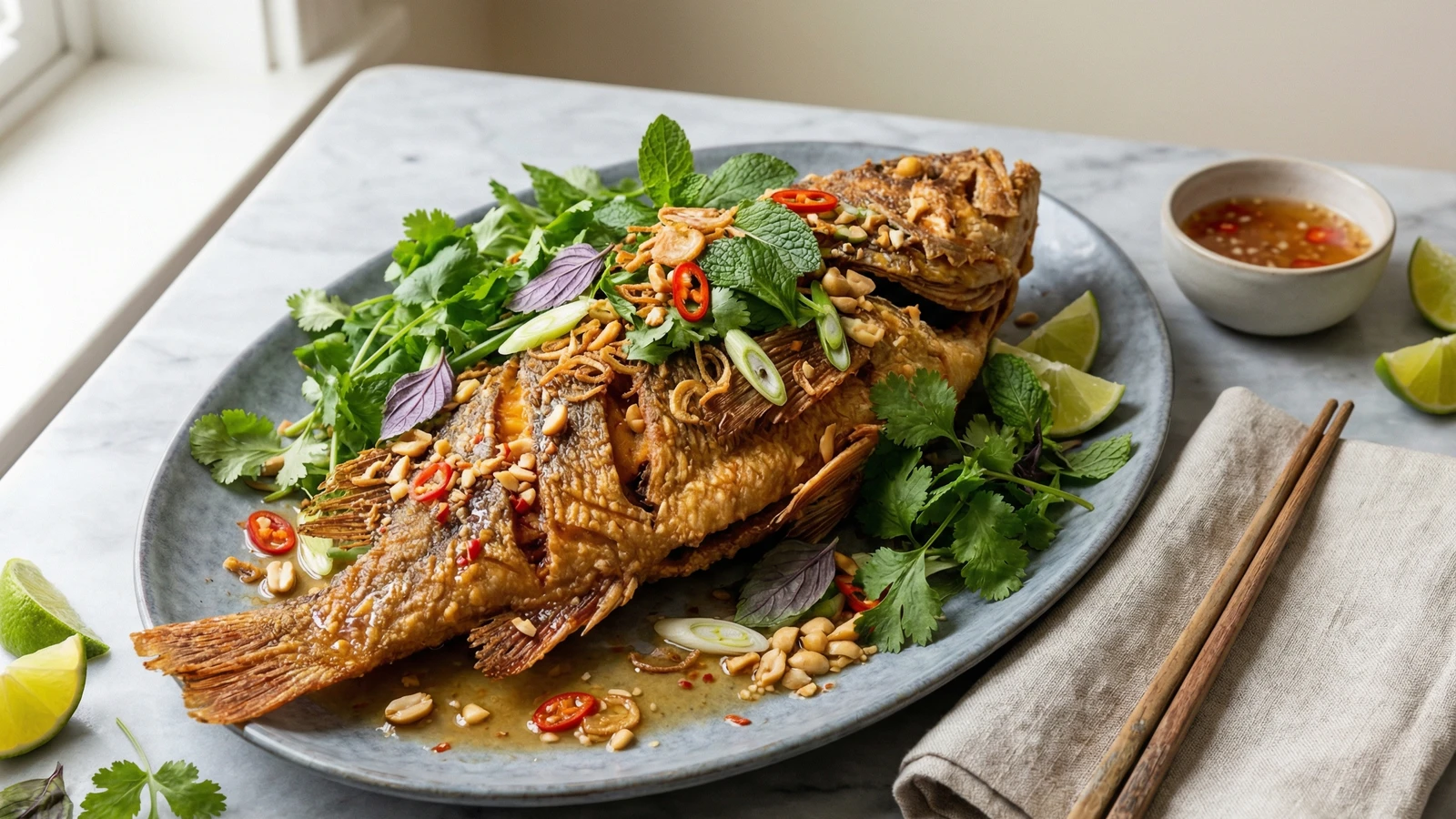
Vietnamese-Style Whole Fried Fish with Nuoc Cham
Created by
A whole Pacific rockfish fried to shattering crispness, dressed in bright nuoc cham and buried under a riot of fresh herbs. This is how Seattle's Vietnamese community celebrates, and how you should too.
The Vietnamese fishing communities along the Pacific Northwest coast have been landing rockfish and snapper for generations now. They brought techniques refined over centuries in the South China Sea and adapted them to our cold, clean waters. The result is something neither purely Vietnamese nor purely American. It's better than both.
A whole fried fish commands the table. There's no hiding behind portion control or careful plating. You present the creature intact, golden and crackling, and let your guests tear into it with chopsticks and spoons. The cheeks go to the guest of honor. The belly meat, rich with fat, disappears first. This is communal eating at its most honest.
The technique requires attention but not complexity. You need oil hot enough to seal the skin instantly, a fish dry enough to avoid spattering, and the courage to leave it alone while it fries. Most home cooks fail because they fidget. Don't fidget. Trust the heat.
I learned this preparation from a fisherman's wife in Ballard who sold her catch at the Sunday market. She scored her fish deeper than I expected and fried them in a wok blackened by decades of use. The nuoc cham she made was sharper than restaurant versions, more lime, more garlic, less sugar. That's the version I'm giving you here.
The technique, the tradition, and the story behind every dish.
Discover Culinary AdvisorIngredients
whole rockfish or red snapper, scaled and gutted
Quantity
1 (2-3 pounds)
kosher salt
Quantity
2 teaspoons
white pepper
Quantity
1 teaspoon
rice flour
Quantity
1/4 cup
cornstarch
Quantity
1/4 cup
neutral oil for frying
Quantity
about 6 cups
garlic
Quantity
4 cloves
minced
Thai chilies
Quantity
2
thinly sliced
fish sauce
Quantity
1/4 cup
fresh lime juice
Quantity
1/4 cup
about 3 limes
warm water
Quantity
3 tablespoons
sugar
Quantity
2 tablespoons
fresh cilantro leaves and tender stems
Quantity
1 cup
fresh mint leaves
Quantity
1/2 cup
fresh Thai basil leaves
Quantity
1/2 cup
scallions
Quantity
4
thinly sliced on the bias
crispy fried shallots
Quantity
1/2 cup
roasted peanuts
Quantity
1/4 cup
roughly chopped
| Ingredient | Quantity |
|---|---|
| whole rockfish or red snapper, scaled and gutted | 1 (2-3 pounds) |
| kosher salt | 2 teaspoons |
| white pepper | 1 teaspoon |
| rice flour | 1/4 cup |
| cornstarch | 1/4 cup |
| neutral oil for frying | about 6 cups |
| garlicminced | 4 cloves |
| Thai chiliesthinly sliced | 2 |
| fish sauce | 1/4 cup |
| fresh lime juiceabout 3 limes | 1/4 cup |
| warm water | 3 tablespoons |
| sugar | 2 tablespoons |
| fresh cilantro leaves and tender stems | 1 cup |
| fresh mint leaves | 1/2 cup |
| fresh Thai basil leaves | 1/2 cup |
| scallionsthinly sliced on the bias | 4 |
| crispy fried shallots | 1/2 cup |
| roasted peanutsroughly chopped | 1/4 cup |
Equipment Needed
- •14-inch flat-bottomed wok or 7-quart Dutch oven
- •Deep-fry thermometer
- •Spider skimmer or two large fish spatulas
- •Wire cooling rack
- •Sheet pan
Instructions
- 1
Prepare the fish
Rinse the fish under cold water and pat it aggressively dry, inside and out, with paper towels. This matters more than any other step. Wet skin in hot oil means spattering, uneven cooking, and a soggy result. Make three diagonal slashes on each side of the fish, cutting down to the bone at a 45-degree angle. These cuts allow heat to penetrate evenly and create more surface area for crispness. Season the fish inside and out with salt and white pepper, working the seasoning into the slashes.
Ask your fishmonger to scale and gut the fish but leave the head and tail intact. The head contains the sweetest meat. - 2
Make the nuoc cham
Combine the minced garlic and sliced chilies in a mortar and pound them lightly to release their oils. You're not making a paste, just bruising them. Transfer to a small bowl. Add the warm water and sugar, stirring until the sugar dissolves completely. Add the fish sauce and lime juice and stir to combine. Taste it. The sauce should hit you with salt first, then sour, then a whisper of sweet, then heat. Adjust until it makes your mouth water. Set aside at room temperature.
The sauce will mellow as it sits. If making ahead, hold back half the lime juice and add it just before serving for brightness. - 3
Coat the fish
Combine the rice flour and cornstarch in a shallow dish and whisk together. The rice flour provides shatter, the cornstarch provides browning. Pat the fish dry one more time, then dredge it thoroughly in the flour mixture, pressing the coating into the slashes and cavity. Shake off excess. Let the fish sit for five minutes so the coating adheres.
- 4
Heat the oil
Pour oil into a wok or large Dutch oven to a depth of at least three inches. The oil must be deep enough to submerge most of the fish. Heat over high flame until a deep-fry thermometer reads 375°F. This takes longer than you expect, usually 8 to 10 minutes. Watch the oil's surface: when it shimmers and a pinch of flour sizzles immediately on contact, you're close. Don't rush this.
A wok's sloped sides require less oil than a Dutch oven and allow you to tilt the oil for better coverage while frying. - 5
Fry the fish
Carefully lower the fish into the hot oil, sliding it away from you to prevent splashing. The oil will bubble violently. This is correct. Fry without moving for 4 to 5 minutes until the bottom turns deep golden. Use two spatulas or a spider and tongs to carefully flip the fish. Fry the second side for another 4 to 5 minutes. The skin should be golden brown and audibly crackling. If your vessel isn't large enough to submerge the fish, use a ladle to continuously baste the exposed portions with hot oil.
The fish is done when the flesh near the backbone is opaque and flakes easily. An instant-read thermometer inserted at the thickest point should read 145°F. - 6
Drain and rest
Transfer the fish to a wire rack set over a sheet pan. Do not use paper towels directly under the fish or you'll steam the bottom crust and lose your crispness. Let the fish rest for two minutes. The carryover heat will finish cooking the interior while the exterior stays crisp.
- 7
Assemble and serve
Transfer the fish to a large platter. Drizzle generously with nuoc cham, letting it pool around the fish and seep into the slashes. Scatter the cilantro, mint, and Thai basil over the top in abundant handfuls. Don't be timid with the herbs. Follow with the scallions, crispy shallots, and chopped peanuts. Serve immediately with the remaining nuoc cham in a bowl on the side and plenty of steamed jasmine rice.
Chef Tips
- •Seek out rockfish, black cod, or Pacific snapper from fishermen practicing sustainable hook-and-line methods. The Marine Stewardship Council certification means something. Ask your fishmonger what came in fresh that morning and adapt accordingly.
- •The fish must be completely dry before it touches the oil. I've seen students pat their fish dry, then let it sit while they prepare other ingredients. Moisture reappears. Pat it dry immediately before dredging.
- •If you're nervous about frying whole fish, practice with smaller specimens first. A pound-and-a-half fish is more forgiving than a three-pounder and still feeds two generously.
- •Save the strained frying oil. Cooled completely and stored in a sealed container, it keeps refrigerated for a month and adds depth to future stir-fries and fried rice.
- •Pair this with an off-dry Riesling from the Columbia Valley or a crisp local pilsner. The sweetness tempers the fish sauce's salinity while the acid cuts through the richness.
Advance Preparation
- •The nuoc cham can be made up to 3 days ahead and refrigerated. Add fresh lime juice before serving to brighten.
- •Crispy fried shallots can be made a week ahead and stored airtight at room temperature.
- •The fish should be cleaned, scored, and seasoned no more than 30 minutes before frying. Longer salting draws moisture to the surface.
- •Wash and dry all herbs up to a day ahead. Store wrapped in damp paper towels in a sealed container in the refrigerator.
Frequently Asked Questions
Nutrition Information
1 serving (about 245g)
Where cooking meets culture.
Culinary mentorship, cultural storytelling, and the editorial depth that makes cooking meaningful.
Explore Culinary Advisor