Culinary Advisor
A cooking platform built around craft, culture, and the stories behind what we eat.
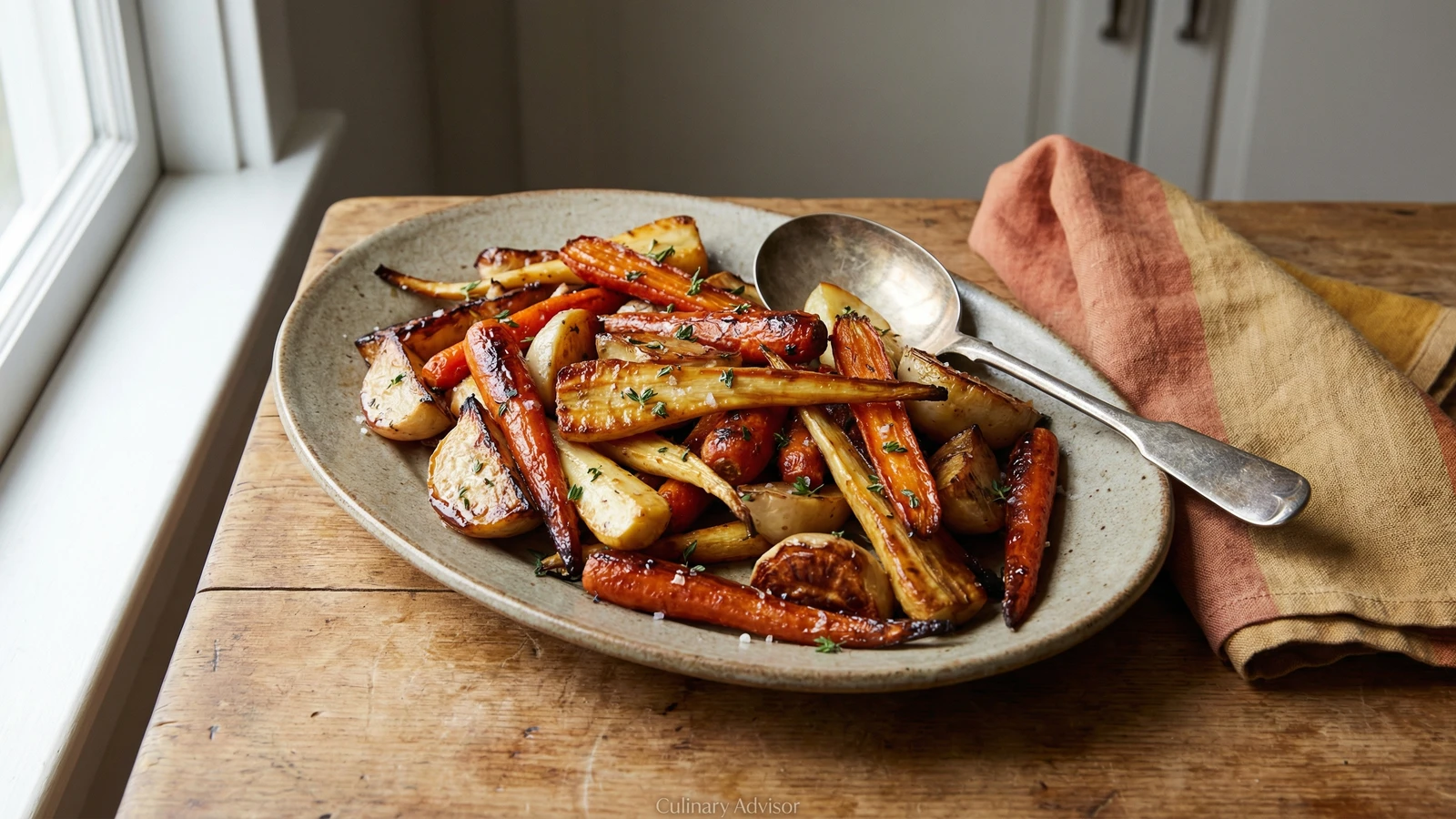
Vermont Maple Roasted Root Vegetables
Created by
Humble root vegetables transformed by high heat and pure Vermont maple syrup into something golden, lacquered, and worthy of the Thanksgiving table. The honest sweetness of the earth, elevated.
Before sugar was cheap and chocolate was common, New Englanders sweetened their lives with maple. Every March, when the nights still froze but the days warmed enough to wake the sap, families gathered in sugar houses to boil down forty gallons of thin sap into one gallon of liquid gold. That syrup flavored everything from beans to bacon to the root vegetables pulled from cold cellars.
This dish honors that tradition. Parsnips, carrots, and turnips, the workhorses of the colonial larder, become something magnificent when roasted at high heat and glazed with good maple. The sugars in the vegetables caramelize. The syrup reduces to a sticky lacquer. What emerges from your oven would make a Vermont grandmother nod with quiet approval.
The technique couldn't be simpler. You roast the vegetables until they develop an honest crust, then dress them in maple and butter. The apple cider vinegar in the glaze is not optional. It provides the brightness that keeps sweetness from becoming cloying. This is the difference between a dish people admire and one they actually finish.
The technique, the tradition, and the story behind every dish.
Discover Culinary AdvisorIngredients
carrots
Quantity
1 pound
peeled and cut into 2-inch pieces
parsnips
Quantity
1 pound
peeled and cut into 2-inch pieces
turnips
Quantity
1 pound
peeled and cut into 1-inch wedges
extra-virgin olive oil
Quantity
3 tablespoons
kosher salt
Quantity
1 teaspoon
black pepper
Quantity
1/2 teaspoon
freshly ground
pure Vermont maple syrup
Quantity
3 tablespoons
unsalted butter
Quantity
2 tablespoons
fresh thyme leaves
Quantity
1 tablespoon
apple cider vinegar
Quantity
1 tablespoon
flaky sea salt
Quantity
for finishing
| Ingredient | Quantity |
|---|---|
| carrotspeeled and cut into 2-inch pieces | 1 pound |
| parsnipspeeled and cut into 2-inch pieces | 1 pound |
| turnipspeeled and cut into 1-inch wedges | 1 pound |
| extra-virgin olive oil | 3 tablespoons |
| kosher salt | 1 teaspoon |
| black pepperfreshly ground | 1/2 teaspoon |
| pure Vermont maple syrup | 3 tablespoons |
| unsalted butter | 2 tablespoons |
| fresh thyme leaves | 1 tablespoon |
| apple cider vinegar | 1 tablespoon |
| flaky sea salt | for finishing |
Equipment Needed
- •Large rimmed baking sheet (18x13-inch half sheet preferred)
- •Thin metal spatula for flipping
- •Small saucepan for the glaze
Instructions
- 1
Heat your oven properly
Position a rack in the lower third of your oven and preheat to 425°F. Place a large rimmed baking sheet in the oven while it heats. This step matters more than you might think. A screaming hot pan sears the vegetables on contact, preventing them from steaming in their own moisture.
- 2
Prepare the vegetables
Cut your carrots and parsnips into similar sized pieces, about two inches long. Thicker ends get halved lengthwise; thinner ends stay whole. Turnips, being denser, need smaller wedges to cook through evenly. Uniformity is your friend here. Mismatched pieces mean some burn while others stay raw.
Young turnips the size of tennis balls have the sweetest flavor. Larger specimens can turn bitter. If you can only find large turnips, taste a raw piece first. - 3
Toss with oil and season
Place the prepared vegetables in a large bowl. Add olive oil, salt, and pepper. Toss with your hands until every piece glistens. You want a thin, even coating, not puddles of oil at the bottom of the bowl. The vegetables should feel slick but not drenched.
- 4
Arrange on hot pan
Carefully remove the hot baking sheet from the oven. Scatter the vegetables across the pan in a single layer, cut sides down where possible. You should hear an immediate sizzle. Do not crowd the pan. Crowded vegetables steam instead of roast, and you'll end up with pale, flabby results.
If your pan looks crowded, use two. Better to dirty another dish than to compromise the caramelization. - 5
Roast until golden
Roast without touching for 20 minutes. Resist the urge to peek or stir. The vegetables are building a proper crust on their undersides. After 20 minutes, flip each piece with a thin spatula. The bottoms should show deep golden spots edged with mahogany. Return to the oven for another 15 minutes until tender when pierced with a knife.
- 6
Make the maple glaze
While vegetables finish roasting, combine maple syrup and butter in a small saucepan over medium heat. Swirl until butter melts completely. Add thyme leaves and let them sizzle in the hot fat for 30 seconds, releasing their oils. Remove from heat and stir in the apple cider vinegar. The vinegar cuts the sweetness and keeps this from tasting like dessert.
- 7
Glaze and finish
Remove the roasted vegetables from the oven. Drizzle the warm maple glaze over everything, then use a spatula to turn the pieces gently, coating them in the sticky, fragrant mixture. Return to the oven for a final 5 minutes. The glaze will tighten into a lacquered sheen, burnishing the edges.
- 8
Season and serve
Transfer to a warm serving platter. Scatter flaky sea salt over the top. The crystals will catch the light and provide bursts of salinity against the sweetness. Serve immediately, or hold in a 200°F oven for up to 30 minutes if your timing needs flexibility.
A final drizzle of good olive oil just before serving adds richness and makes the colors pop on the plate.
Chef Tips
- •Not all maple syrup deserves your attention. Grade A Dark Robust (formerly Grade B) has the deepest maple flavor and stands up to roasting. Golden Delicate disappears. If you wouldn't drizzle it on pancakes with pride, don't cook with it.
- •Root vegetables store well, so buy them a week ahead of your gathering. They'll wait patiently in the crisper drawer while you manage the rest of your menu.
- •The vegetables can share oven space with a turkey roasting at 325°F. Simply add 15 to 20 minutes to the cooking time and check for browning before glazing.
- •For a more robust finish, add a handful of pecans to the pan during the final five minutes. They'll toast in the maple glaze and add welcome crunch.
Advance Preparation
- •Vegetables can be peeled and cut up to two days ahead. Store submerged in cold water in the refrigerator. Drain and pat completely dry before roasting.
- •The maple glaze can be made three days ahead and refrigerated. Warm gently before using.
- •Fully roasted vegetables hold well in a 200°F oven for up to 45 minutes, making this ideal for holiday meals when oven timing gets complicated.
- •For potluck transport, roast vegetables at home, transfer to an oven-safe dish, cover with foil, and wrap in towels. Reheat uncovered at 375°F for 10 minutes to restore crispness.
Frequently Asked Questions
Nutrition Information
1 serving (about 170g)
Where cooking meets culture.
Culinary mentorship, cultural storytelling, and the editorial depth that makes cooking meaningful.
Explore Culinary Advisor