Culinary Advisor
A cooking platform built around craft, culture, and the stories behind what we eat.
Vegetable Stock
Created by Chef Thomas
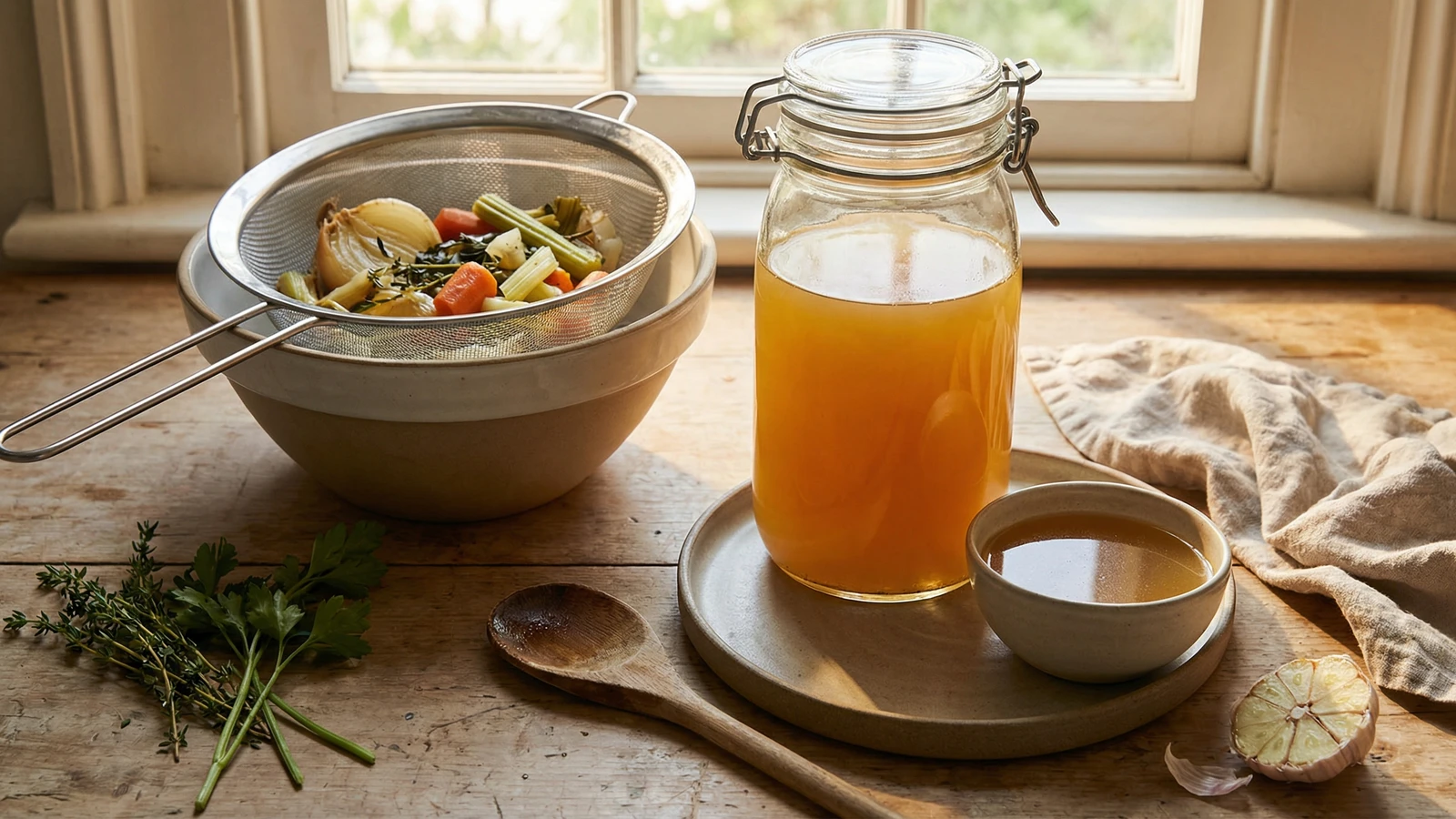
A clean, golden vegetable stock made from the week's best scraps and a little patience, the quiet foundation that turns a bowl of soup into something worth sitting down for.
There's a point on a Sunday afternoon when the fridge needs a reckoning. The half a leek from Tuesday's supper, the carrots that have gone a bit bendy, the parsley stalks you kept because you knew you'd find a use for them. This is the use. A pot of stock on the back of the hob, quietly turning yesterday's odds and ends into tomorrow's dinner.
Vegetable stock gets overlooked. People reach for a cube because they think the real stock is the one with bones in it, and the vegetable version is a compromise. It isn't. A proper vegetable stock, made with attention, has a clean sweetness and a golden colour that no cube will ever give you. It's the difference between a risotto that tastes of rice and a risotto that tastes of something. The difference between fine and worth making again.
The method is barely a method. Rough-chop, sweat, simmer, strain. No bones, no skimming for hours, no complicated technique. What matters is the ingredients and the patience to let the water do its slow work. Keep the onion skins on, use the green tops of the leek, don't throw away the celery leaves. A stock is a quiet protest against waste.
I make a pot most weekends and freeze it in different sizes. A few big tubs for soups, smaller ones for risottos, an ice cube tray for when a pan sauce needs a ladleful. I wrote it down in the notebook once: "Sunday stock. Golden. Smells like next week." That's still the best description I've managed.
The technique, the tradition, and the story behind every dish.
Discover Culinary AdvisorIngredients
onions
Quantity
2 medium
skins on, roughly chopped
leek
Quantity
1 large
green tops included, well washed and sliced
carrots
Quantity
2 medium
scrubbed and roughly chopped
celery sticks
Quantity
3
roughly chopped, leaves included
garlic
Quantity
1 whole head
halved across the middle
parsley
Quantity
1 small bunch
stalks and all
thyme
Quantity
a few sprigs
bay leaves
Quantity
2
black peppercorns
Quantity
10 whole
fine sea salt
Quantity
1 teaspoon
cold water
Quantity
2 litres
| Ingredient | Quantity |
|---|---|
| onionsskins on, roughly chopped | 2 medium |
| leekgreen tops included, well washed and sliced | 1 large |
| carrotsscrubbed and roughly chopped | 2 medium |
| celery sticksroughly chopped, leaves included | 3 |
| garlichalved across the middle | 1 whole head |
| parsleystalks and all | 1 small bunch |
| thyme | a few sprigs |
| bay leaves | 2 |
| black peppercorns | 10 whole |
| fine sea salt | 1 teaspoon |
| cold water | 2 litres |
Equipment Needed
- •Large stockpot or heavy saucepan (at least 4 litres)
- •Fine mesh sieve
- •Ladle
- •Storage containers or freezer-safe jars
Instructions
- 1
Rough-chop the vegetables
Get a big pot out. The vegetables don't need to be pretty. Rough chunks are fine, small enough to fit in the pan, large enough that they won't disintegrate into mush. Keep the onion skins on. They're what gives the stock its golden colour, and throwing them away is the kind of tidy habit that costs you flavour.
This is the place for the ends and offcuts you've been saving through the week. A leek top, a handful of parsley stalks, the fennel fronds from Saturday's market. Anything clean and fresh goes in. Nothing slimy, nothing bitter. Use your nose. - 2
Sweat the vegetables gently
Warm a splash of olive oil in the pot over a medium heat. Tip in the onions, leek, carrots, and celery. Stir them through the oil and let them sweat for eight or ten minutes. You're not trying to brown them, just coax them. When the onions have softened and the kitchen starts to smell like the beginning of something, you're ready for the next step. A little colour on the edges is fine. A lot isn't.
- 3
Add aromatics and water
Drop in the halved head of garlic, cut side down. Add the parsley, thyme, bay, peppercorns, and salt. Pour the cold water over everything. Cold water, not boiling. You want the flavour to come out slowly as the water heats, not be locked in by a sudden plunge into a hot pot. Bring it gently up to a bare simmer.
- 4
Simmer slowly
Once it's bubbling quietly, turn the heat down so the surface barely moves. Let it go for forty-five minutes. No lid, or only slightly ajar. A hard boil will cloud the stock and give you something grey and tired. A slow simmer gives you gold. The kitchen will start to smell properly vegetal and sweet, a bit like a good soup before it becomes one.
Resist the urge to keep stirring. A stock wants to be left alone. Skim any foam that rises to the top in the first ten minutes, then leave it be. - 5
Strain and taste
Set a sieve over a large bowl or a second pan. Ladle the stock through, pressing the vegetables gently with the back of a spoon to coax out the last of the liquid. Don't crush them. Gentle pressure only. You'll get about 1.5 litres of clean, amber stock. Taste it. It should taste quietly of everything you put in, balanced, a little sweet from the onions and carrots, herbal from the parsley and thyme. If it tastes thin, simmer it for another ten minutes to concentrate. If it tastes right, stop.
- 6
Cool and store
Let the stock cool to room temperature before you put it in the fridge. It'll keep for four days in a covered jar, or three months in the freezer. I freeze mine in different sizes: a few big containers for soups and stews, some smaller ones for when a risotto needs a ladleful, an ice cube tray for when a pan sauce wants a splash. Label them. You'll think you'll remember. You won't.
Chef Tips
- •Keep a bag in the freezer for stock scraps. Onion ends, leek tops, carrot peelings, parsley stalks, the woody ends of asparagus, mushroom stems. When the bag is full, you have a stock waiting to happen. This is the quiet economy of a good kitchen.
- •Avoid the brassicas. Cabbage, cauliflower, broccoli, Brussels sprouts. They'll turn your stock sulphurous and bitter, and there's no saving it. Same goes for anything starchy: potatoes, sweet potatoes, squash. They cloud the liquid and dull the flavour.
- •Salt lightly at this stage. You don't know yet what the stock is going to become. A salted stock that gets reduced for a sauce will end up too salty to use. Better to season properly at the end of whatever dish it's feeding.
- •If you want a deeper, more savoury stock, roast the vegetables first. Spread them on a tray with a splash of oil and give them thirty minutes in a hot oven until the edges go dark and sticky. It's a different kind of stock: richer, browner, better for a dark gravy or a mushroom soup. Worth knowing about.
Advance Preparation
- •Stock keeps in a covered container in the fridge for up to four days.
- •Freezes beautifully for up to three months. Portion it into different sizes: large tubs for soups and stews, smaller ones for risottos, an ice cube tray for pan sauces and deglazing.
- •Label and date everything. Frozen stock all looks the same in six weeks, and you'll thank yourself for the small effort.
Frequently Asked Questions
Nutrition Information
1 serving (about 250g)
Where cooking meets culture.
Culinary mentorship, cultural storytelling, and the editorial depth that makes cooking meaningful.
Explore Culinary Advisor