Culinary Advisor
A cooking platform built around craft, culture, and the stories behind what we eat.
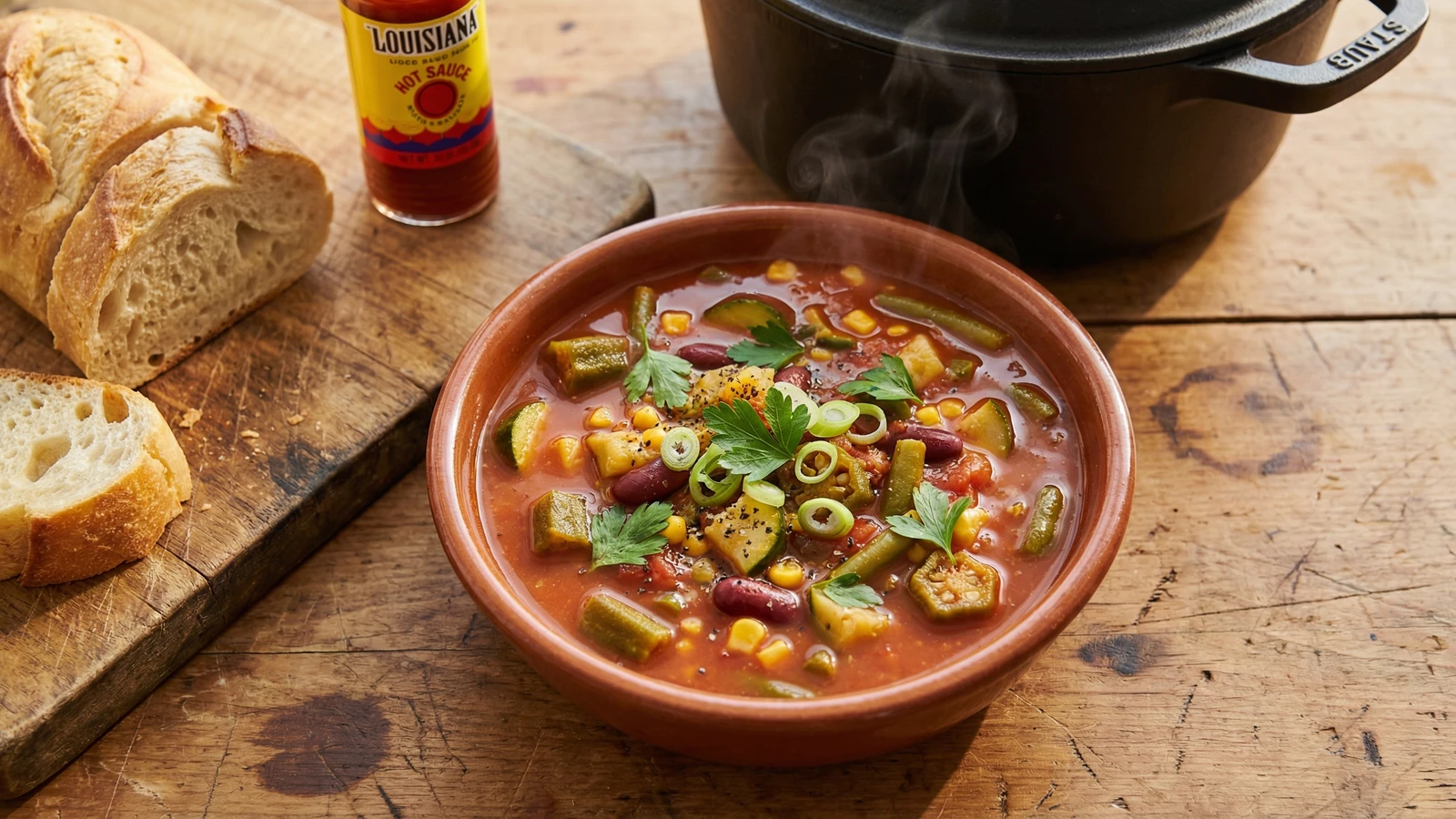
Vegetable Soup Cajun Style
Created by Chef Remy
A garden's worth of vegetables simmered low and slow in a bold tomato broth built on the holy trinity, seasoned the way four generations of Boudreaux cooks have done it, proving that meatless can still mean soulful.
Some folks think Cajun food requires a pound of andouille in every pot. They're wrong. The real magic lives in technique: how you build flavor in layers, how you coax sweetness from vegetables, how you season with intention rather than afterthought. This soup proves it.
My grandmother Evangeline made a version of this every Friday during Lent. She'd walk the garden in the morning, picking whatever looked ready. Okra, tomatoes, green beans, whatever the bayou soil decided to give. By afternoon, the whole house smelled like salvation. No meat, but nobody at that table ever felt deprived.
The secret is treating your vegetables with the same respect you'd give a fine piece of meat. Season the trinity when it hits the pot. Let the okra caramelize before adding liquid. Build your broth with intention. Taste as you go. Adjust. Trust your palate. At Lagniappe, we serve this soup to guests who swear they'll never eat vegetarian, and they clean their bowls every time.
The technique, the tradition, and the story behind every dish.
Discover Culinary AdvisorIngredients
vegetable oil or butter
Quantity
3 tablespoons
yellow onion
Quantity
1 large
diced
celery stalks
Quantity
3
sliced
green bell pepper
Quantity
1 large
diced
garlic
Quantity
4 cloves
minced
Cajun seasoning
Quantity
2 tablespoons, divided
smoked paprika
Quantity
1 teaspoon
cayenne pepper
Quantity
1/2 teaspoon, or to taste
crushed tomatoes
Quantity
1 can (28 ounces)
tomato paste
Quantity
2 tablespoons
vegetable stock
Quantity
8 cups
okra
Quantity
2 cups
sliced into 1/2-inch rounds
green beans
Quantity
2 cups
trimmed and cut into 1-inch pieces
fresh corn kernels
Quantity
2 ears, or 1 1/2 cups frozen
zucchini
Quantity
2 medium
diced
kidney beans
Quantity
1 can (15 ounces)
drained and rinsed
bay leaves
Quantity
2
dried thyme
Quantity
1 teaspoon
Louisiana hot sauce
Quantity
1 teaspoon, plus more for serving
kosher salt
Quantity
to taste
black pepper
Quantity
to taste
freshly cracked
fresh parsley
Quantity
1/4 cup
chopped
green onions
Quantity
2
sliced thin
| Ingredient | Quantity |
|---|---|
| vegetable oil or butter | 3 tablespoons |
| yellow oniondiced | 1 large |
| celery stalkssliced | 3 |
| green bell pepperdiced | 1 large |
| garlicminced | 4 cloves |
| Cajun seasoning | 2 tablespoons, divided |
| smoked paprika | 1 teaspoon |
| cayenne pepper | 1/2 teaspoon, or to taste |
| crushed tomatoes | 1 can (28 ounces) |
| tomato paste | 2 tablespoons |
| vegetable stock | 8 cups |
| okrasliced into 1/2-inch rounds | 2 cups |
| green beanstrimmed and cut into 1-inch pieces | 2 cups |
| fresh corn kernels | 2 ears, or 1 1/2 cups frozen |
| zucchinidiced | 2 medium |
| kidney beansdrained and rinsed | 1 can (15 ounces) |
| bay leaves | 2 |
| dried thyme | 1 teaspoon |
| Louisiana hot sauce | 1 teaspoon, plus more for serving |
| kosher salt | to taste |
| black pepperfreshly cracked | to taste |
| fresh parsleychopped | 1/4 cup |
| green onionssliced thin | 2 |
Equipment Needed
- •Large Dutch oven or heavy-bottomed pot (6-quart minimum)
- •Wooden spoon for stirring
- •Sharp knife for vegetable prep
- •Ladle for serving
Instructions
- 1
Build the holy trinity
Heat the oil in a large Dutch oven or heavy-bottomed pot over medium-high heat. When the oil shimmers and flows like water across the pan, add the onion, celery, and bell pepper. This is your holy trinity, the foundation of every great Cajun dish. Sprinkle with one tablespoon of Cajun seasoning immediately. Season your aromatics. That's the bayou way.
The trinity should sizzle when it hits the pot. If it doesn't, your oil isn't hot enough. Wait. - 2
Sweat until fragrant
Cook the trinity, stirring occasionally, until the onions turn translucent and the edges begin to caramelize, about eight to ten minutes. You want softness with a hint of color. The kitchen should smell like Louisiana by now: sweet onion, green pepper, that warm Cajun spice. Add the garlic and cook one minute more until fragrant. Garlic burns fast, so keep it moving.
- 3
Bloom the spices
Add the remaining tablespoon of Cajun seasoning, the smoked paprika, and the cayenne. Stir constantly for thirty seconds. This blooming process wakes up the spices, releasing their essential oils into the fat. You'll smell it happen: the aroma deepens and becomes more complex. Don't skip this step.
If you're sensitive to heat, start with a quarter teaspoon of cayenne. You can always add more at the end. You can't take it away. - 4
Add tomatoes and paste
Stir in the tomato paste and cook for one minute, letting it darken slightly against the hot pot. This concentrates the tomato flavor and removes the raw, tinny taste. Add the crushed tomatoes and stir well, scraping up any fond from the bottom. That caramelized goodness belongs in your soup.
- 5
Build the broth
Pour in the vegetable stock and bring to a boil. Add the bay leaves and dried thyme. Reduce heat to maintain a gentle simmer, with lazy bubbles rising every few seconds. A rolling boil makes vegetables mushy. We want tender, not broken.
- 6
Add the sturdy vegetables
Add the okra and green beans first. These need more time to become tender. Simmer for fifteen minutes. The okra will release its natural thickener, giving the broth body. Some folks complain about okra's texture, but that's because they've never had it cooked right. Let it do its work.
Fresh okra is best, but frozen works fine. Don't thaw it first. The cold actually helps reduce the sliminess some folks worry about. - 7
Add remaining vegetables
Add the corn, zucchini, and kidney beans. Simmer for another ten to twelve minutes until the zucchini is tender but still holds its shape. The corn should be sweet and just barely cooked through. This is when you start tasting. Dip a spoon, blow on it, taste. Does it need salt? More heat? Adjust now.
- 8
Season and finish
Remove the bay leaves. Stir in the hot sauce. Taste again. Adjust salt and pepper. The soup should be bold, deeply seasoned, with layers of flavor that unfold as you eat. If it tastes flat, it needs salt. If it tastes one-dimensional, it needs acid: a splash more hot sauce or a squeeze of lemon.
Good soup improves overnight. The flavors marry and deepen. Make it today, eat it tomorrow. That's how we do it at Lagniappe. - 9
Serve with soul
Ladle the soup into deep bowls. Scatter fresh parsley and sliced green onions over each serving. Set the hot sauce bottle on the table for those who want more heat. Serve with crusty French bread for soaking up the broth. When the last bite is as good as the first, you've done it right.
Chef Tips
- •Make your own Cajun seasoning if you can. Equal parts paprika and garlic powder, half parts each of onion powder, black pepper, cayenne, oregano, and thyme. Mix a big batch and keep it in a jar by the stove.
- •This soup is even better the next day. The vegetables absorb the broth's flavor overnight. Make a double batch for the week ahead.
- •For a heartier meal, serve over steamed white rice in the bowl. The rice soaks up that beautiful broth and stretches each serving further.
- •If fresh okra isn't available, frozen is perfectly acceptable. Fresh tomatoes in summer can replace the canned, but you'll need about two pounds, peeled and crushed.
- •A ham hock simmered with the broth adds smoky depth if you're not keeping this vegetarian. Remove it before serving and shred any meat back into the pot.
Advance Preparation
- •The soup can be made up to four days ahead and refrigerated in an airtight container. Reheat gently over medium heat, adding a splash of stock if it has thickened.
- •Freezes beautifully for up to three months. The zucchini will soften slightly upon thawing, but the flavor remains excellent.
- •Prep all vegetables up to one day ahead and store in separate containers in the refrigerator. This makes weeknight cooking nearly effortless.
Frequently Asked Questions
Nutrition Information
1 serving (about 450g)
Where cooking meets culture.
Culinary mentorship, cultural storytelling, and the editorial depth that makes cooking meaningful.
Explore Culinary Advisor