Culinary Advisor
A cooking platform built around craft, culture, and the stories behind what we eat.
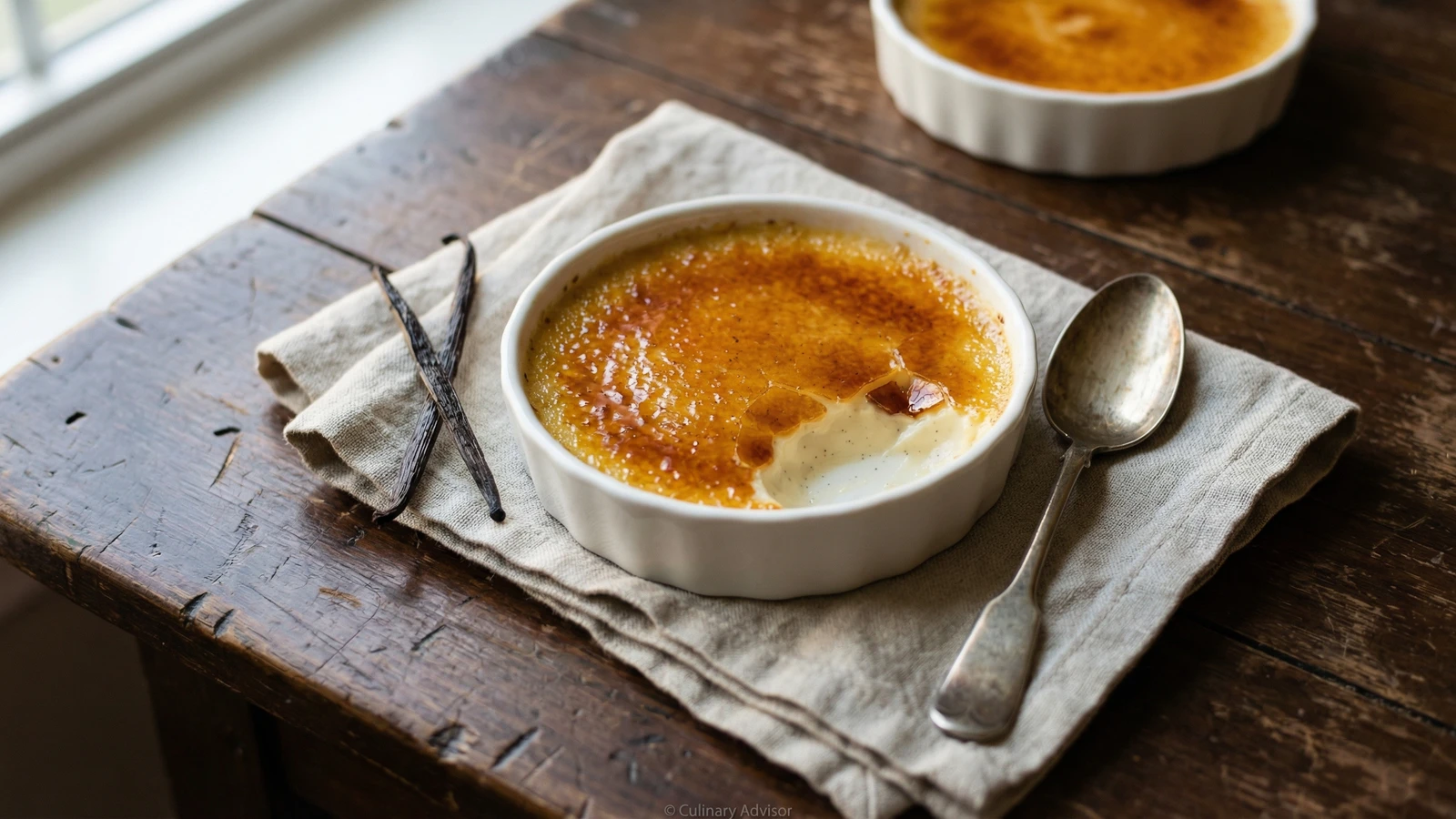
Vanilla Bean Crème Brûlée
Created by Chef Ally
A trembling custard flecked with vanilla seeds beneath the thinnest amber shell, cracked with a spoon to reveal pure silk beneath. Four ingredients. Nothing to hide behind.
Start with the vanilla bean. Hold it in your hand. A good one is pliable, almost oily, with a fragrance that reaches you before you split it open. Dry, brittle pods have been sitting too long or were harvested too young. What you want is a bean that bends without cracking, dark and supple, heavy with the seeds inside.
Crème brûlée is an act of restraint. Cream, egg yolks, sugar, vanilla. Four ingredients. There is nowhere to hide poor quality and nothing to distract from it. The cream should be fresh and heavy, the yolks from hens that saw daylight and ate well. The vanilla should be real. These are the only requirements, and they are absolute.
The technique matters, but it is in service of the ingredients, not the other way around. You warm the cream gently to coax out the vanilla's perfume. You temper the eggs so they do not scramble. You bake in a water bath so the custard sets like silk rather than rubber. Then you wait. The chilling is not optional. When you finally torch that sugar into amber glass, the cold custard beneath keeps it from melting. The contrast of temperatures and textures, that first crack of the spoon through the shell, this is why people order this dessert again and again.
Good ingredients, proper care, and the patience to leave well enough alone. That is all any dessert needs.
The technique, the tradition, and the story behind every dish.
Discover Culinary AdvisorIngredients
heavy cream
Quantity
2 cups (480ml)
vanilla bean
Quantity
1 plump
large egg yolks
Quantity
5
at room temperature
granulated sugar
Quantity
1/2 cup (100g), plus 6 tablespoons for brûléeing
fine sea salt
Quantity
pinch
| Ingredient | Quantity |
|---|---|
| heavy cream | 2 cups (480ml) |
| vanilla bean | 1 plump |
| large egg yolksat room temperature | 5 |
| granulated sugar | 1/2 cup (100g), plus 6 tablespoons for brûléeing |
| fine sea salt | pinch |
Equipment Needed
- •Six shallow ramekins (4 to 6 ounces each)
- •Fine-mesh strainer
- •Kitchen torch
- •Large baking dish for water bath
Instructions
- 1
Infuse the cream
Pour the cream into a heavy saucepan. Split the vanilla bean lengthwise with a paring knife, then run the blade down each half to scrape out the seeds. They should look like dark, sticky caviar. Add both seeds and pod to the cream. Warm over medium heat until small bubbles appear at the edges, then remove from heat, cover, and let steep for thirty minutes. The cream will turn pale ivory and smell intoxicating.
Do not discard the scraped pod. It still holds flavor. After this recipe, rinse it, dry it, and bury it in a jar of sugar. In two weeks you will have vanilla sugar. - 2
Prepare the ramekins
While the cream steeps, position a rack in the center of your oven and heat to 325°F. Arrange six shallow ramekins in a baking dish with sides at least two inches tall. Boil a kettle of water and keep it hot.
- 3
Whisk the yolks
In a large bowl, whisk the egg yolks with the half cup of sugar and salt until the mixture lightens slightly and the sugar dissolves, about one minute. You are not incorporating air. You are simply blending. Overzealous whisking creates bubbles that mar the custard's surface.
- 4
Temper the eggs
Return the steeped cream to medium heat until steaming. Remove the vanilla pod. Slowly pour a thin stream of hot cream into the yolks while whisking constantly. This warms the eggs gently so they do not scramble. Add more cream in a steady stream, whisking all the while, until fully combined.
- 5
Strain and pour
Pour the custard through a fine-mesh strainer into a clean bowl or pitcher. This catches any bits of cooked egg and ensures silkiness. Divide evenly among the ramekins, filling them about three-quarters full.
If bubbles appear on the surface, skim them with a spoon or gently run a kitchen torch across the top. They will pop in the heat. - 6
Create the water bath
Transfer the baking dish to the oven rack, then carefully pour hot water into the dish until it reaches halfway up the sides of the ramekins. The water bath insulates the custard, surrounding it with gentle, even heat. This is how you achieve that tremble.
- 7
Bake until just set
Bake for 40 to 50 minutes. The custards are ready when the edges are set but the centers still wobble like gelatin when you gently shake the pan. They will firm as they chill. Pulling them too early means soup; too late means grainy texture. Trust the wobble.
Every oven runs differently. Start checking at 35 minutes. The custard should jiggle in a two-inch circle at the center, no more. - 8
Chill completely
Carefully remove ramekins from the water bath and let cool on a rack for thirty minutes. Cover each with plastic wrap, ensuring it does not touch the surface, and refrigerate for at least four hours or overnight. The custard must be thoroughly cold before you brûlée, or the sugar will melt into the cream rather than forming a shell.
- 9
Caramelize the sugar
Remove the custards from the refrigerator. Blot any moisture from the surface with a paper towel. Sprinkle one tablespoon of sugar in an even layer across each custard, tilting to coat. Using a kitchen torch, hold the flame two to three inches from the surface and move in slow circles until the sugar bubbles, darkens to amber, and forms a glassy shell. Let cool for one minute so the sugar hardens, then serve immediately.
Chef Tips
- •Vanilla beans vary tremendously. Madagascar Bourbon beans are the standard: creamy, sweet, familiar. Tahitian beans are more floral and fruity. Mexican beans are bold and spicy. Choose one you love and buy it from a source that turns over inventory quickly.
- •The leftover egg whites freeze beautifully. Save them for meringues, macarons, or adding to scrambled eggs for lighter texture.
- •If you do not own a kitchen torch, you can use your broiler. Place the sugared custards on a baking sheet four inches from the heat and watch them like a hawk. This works, but you have less control.
- •The custards can be made up to three days ahead and kept refrigerated. Brûlée the sugar only moments before serving. The shell softens after ten minutes.
Advance Preparation
- •Unbaked custard base can be prepared and refrigerated overnight. Return to room temperature before baking.
- •Baked, chilled custards keep covered in the refrigerator for up to three days before brûléeing.
- •Once the sugar is caramelized, serve within ten minutes. The shell will soften and weep if it sits.
Frequently Asked Questions
Nutrition Information
1 serving (about 125g)
Where cooking meets culture.
Culinary mentorship, cultural storytelling, and the editorial depth that makes cooking meaningful.
Explore Culinary Advisor