Culinary Advisor
A cooking platform built around craft, culture, and the stories behind what we eat.
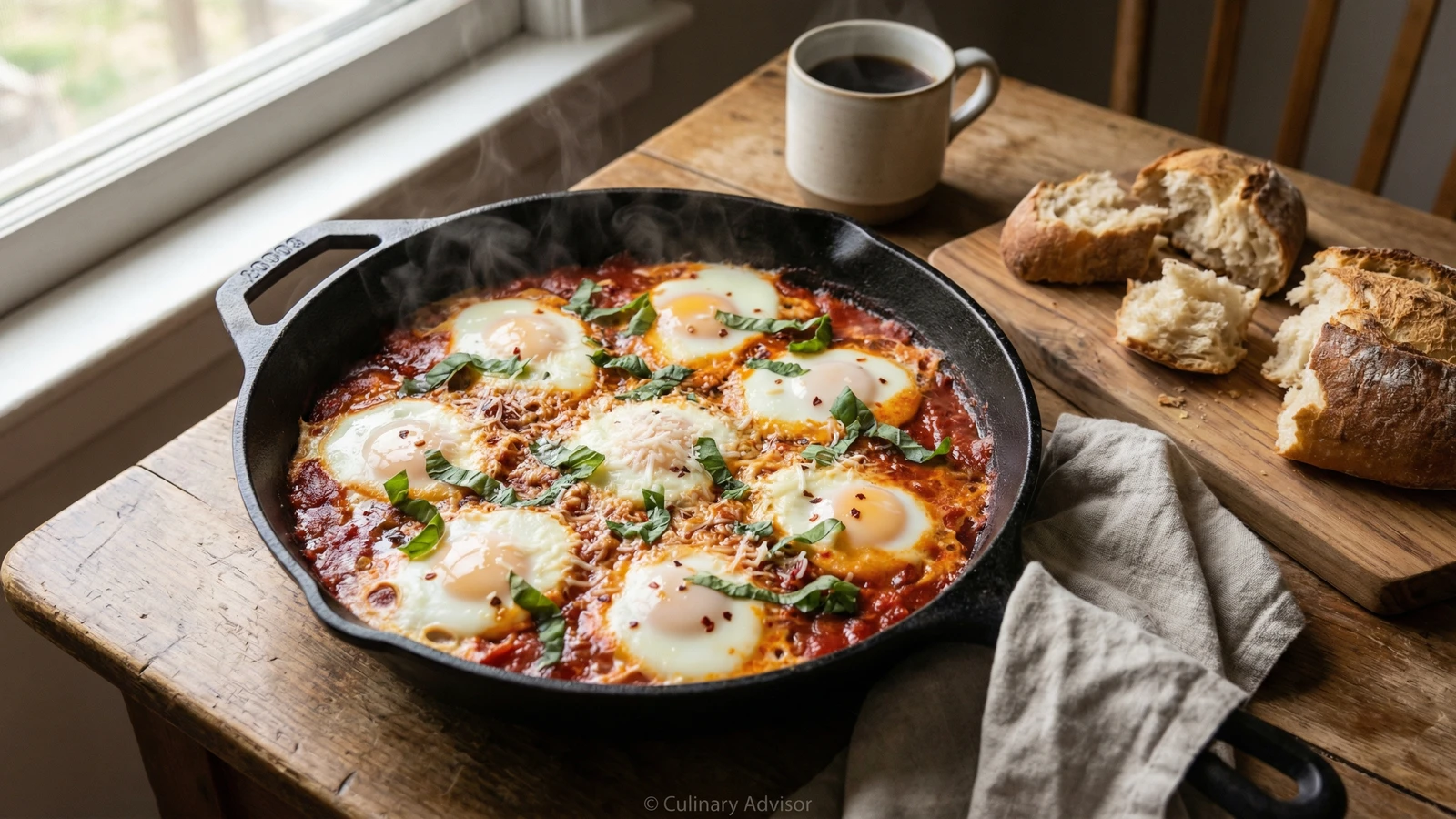
Uova in Purgatorio
Created by Chef Graziella
Eggs nestled in a spicy tomato sauce, the way Neapolitan home cooks have prepared them for generations. Four ingredients, one pan, and the understanding that simplicity requires precision.
The name tells you everything. Uova in purgatorio: eggs in purgatory. The white of the egg surrounded by red sauce, souls suspended between heaven and hell. Neapolitans have a gift for the dramatic, and this breakfast proves it.
This is not shakshuka, though Americans often confuse them. Shakshuka is North African, spiced with cumin and paprika and sometimes peppers. Uova in purgatorio is Neapolitan: tomatoes, a whisper of garlic, peperoncino for heat, and nothing more. The garlic is removed after infusing the oil. What remains is perfume, not presence. This is the difference between Italian cooking and what people imagine Italian cooking to be.
You need a good pan, good tomatoes, and eggs with orange yolks that stand up when cracked. You need crusty bread for dipping into the sauce and breaking the yolk. That is all. What you keep out is as significant as what you put in.
Uova in purgatorio appears in Neapolitan cookbooks as early as the 18th century, emerging alongside the tomato's acceptance into Italian cuisine. The dish belongs to the tradition of cucina povera, poor cooking, where peasants stretched a few eggs to feed a family by poaching them in the one thing Naples had in abundance: tomato sauce simmered with whatever heat the household could afford.
The technique, the tradition, and the story behind every dish.
Discover Culinary AdvisorIngredients
extra virgin olive oil
Quantity
1/4 cup
garlic cloves
Quantity
3
lightly crushed
red pepper flakes (peperoncino)
Quantity
1/2 teaspoon, or more to taste
San Marzano tomatoes
Quantity
1 can (28 ounces)
whole peeled
kosher salt
Quantity
to taste
large eggs
Quantity
8
at room temperature
fresh basil leaves
Quantity
8-10 leaves
Pecorino Romano
Quantity
for serving
freshly grated
crusty bread
Quantity
for serving
| Ingredient | Quantity |
|---|---|
| extra virgin olive oil | 1/4 cup |
| garlic cloveslightly crushed | 3 |
| red pepper flakes (peperoncino) | 1/2 teaspoon, or more to taste |
| San Marzano tomatoeswhole peeled | 1 can (28 ounces) |
| kosher salt | to taste |
| large eggsat room temperature | 8 |
| fresh basil leaves | 8-10 leaves |
| Pecorino Romanofreshly grated | for serving |
| crusty bread | for serving |
Equipment Needed
- •12-inch skillet with tight-fitting lid
- •Wooden spoon
- •Small bowl for cracking eggs
Instructions
- 1
Infuse the oil
In a 12-inch skillet with a lid, warm the olive oil over medium-low heat. Add the crushed garlic cloves and cook gently, turning occasionally, until they are golden and fragrant, about 3 minutes. The garlic must not brown or it will turn bitter. Remove and discard the garlic. It has done its work.
Crushing the garlic releases its oils without creating the harshness of minced garlic. This technique gives you flavor without aggression. - 2
Add the heat
Add the peperoncino to the warm oil and let it sizzle for 30 seconds. You should smell the heat. This is purgatory, after all. It should have fire.
- 3
Build the sauce
Pour the tomatoes into the skillet and crush them with your hands as they go in, or break them apart with a wooden spoon once in the pan. Season with salt. Bring to a gentle simmer and cook uncovered for 12 to 15 minutes, stirring occasionally, until the sauce thickens and the raw tomato taste cooks away. The sauce should coat a spoon but still move easily in the pan.
Never cover the pan while cooking the sauce. Covering traps steam and prevents proper reduction. The sauce must concentrate. - 4
Create wells for the eggs
Reduce heat to medium-low. Using the back of a spoon, make 8 shallow wells in the sauce, spacing them evenly. The wells do not need to reach the bottom of the pan. They are guides, not bowls.
- 5
Add the eggs
Crack each egg into a small bowl first, then slide it gently into a well. This prevents shell fragments and lets you place each egg precisely. Season the eggs lightly with salt. Cover the pan.
Room temperature eggs cook more evenly than cold eggs. Take them from the refrigerator 20 minutes before you begin. - 6
Poach until just set
Cook covered for 4 to 6 minutes, checking at 4 minutes. The whites should be fully set and opaque. The yolks should still be soft, yielding when touched gently with a spoon. They will continue cooking from residual heat once you remove the pan from the burner. If you prefer firm yolks, cook 2 minutes longer, but you will lose something.
The eggs are ready when the whites nearest the yolks have just turned from translucent to opaque. Remove from heat immediately. A runny yolk that mingles with the sauce is the point of this dish. - 7
Finish and serve
Remove from heat. Tear the basil leaves and scatter them over the eggs. Bring the skillet directly to the table. Serve immediately with crusty bread for dipping and pass the Pecorino Romano. Once the eggs are ready, there is no waiting. Invite everyone to put off talking and start eating.
Chef Tips
- •The quality of your tomatoes determines the quality of this dish. San Marzano tomatoes grown in volcanic soil near Mount Vesuvius have a sweetness and low acidity that no other variety matches. Look for the DOP certification on the can.
- •This dish serves two generously or four modestly. Scale the sauce but not the pan; crowding prevents proper poaching. For more than 8 eggs, use two skillets.
- •Southerners sometimes add a few torn pieces of stale bread directly to the sauce before adding eggs, creating a more substantial meal. This is correct for Naples, optional for everyone else.
- •If fresh peperoncino is available, use one small pepper, sliced thin, in place of the flakes. The flavor is brighter, more immediate.
Advance Preparation
- •The tomato sauce can be prepared up to 3 days ahead and refrigerated. Reheat gently before adding the eggs.
- •Do not attempt to poach the eggs ahead. They must be cooked and served immediately. This is not a dish for entertaining unless your guests are in the kitchen with you.
Frequently Asked Questions
Nutrition Information
1 serving (about 290g)
Where cooking meets culture.
Culinary mentorship, cultural storytelling, and the editorial depth that makes cooking meaningful.
Explore Culinary Advisor