Culinary Advisor
A cooking platform built around craft, culture, and the stories behind what we eat.
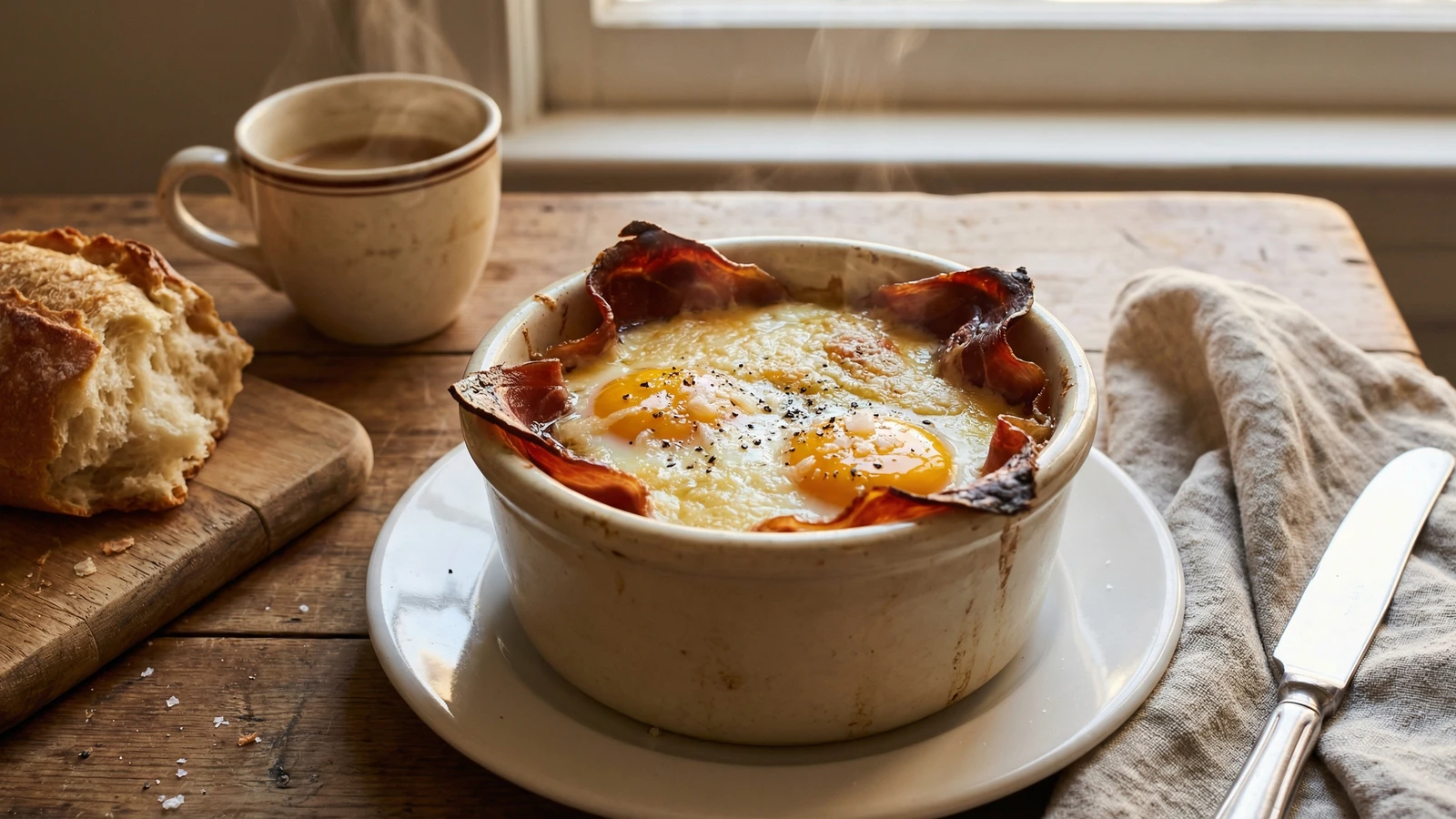
Uova al Forno con Prosciutto di Parma
Created by Chef Graziella
Eggs baked in a nest of Parma's famous prosciutto, the ham crisping at the edges while the yolks stay liquid. This is Emilian restraint: four ingredients, none hiding behind another.
In Emilia-Romagna, we do not apologize for simplicity. We insist on it. This dish contains four ingredients. Each one must be worthy of the name or you should not begin.
The prosciutto comes from Parma, where pigs eat the whey left over from making Parmigiano-Reggiano, and the air from the Apennine foothills cures the hams for years. The cheese comes from those same hills, aged until it crumbles and sings. The eggs must be fresh, with yolks so orange they look artificial to Americans accustomed to pale industrial specimens. The butter must taste like butter.
There is no technique here to impress your friends. You are simply placing excellent things in a hot oven and not ruining them. The prosciutto crisps where it touches the ceramic, stays silky where the egg protects it. The yolk remains liquid if you have the discipline to remove the dish before your fear tells you it needs more time. The cheese melts into lace.
This is a Sunday morning dish. Not rushed, not complicated, just honest. Serve it with bread warm from the oven and strong coffee. Say little. Eat while it is hot.
Baked eggs appear throughout Emilia-Romagna in various forms, always reflecting the region's wealth of pork and dairy. The combination with prosciutto di Parma follows centuries of logic: in a land that produces both the world's finest cured ham and its greatest cheese, why would you use anything else? The dish exists because the ingredients exist, and because Emilians have always understood that proximity to excellence demands respect for it.
The technique, the tradition, and the story behind every dish.
Discover Culinary AdvisorIngredients
unsalted butter
Quantity
4 tablespoons
softened
prosciutto di Parma
Quantity
8 thin slices (about 4 ounces)
large eggs
Quantity
8
at room temperature
heavy cream
Quantity
4 tablespoons
Parmigiano-Reggiano
Quantity
1/2 cup
freshly grated
black pepper
Quantity
to taste
freshly ground
flaky sea salt
Quantity
to taste
| Ingredient | Quantity |
|---|---|
| unsalted buttersoftened | 4 tablespoons |
| prosciutto di Parma | 8 thin slices (about 4 ounces) |
| large eggsat room temperature | 8 |
| heavy cream | 4 tablespoons |
| Parmigiano-Reggianofreshly grated | 1/2 cup |
| black pepperfreshly ground | to taste |
| flaky sea salt | to taste |
Equipment Needed
- •Four individual baking dishes or ramekins (1-cup capacity)
- •Rimmed baking sheet
Instructions
- 1
Prepare the ramekins
Position a rack in the center of the oven and heat to 400°F. Generously butter the interior of four individual baking dishes or ramekins, each about one cup capacity. The butter must coat every surface. This prevents sticking and contributes to the flavor. Emilian cooking uses butter, not olive oil. Know the difference.
- 2
Line with prosciutto
Drape two slices of prosciutto into each buttered dish, allowing the edges to hang over the rim. The ham should cover the bottom and most of the sides, creating a nest for the eggs. Do not trim the overhanging pieces. They will crisp in the oven and become the best part.
Prosciutto di Parma must be sliced paper-thin. If your slices are thick, they will remain chewy rather than crisping. Speak with your salumiere. A good one understands. - 3
Add the cream
Spoon one tablespoon of cream into the bottom of each prosciutto-lined dish. The cream will cushion the eggs and keep the yolks from overcooking against the hot ceramic. It also enriches the sauce that forms as everything bakes together.
- 4
Crack in the eggs
Crack two eggs into each dish, taking care not to break the yolks. They should nestle side by side in the prosciutto nest. If a yolk breaks, you may continue, but the presentation suffers. Cold eggs are more likely to break. This is why they must be at room temperature.
- 5
Season and add cheese
Grind fresh pepper over each dish. Do not add salt yet. The prosciutto and cheese provide salt. Scatter the grated Parmigiano-Reggiano over the eggs, concentrating it around the whites rather than directly on the yolks.
- 6
Bake until just set
Place the dishes on a baking sheet and transfer to the oven. Bake for 10 to 12 minutes. The whites should be just set, opaque throughout but still tender. The yolks should remain liquid beneath a thin film. They will continue cooking from residual heat after you remove them. Pull them early rather than late.
Every oven differs. Check at 10 minutes. The eggs are ready when the whites no longer jiggle but the yolks move freely beneath the surface. Overcooked yolks cannot be corrected. - 7
Rest and serve
Remove from the oven and let rest for one minute only. The dishes will be extremely hot. Place each ramekin on a small plate, warn your guests about the temperature, and serve immediately with good bread for dipping into the yolk. A final pinch of flaky salt on top, if you wish, though taste first.
Chef Tips
- •Prosciutto di Parma carries a branded fire mark on the skin and a Ducal Crown stamp. Accept no substitutes. American 'prosciutto' is cured differently and lacks the sweetness that defines the original.
- •Warm your serving plates in the oven as it preheats. A cold plate beneath a hot ramekin speeds cooling and hastens the tragedy of an overcooked yolk.
- •If you cannot find eggs with deeply colored yolks, seek out a farmers market. The difference is not subtle. Factory eggs produce factory results.
- •The overhanging prosciutto edges that crisp and darken are not burnt. They are the reward for those who understand that contrast in texture elevates simple preparations.
Advance Preparation
- •There is no advance preparation. This dish takes 20 minutes from cold oven to table. The only preparation is having ingredients of sufficient quality.
- •You may butter the ramekins an hour ahead if you wish to shave two minutes from your morning. Refrigerate them until needed.
Frequently Asked Questions
Nutrition Information
1 serving (about 155g)
Where cooking meets culture.
Culinary mentorship, cultural storytelling, and the editorial depth that makes cooking meaningful.
Explore Culinary Advisor