Culinary Advisor
A cooking platform built around craft, culture, and the stories behind what we eat.
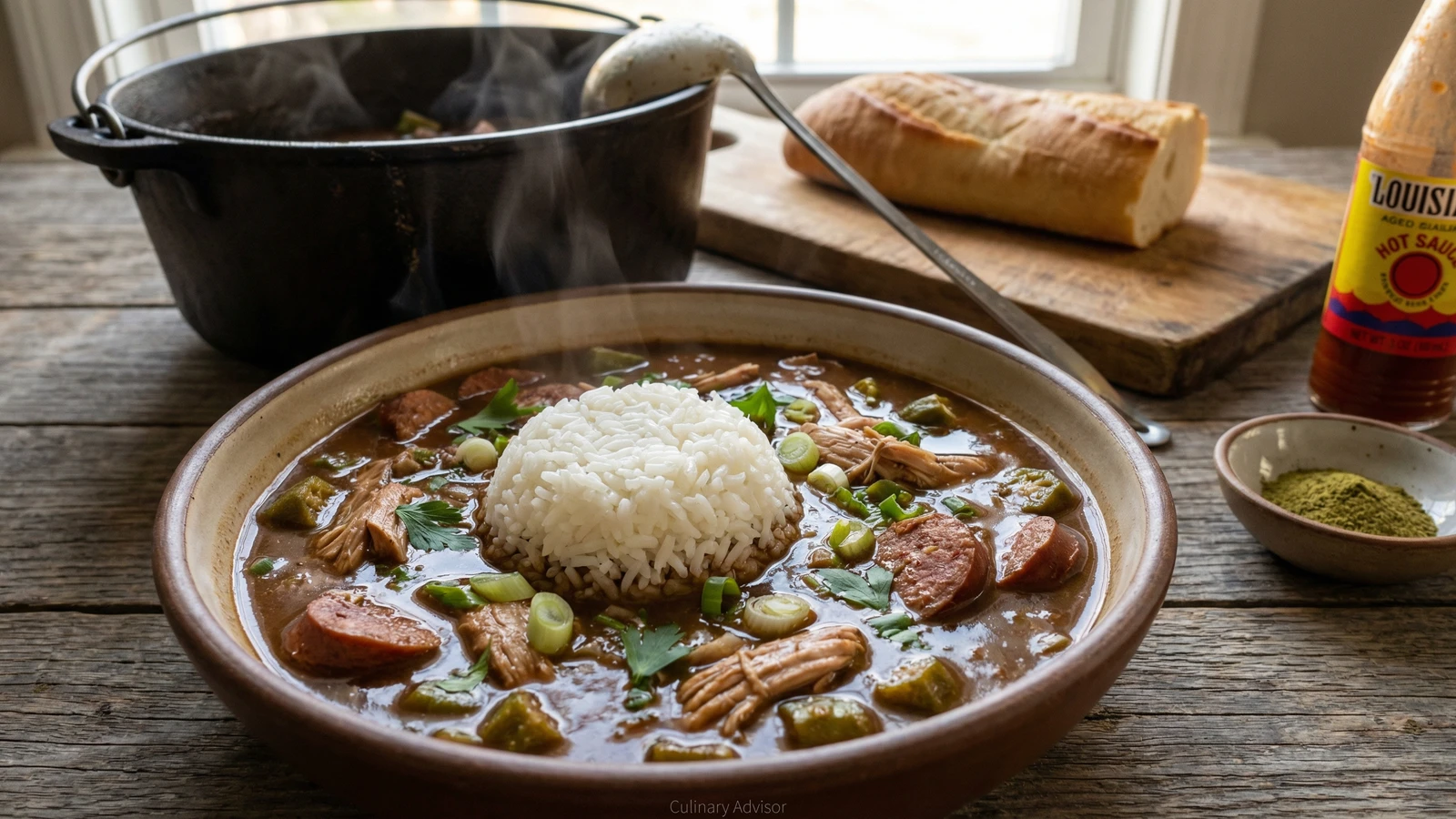
Turkey and Andouille Gumbo
Created by Chef Remy
The day-after-Thanksgiving miracle: leftover turkey transformed into a rich, smoky gumbo with a chocolate-dark roux and spicy andouille, served over steaming rice with all the love of four generations of bayou cooking.
Every year, my grandmother Evangeline roasted a turkey too big for her table. I thought she couldn't count, but I was wrong. She was planning ahead. That bird wasn't dinner. It was the beginning of gumbo.
This is the magic of Louisiana cooking: nothing goes to waste. Turkey carcass becomes stock. Leftover meat becomes treasure. And when you marry that turkey with smoky andouille and a proper dark roux, you end up with something better than the Thanksgiving meal itself. At Lagniappe, we serve this the week after Thanksgiving, and people line up for it. They know.
The roux is where the magic lives. You stand at that stove stirring for forty-five minutes, watching the color deepen from blond to peanut butter to chocolate. It smells like roasted pecans when it's right. That's four generations of Boudreaux cooks talking through your hands. Don't rush it. Don't walk away. The roux rewards patience and punishes distraction.
Build your flavor in layers: season the andouille with heat, season the trinity with time, season the finished gumbo with love and a heavy hand. Taste as you go. Adjust. That's the bayou way.
The technique, the tradition, and the story behind every dish.
Discover Culinary AdvisorIngredients
vegetable oil or bacon fat
Quantity
1 cup
all-purpose flour
Quantity
1 cup
yellow onion
Quantity
2 cups
diced
celery
Quantity
1 1/2 cups
diced
green bell pepper
Quantity
1 1/2 cups
diced
garlic
Quantity
6 cloves
minced
andouille sausage
Quantity
1 pound
sliced into half-moons
cooked turkey meat
Quantity
4-5 cups
shredded or cubed
turkey or chicken stock
Quantity
3 quarts
warmed
bay leaves
Quantity
2
Cajun seasoning
Quantity
1 tablespoon
dried thyme
Quantity
1 teaspoon
cayenne pepper
Quantity
1/2 teaspoon, or to taste
black pepper
Quantity
1 teaspoon
freshly ground
Worcestershire sauce
Quantity
1 tablespoon
kosher salt
Quantity
to taste
green onions
Quantity
1 bunch
sliced, whites and greens separated
fresh parsley
Quantity
1/4 cup
chopped
filé powder
Quantity
for serving
white rice
Quantity
for serving
cooked
hot sauce (optional)
Quantity
for serving
| Ingredient | Quantity |
|---|---|
| vegetable oil or bacon fat | 1 cup |
| all-purpose flour | 1 cup |
| yellow oniondiced | 2 cups |
| celerydiced | 1 1/2 cups |
| green bell pepperdiced | 1 1/2 cups |
| garlicminced | 6 cloves |
| andouille sausagesliced into half-moons | 1 pound |
| cooked turkey meatshredded or cubed | 4-5 cups |
| turkey or chicken stockwarmed | 3 quarts |
| bay leaves | 2 |
| Cajun seasoning | 1 tablespoon |
| dried thyme | 1 teaspoon |
| cayenne pepper | 1/2 teaspoon, or to taste |
| black pepperfreshly ground | 1 teaspoon |
| Worcestershire sauce | 1 tablespoon |
| kosher salt | to taste |
| green onionssliced, whites and greens separated | 1 bunch |
| fresh parsleychopped | 1/4 cup |
| filé powder | for serving |
| white ricecooked | for serving |
| hot sauce (optional) | for serving |
Equipment Needed
- •Large Dutch oven or heavy-bottomed pot (7-quart minimum)
- •Wooden spoon or flat-edged roux whisk
- •Ladle
- •Deep serving bowls
Instructions
- 1
Brown the andouille
Heat a large Dutch oven or heavy-bottomed pot over medium-high heat. Add the andouille slices in a single layer and let them sizzle until the edges turn dark and the fat renders out, about four to five minutes per side. The kitchen should smell smoky and rich. Remove the sausage to a plate but leave every drop of that rendered fat in the pot. That's flavor you're building.
Good andouille comes from Louisiana. If yours is from somewhere else, it might be fine, but it won't be the same. Seek out a reputable source or ask your butcher. - 2
Build the roux
Add the oil to the rendered fat in the pot, bringing your total fat to about one cup. Heat over medium until shimmering, then whisk in the flour all at once. Now comes the meditation. Stir constantly with a wooden spoon or flat-edged roux whisk, scraping the bottom and corners of the pot where flour likes to hide and burn. The roux will go from white to blond to peanut butter to the color of milk chocolate. This takes thirty-five to forty-five minutes. Do not walk away. Do not answer the phone. A burned roux is a ruined gumbo, and there's no fixing it.
Your arm will ache. That's how you know you're doing it right. I've made thousands of rouxs in my life, and I still respect this step. - 3
Add the holy trinity
When your roux reaches that deep chocolate color and smells like roasted pecans (not burned toast), add the onion, celery, and bell pepper all at once. It will sizzle and steam and complain. That's good. Stir constantly for another five to seven minutes until the vegetables soften and the roux darkens a shade more. The trinity will stop the cooking and bring everything together. Add the garlic and the white parts of the green onions, stirring for one more minute until fragrant.
- 4
Build the gumbo base
Slowly pour in the warm stock, about a cup at a time, stirring well after each addition. The roux will seize up at first, then relax into the liquid. Take your time here. Rushing makes lumps. Once all the stock is incorporated, the mixture should be the color of strong coffee with cream. Add the bay leaves, Cajun seasoning, thyme, cayenne, black pepper, and Worcestershire sauce. Stir well.
Always use warm or hot stock. Cold stock shocks the roux and can cause it to separate or get lumpy. - 5
Simmer low and slow
Bring the gumbo to a gentle boil, then reduce heat to maintain a lazy simmer with bubbles breaking the surface every few seconds. Let it cook uncovered for one hour, stirring occasionally. The gumbo will thicken and the flavors will marry. A film of oil may rise to the surface. Skim it if you like, or leave it for richness. Taste and adjust seasoning. The gumbo should be well-seasoned but not salty, with warmth from the cayenne building at the back of your throat.
- 6
Add the proteins
Return the browned andouille to the pot along with the turkey meat. Stir gently to distribute, then continue simmering for another thirty minutes. The turkey will absorb the gumbo's flavor while lending its own richness to the broth. The sausage will plump slightly. Taste again. This is when you make final adjustments: more salt, more cayenne, more black pepper. You're the cook. Trust your palate.
- 7
Finish and serve
Remove the bay leaves. Stir in the green onion tops and most of the parsley, reserving some for garnish. Ladle generous portions over mounds of steamed white rice in deep bowls. Sprinkle with remaining parsley and green onions. Pass filé powder and hot sauce at the table, letting each person season their own bowl.
Filé powder thickens and flavors gumbo, but it gets stringy if it boils. Always add it at the table or after removing from heat.
Chef Tips
- •Save your turkey carcass and make stock the day after Thanksgiving. Homemade turkey stock gives this gumbo a depth that store-bought cannot match. Freeze it until you're ready to cook.
- •If you don't have turkey, this recipe works beautifully with rotisserie chicken. Pull all the meat from the bones, use the carcass for quick stock, and proceed as written.
- •Cajun seasoning varies wildly by brand. Start with less than you think you need, taste, and build from there. You can always add heat. You can't take it away.
- •Gumbo is better the second day after the flavors have had time to get acquainted. Make it ahead and reheat gently. Add a splash of stock if it's thickened too much.
- •At Lagniappe, we serve this with hot sauce on the side and cold beer nearby. Both are traditional and non-negotiable.
Advance Preparation
- •The roux can be made up to a week ahead and refrigerated in a sealed container. Reheat gently before adding vegetables.
- •Complete gumbo (without rice) refrigerates beautifully for up to 4 days. The flavors deepen overnight.
- •Freeze finished gumbo for up to 3 months. Thaw overnight in the refrigerator and reheat slowly, adding stock to adjust consistency.
Frequently Asked Questions
Nutrition Information
1 serving (about 380g)
Where cooking meets culture.
Culinary mentorship, cultural storytelling, and the editorial depth that makes cooking meaningful.
Explore Culinary Advisor