Culinary Advisor
A cooking platform built around craft, culture, and the stories behind what we eat.
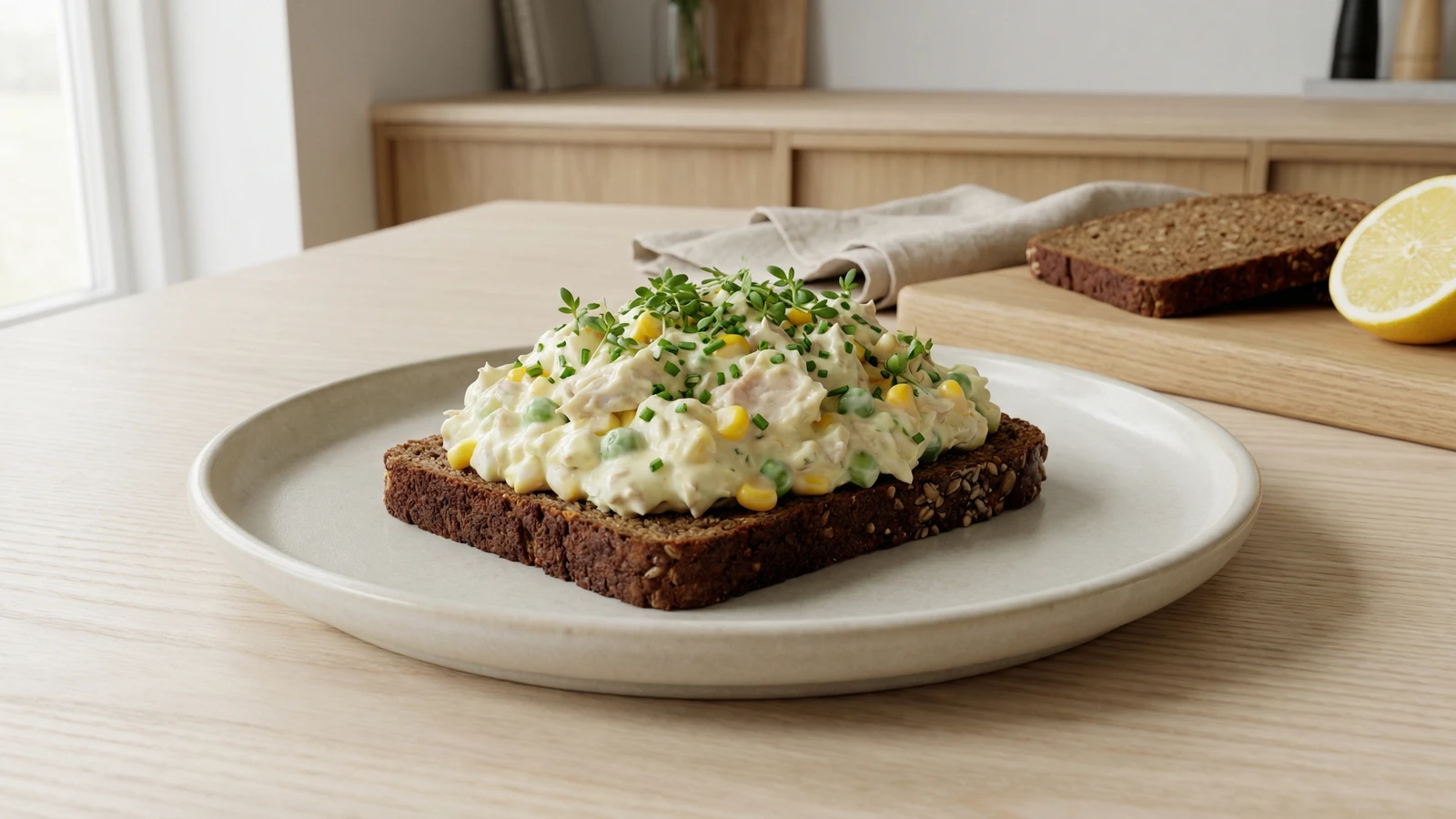
Tunsalat
Created by Chef Freja
The Danish weekday tuna salad of canned tuna, sweet corn, peas, and a lemon-spiked mayo, spooned onto dark rugbrod. Five minutes from fridge to lunchbox, and one of the most quietly loved things in the whole repertoire.
The madpakke is the most unromantic institution in Danish food culture, and also one of the most important. It's the lunchbox you pack the night before or the morning of, a stack of rugbrod slices with something good on top, wrapped in paper and sent with you to school or to work. Tunsalat belongs to this world. Not the world of the long lunch and the aquavit, but the world of the Monday morning and the need to get out the door.
This is a pantry dish, which is another way of saying it doesn't care what season it is. Two tins of tuna, a spoonful of mayonnaise, a handful of corn and peas, the sharp lift of lemon, and a few snipped chives from the windowsill. Five minutes. The result is something that sits on dark rugbrod with the quiet confidence of a dish that has been made exactly this way in Danish kitchens for nearly a hundred years, and shows no sign of going anywhere.
What matters most is that you drain everything properly. The tuna, the corn, the peas. Wet ingredients make wet salad, and wet salad soaks into the bread and turns the whole thing sad. I'll walk you through it so you know what to watch for. And pay attention to the lemon. Most recipes forget it, and without it the salad goes heavy. With it, the whole thing lifts.
Canned tuna arrived in Denmark in the early twentieth century, when improvements in canning technology made preserved fish an affordable pantry staple across Scandinavia, and it slotted neatly into the existing Danish habit of putting something savoury on a slice of rye for lunch. The addition of sweet corn and peas, the detail that distinguishes Danish tunsalat from the tuna salads of other countries, came later, popularised by the cookery magazines and housewife's handbooks of the 1950s and 1960s that were shaping the modern madpakke. By the 1970s, a bowl of tunsalat in the fridge had become shorthand for a household that was ready for the week ahead.
The technique, the tradition, and the story behind every dish.
Discover Culinary AdvisorIngredients
tuna in water
Quantity
2 cans (about 320g drained)
drained thoroughly
good mayonnaise
Quantity
4 tablespoons
sweet corn
Quantity
100g
drained
frozen peas
Quantity
80g
defrosted and patted dry
fresh lemon juice
Quantity
1 tablespoon, plus more to taste
fine sea salt
Quantity
to taste
white pepper
Quantity
freshly ground, to taste
chives
Quantity
1 tablespoon, plus more to finish
finely snipped
dark rugbrod
Quantity
thick slices, to serve
cress (optional)
Quantity
small handful, to finish
| Ingredient | Quantity |
|---|---|
| tuna in waterdrained thoroughly | 2 cans (about 320g drained) |
| good mayonnaise | 4 tablespoons |
| sweet corndrained | 100g |
| frozen peasdefrosted and patted dry | 80g |
| fresh lemon juice | 1 tablespoon, plus more to taste |
| fine sea salt | to taste |
| white pepper | freshly ground, to taste |
| chivesfinely snipped | 1 tablespoon, plus more to finish |
| dark rugbrod | thick slices, to serve |
| cress (optional) | small handful, to finish |
Equipment Needed
- •Fine sieve for draining the tuna
- •Medium mixing bowl
- •Fork for flaking and folding
Instructions
- 1
Drain the tuna properly
Tip the tuna into a fine sieve and press it with the back of a spoon until no more water runs out. This is the step people skip and the reason their tunsalat turns out watery and grey. The tuna should look almost dry and flake apart when you press it. A wet tin gives you a sad salad; a properly drained one gives you something that holds its shape on a slice of rugbrod.
Give it a minute longer than you think you need. The last spoonfuls of water are the ones that ruin the texture. - 2
Prepare the vegetables
Drain the corn well and tip it onto a piece of kitchen paper to blot. Defrost the peas under cool running water, then dry them the same way. Peas and corn carry more water than you would guess, and wet vegetables dilute the dressing. You want every ingredient going into the bowl as dry as you can reasonably get it.
- 3
Combine with care
Tip the drained tuna into a bowl and break it up gently with a fork. Add the mayonnaise, the lemon juice, the corn, and the peas. Fold everything together with the fork. Don't stir hard. You want the tuna in soft flakes, not a paste, and you want to see the yellow of the corn and the green of the peas holding their shape. Add the snipped chives and fold them through.
A fork is the right tool here. A spoon crushes everything into a single colour and you lose the thing that makes this dish pretty on bread. - 4
Season and taste
Add a pinch of salt and a turn of white pepper, then taste. Adjust. What you are looking for is brightness from the lemon, richness from the mayo, and the clean savour of the tuna sitting on top of it all. If it tastes flat, add a few more drops of lemon juice before you reach for more salt. Lemon is almost always the answer. You'll know when it's right when the flavour lifts off the spoon instead of sitting heavy on it.
- 5
Serve on rugbrod
Spoon a generous mound of tunsalat onto a thick slice of dark rugbrod, spreading it to the edges but letting the bread show at the corners. Finish with a scatter of extra chives and, if you have it, a small handful of cress. Eat with a knife and fork. This is the weekday smorrebrod that built generations of Danish lunchboxes, and it deserves the same care you'd give the fancier pieces. Tak for mad.
Chef Tips
- •Tuna in water is the traditional Danish choice and keeps the salad clean and bright. Tuna in olive oil gives a richer, more luxurious result if you're serving it as a smorrebrod piece at the table rather than packing it in a lunchbox. Either is honest.
- •Good mayonnaise matters more than you'd think, because there are only a few ingredients and you can taste every one. Danish mayonnaise is slightly sweeter and softer than the French or American versions. If you can find a Danish brand, use it. If not, a good quality jarred mayo with a small pinch of sugar added will get you close.
- •Chives are the right herb here, not parsley and definitely not dill. Dill belongs to the fish and the cucumber; chives belong to the creamy things. It's a quiet distinction but a Danish one.
- •The salad is better after thirty minutes in the fridge than it is straight from the bowl. The flavours settle into each other. If you have the time, make it ahead and let it rest.
Advance Preparation
- •Tunsalat keeps well in a sealed container in the fridge for up to two days. Any longer and the peas start to lose their colour and the lemon fades.
- •For a madpakke, assemble the smorrebrod in the morning rather than the night before. Tuna salad on rugbrod held overnight softens the bread, and rugbrod at its best has a little bite to it.
- •You can prep the components, drained tuna, corn, peas, the evening before and store them separately, then fold everything together in under a minute when you need it.
Frequently Asked Questions
Nutrition Information
1 serving (about 195g)
Where cooking meets culture.
Culinary mentorship, cultural storytelling, and the editorial depth that makes cooking meaningful.
Explore Culinary Advisor