Culinary Advisor
A cooking platform built around craft, culture, and the stories behind what we eat.
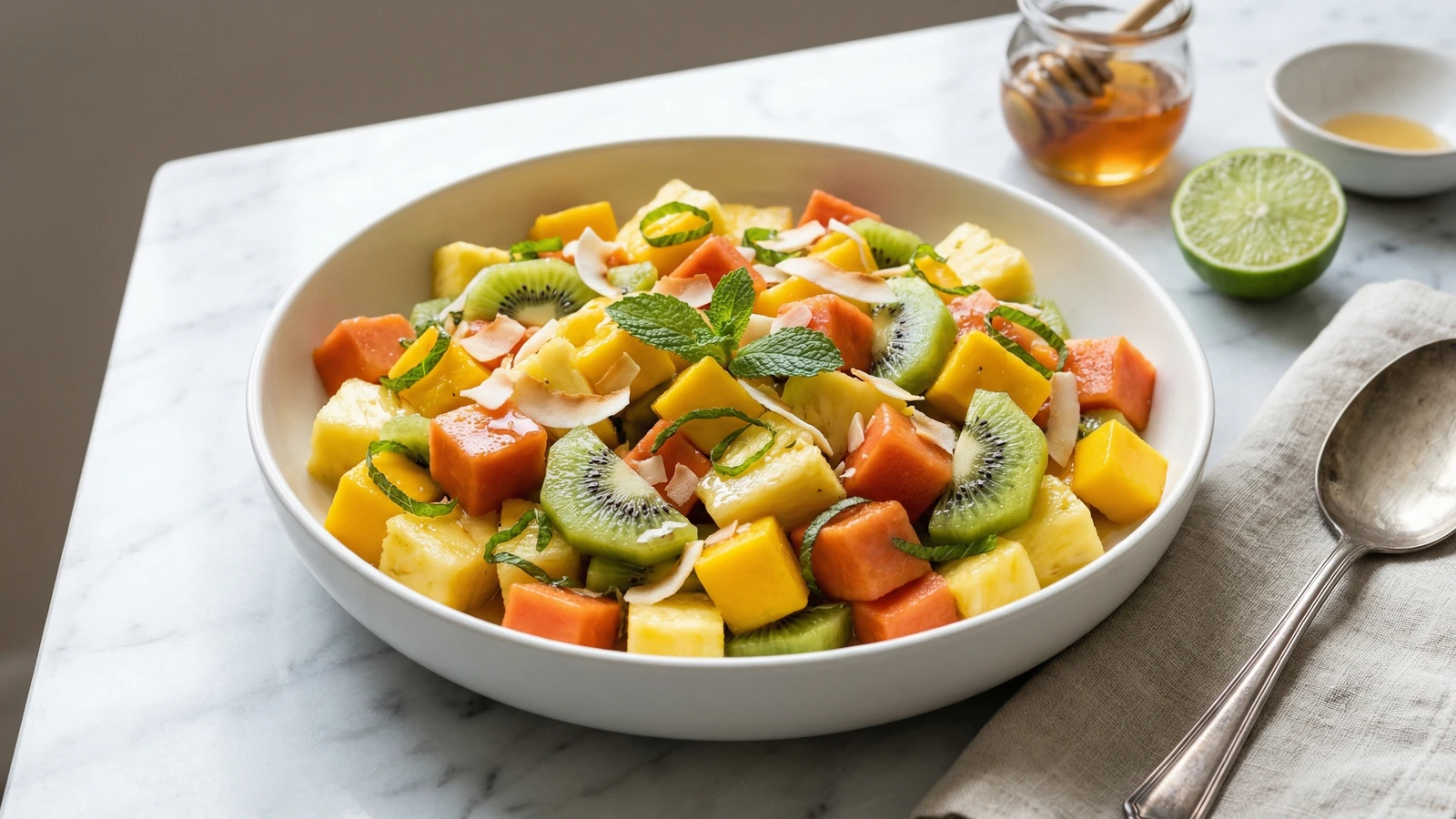
Tropical Fruit Salad with Honey-Lime Dressing
Created by
Sun-ripened tropical fruits glistening in a silky honey-lime dressing brightened with fresh mint. This is the fruit salad that makes guests ask for the recipe, the one that disappears first from the bridal shower buffet.
Aproper fruit salad requires the same respect you'd give any composed dish. I've watched too many cooks dump canned fruit cocktail into a bowl and call it done. That's not cooking. That's giving up.
Tropical fruits deserve better. A ripe mango has complexity rivaling any stone fruit. Pineapple, when chosen well, balances sweetness with enough acid to wake up your palate. Papaya brings that soft, almost custard-like quality that rounds out the texture. Together, they create something greater than any single fruit could achieve alone.
The dressing here isn't an afterthought. Honey and lime form a glossy coating that clings to each piece, the honey's viscosity acting as a natural binder while the lime's acid brightens everything it touches. A handful of fresh mint woven throughout provides the cooling counterpoint these bold flavors need. This is fruit salad elevated to its proper station: worthy of a bride, worthy of your best china, worthy of the effort it takes to select perfect specimens at the market.
The technique, the tradition, and the story behind every dish.
Discover Culinary AdvisorIngredients
ripe mangoes
Quantity
2 large (about 1 1/2 pounds total)
fresh pineapple
Quantity
1/2 large (about 2 pounds before trimming)
ripe papaya
Quantity
1 medium (about 1 pound)
ripe kiwis
Quantity
2
fresh lime juice
Quantity
1/4 cup (about 3 limes)
lime zest
Quantity
2 teaspoons
finely grated
mild honey
Quantity
3 tablespoons
fine sea salt
Quantity
1/8 teaspoon
fresh mint leaves
Quantity
2 tablespoons
cut into thin ribbons
unsweetened coconut flakes (optional)
Quantity
1/4 cup
lightly toasted
fresh mint sprigs
Quantity
for garnish
| Ingredient | Quantity |
|---|---|
| ripe mangoes | 2 large (about 1 1/2 pounds total) |
| fresh pineapple | 1/2 large (about 2 pounds before trimming) |
| ripe papaya | 1 medium (about 1 pound) |
| ripe kiwis | 2 |
| fresh lime juice | 1/4 cup (about 3 limes) |
| lime zestfinely grated | 2 teaspoons |
| mild honey | 3 tablespoons |
| fine sea salt | 1/8 teaspoon |
| fresh mint leavescut into thin ribbons | 2 tablespoons |
| unsweetened coconut flakes (optional)lightly toasted | 1/4 cup |
| fresh mint sprigs | for garnish |
Equipment Needed
- •Large serving bowl (glass shows off the colors beautifully)
- •Sharp chef's knife
- •Vegetable peeler
- •Microplane or fine grater for zesting
- •Small whisk
Instructions
- 1
Select your fruit
Ripeness determines everything. Your mango should yield slightly to pressure near the stem and smell fragrant, almost perfumed. Pineapple should pull away easily when you tug a center leaf and release a sweet aroma from its base. Papaya needs to give gently, like a ripe avocado, with golden-orange skin showing through any green. Underripe fruit makes a mediocre salad no dressing can rescue.
Buy your tropical fruit three to four days before you need it. Most supermarket specimens need time on the counter to reach their peak. - 2
Build the dressing
Zest your limes first, before juicing. You want that fragrant outer layer, not the bitter white pith beneath. In a small bowl, combine the lime juice, zest, honey, and salt. Whisk vigorously for thirty seconds until the honey dissolves completely and the mixture turns slightly opaque. The honey's natural sugars will bind with the lime juice, creating a glossy, cohesive dressing that clings rather than pools.
If your honey is crystallized or thick, warm the lime juice gently first. Honey dissolves poorly into cold liquid and will streak instead of emulsify. - 3
Prepare the mango
Stand the mango on its end and slice down along each side of the flat pit, giving you two cheeks. Score each cheek in a crosshatch pattern, cutting to but not through the skin. Invert the cheek so the cubes pop outward, then slice them free. Trim any remaining flesh from around the pit. Cut into roughly three-quarter-inch pieces. Uniformity matters here: evenly sized pieces dress evenly and look intentional.
- 4
Prepare the pineapple
Slice off the crown and base, then stand the pineapple upright. Cut away the skin in strips, following the curve. Remove any remaining eyes with the tip of your knife or a small melon baller. Quarter the pineapple lengthwise, cut away the fibrous core from each quarter, then slice into half-inch chunks. The pineapple's firmer texture provides necessary contrast to the softer fruits.
- 5
Prepare the papaya
Halve the papaya lengthwise and scoop out the black seeds with a spoon. Peel each half with a vegetable peeler or paring knife. Cut into three-quarter-inch cubes, handling gently. Ripe papaya bruises easily and becomes mushy if mistreated. Its creamy texture provides the counterpoint to pineapple's bite.
- 6
Prepare the kiwi
Trim both ends of each kiwi, then slide a spoon between the flesh and skin, rotating to release the fruit whole. Slice into half-inch rounds, then quarter each round. The kiwi's emerald color and slight tartness cut through the sweeter fruits, while those tiny black seeds add visual interest and the faintest textural crunch.
- 7
Combine and dress
Place all prepared fruit in a large, wide serving bowl. Drizzle the dressing over the top and toss gently, using two large spoons or your impeccably clean hands. The goal is coating every piece without crushing the delicate papaya. Add the mint ribbons and toss once more. The dressing should glisten on every surface, pooling slightly at the bottom.
Cut mint into thin ribbons, called chiffonade, rather than chopping. Chopping bruises the leaves and turns them dark. Stack the leaves, roll them like a cigar, and slice thinly. - 8
Rest and serve
Let the salad rest at room temperature for ten to fifteen minutes before serving. This brief maceration allows the dressing to penetrate slightly while the fruit releases a small amount of juice that enriches the dressing. Any longer and the fruit begins to weep. Scatter toasted coconut over the top if using, garnish with mint sprigs, and serve within the hour.
For a bridal shower or buffet, nestle the serving bowl in a larger bowl filled with ice. This keeps everything cold without the fruit sitting directly in ice water.
Chef Tips
- •Never refrigerate whole tropical fruit. Cold temperatures halt ripening and damage cell structure, leaving you with mealy, flavorless specimens. Refrigerate only after cutting, and even then, bring to room temperature before serving for the best flavor.
- •The dressing ratio works for any combination of tropical fruit. Try adding starfruit, dragon fruit, or fresh passion fruit pulp when you find them at peak ripeness.
- •For an adult variation at evening celebrations, add two tablespoons of white rum or coconut rum to the dressing. The alcohol amplifies the tropical character without overwhelming the fruit.
- •Toast coconut flakes in a dry skillet over medium heat, stirring constantly, until golden in spots. Watch carefully. Coconut goes from perfect to burnt in seconds. Transfer immediately to a plate to stop the cooking.
Advance Preparation
- •The dressing can be made up to three days ahead and refrigerated. Bring to room temperature and whisk again before using.
- •Mango and pineapple can be cut and refrigerated separately up to one day ahead.Store in airtight containers.
- •Papaya and kiwi should be cut no more than four hours before serving. They soften quickly once exposed.
- •The assembled salad is best within two hours. Beyond that, the fruit releases too much liquid and the textures suffer.
Frequently Asked Questions
Nutrition Information
1 serving (about 168g)
Where cooking meets culture.
Culinary mentorship, cultural storytelling, and the editorial depth that makes cooking meaningful.
Explore Culinary Advisor