Culinary Advisor
A cooking platform built around craft, culture, and the stories behind what we eat.
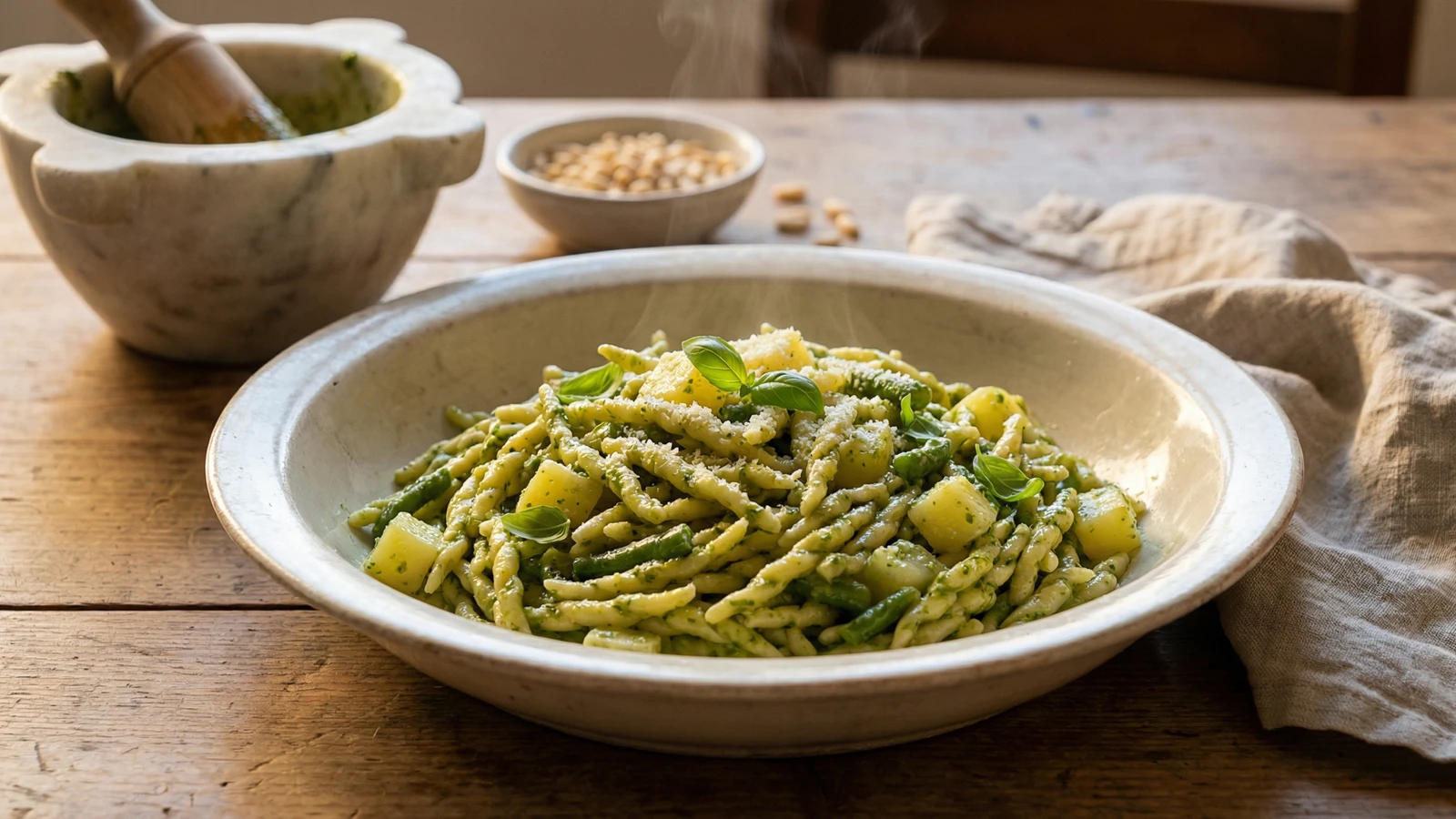
Trofie al Pesto Genovese
Created by Chef Graziella
The true pesto of Genoa, pounded in a mortar with basil, pine nuts, two cheeses, and Ligurian oil, tossed with twisted pasta, potatoes, and green beans as the Ligurians have done for generations.
Pesto is not made in a blender. Or rather, it can be, and what you produce will be adequate. But true pesto Genovese comes from the mortar and pestle, the marble bowl and wooden crusher that give the sauce its name. 'Pestare' means to pound. The pounding releases the oils from the basil leaves without heating them, without bruising them into bitterness. It creates a texture that no blade can replicate.
The basil must be young and tender, preferably from Pra', a small district west of Genoa where the maritime climate and soil produce leaves of extraordinary fragrance and delicacy. If you cannot obtain Genovese basil, use the smallest, most tender leaves you can find. Large leaves grown in hot climates turn aggressive and minty.
The combination of trofie, potatoes, and green beans is not a suggestion. This is how pesto is eaten in Liguria. The starch from the potatoes thickens the sauce. The green beans add sweetness and texture. Those who omit them are making a different dish. They are not making trofie al pesto Genovese.
Pesto descends from ancient pounded sauces: the Roman moretum of cheese, garlic, and herbs, and the medieval agliata of walnuts and garlic. Basil arrived in Genoa from the East and gradually displaced the older ingredients. By the 19th century, the formula we know today had crystallized, and the basil fields of Pra' were already famous. The DOP protection for Pesto Genovese, granted in 2022, codified what Ligurian grandmothers had guarded for centuries.
The technique, the tradition, and the story behind every dish.
Discover Culinary AdvisorIngredients
fresh basil leaves
Quantity
2 cups packed (about 2 large bunches)
Genovese variety if possible
pine nuts
Quantity
2 tablespoons
garlic cloves
Quantity
2
peeled
coarse sea salt
Quantity
1/2 teaspoon, plus more for pasta water
Parmigiano-Reggiano
Quantity
1/4 cup
freshly grated
Pecorino Fiore Sardo or Pecorino Romano
Quantity
2 tablespoons
freshly grated
extra virgin olive oil
Quantity
1/2 cup
preferably Ligurian
trofie pasta
Quantity
1 pound
green beans
Quantity
6 ounces
trimmed and cut into 2-inch pieces
waxy potatoes
Quantity
8 ounces
peeled and cut into 1/2-inch cubes
| Ingredient | Quantity |
|---|---|
| fresh basil leavesGenovese variety if possible | 2 cups packed (about 2 large bunches) |
| pine nuts | 2 tablespoons |
| garlic clovespeeled | 2 |
| coarse sea salt | 1/2 teaspoon, plus more for pasta water |
| Parmigiano-Reggianofreshly grated | 1/4 cup |
| Pecorino Fiore Sardo or Pecorino Romanofreshly grated | 2 tablespoons |
| extra virgin olive oilpreferably Ligurian | 1/2 cup |
| trofie pasta | 1 pound |
| green beanstrimmed and cut into 2-inch pieces | 6 ounces |
| waxy potatoespeeled and cut into 1/2-inch cubes | 8 ounces |
Equipment Needed
- •Large marble mortar and wooden pestle (traditional)
- •Food processor (acceptable alternative)
- •Large pot for pasta and vegetables
- •Salad spinner or clean kitchen towels
Instructions
- 1
Prepare the basil
Wash the basil leaves gently and dry them completely. Wet basil darkens when pounded and produces an inferior pesto. Spread the leaves on clean kitchen towels and pat dry, or use a salad spinner. The leaves must be bone dry.
- 2
Begin the pesto
In a large marble mortar, combine the garlic cloves and coarse salt. Pound with the wooden pestle in a circular, grinding motion until you have a smooth paste. The salt acts as an abrasive. Add the pine nuts and pound until they are incorporated into the paste. This takes patience.
A food processor may be used if a mortar is unavailable. Pulse briefly; do not let the blade heat the basil. The texture will be different, less creamy and more uniform. The mortar produces something the machine cannot replicate. - 3
Add the basil
Add the basil leaves in small handfuls, pounding and grinding against the sides of the mortar with a rotating motion. Work each handful into the paste before adding more. The pounding bruises the leaves and releases their oils without heating them. This is why mortar pesto tastes different from blender pesto. Continue until all the basil is incorporated and you have a thick, bright green paste.
- 4
Add the cheeses
Work in the grated Parmigiano-Reggiano and Pecorino, pounding gently to incorporate. The cheeses add body and salt. Taste. Adjust.
- 5
Add the oil
Add the olive oil in a thin, steady stream while stirring with the pestle. The pesto should become creamy and emulsified. Transfer to a bowl and press plastic wrap directly onto the surface to prevent oxidation. The pesto can wait like this for an hour or two. It does not improve with time.
- 6
Cook the vegetables
Bring a large pot of water to a vigorous boil. Salt it generously. Add the potato cubes first and cook for 5 minutes. They need a head start. Then add the green beans and cook together for another 5 minutes, until both vegetables are tender but not soft. They will finish cooking with the pasta.
- 7
Cook the pasta
Add the trofie to the pot with the vegetables. Cook according to package directions for dried pasta, about 12 minutes, or 3 to 4 minutes for fresh. The pasta, potatoes, and beans cook together in the same water. This is how it is done in Liguria. Reserve one cup of the starchy cooking water before draining.
The starch from the potatoes enriches the pasta water. This is not an accident. The Ligurians understood what they were doing. - 8
Combine and serve
Place the pesto in a large warmed serving bowl. Add two or three tablespoons of the hot pasta water and stir to loosen. Drain the pasta and vegetables and add them to the bowl. Toss gently but thoroughly until every twist of pasta is coated with the green sauce. Add more pasta water if needed to achieve a creamy consistency. The pesto should cling, not pool. Serve immediately in warmed bowls. Do not add cheese at the table. There is already enough in the pesto.
Chef Tips
- •Do not toast the pine nuts. Ligurian tradition keeps them raw. Toasting adds a different flavor that competes with the basil. Some Romans toast. They are wrong.
- •If using a food processor, chill the bowl and blade in the freezer for 20 minutes. This prevents the friction heat that turns pesto brown and bitter. Pulse in short bursts. Never let it run continuously.
- •The ratio of Parmigiano to Pecorino matters. Too much Pecorino makes the pesto aggressive. The traditional balance is roughly four parts Parmigiano to one part Pecorino. Fiore Sardo from Sardinia is most traditional; Romano is acceptable.
- •Pesto oxidizes quickly. If not using immediately, float a thin layer of olive oil on top and press plastic wrap directly onto the surface. It keeps for two days refrigerated, but fresh is always superior.
Advance Preparation
- •Pesto can be made several hours ahead and stored with plastic wrap pressed directly on the surface. It will darken slightly. This is unavoidable.
- •For longer storage, freeze pesto in ice cube trays, then transfer to freezer bags. Add the cheese only after thawing. Frozen pesto keeps three months but loses some vibrancy.
- •The potatoes and green beans must be cooked fresh with the pasta. There is no way around this.
Frequently Asked Questions
Nutrition Information
1 serving (about 370g)
Where cooking meets culture.
Culinary mentorship, cultural storytelling, and the editorial depth that makes cooking meaningful.
Explore Culinary Advisor