Culinary Advisor
A cooking platform built around craft, culture, and the stories behind what we eat.
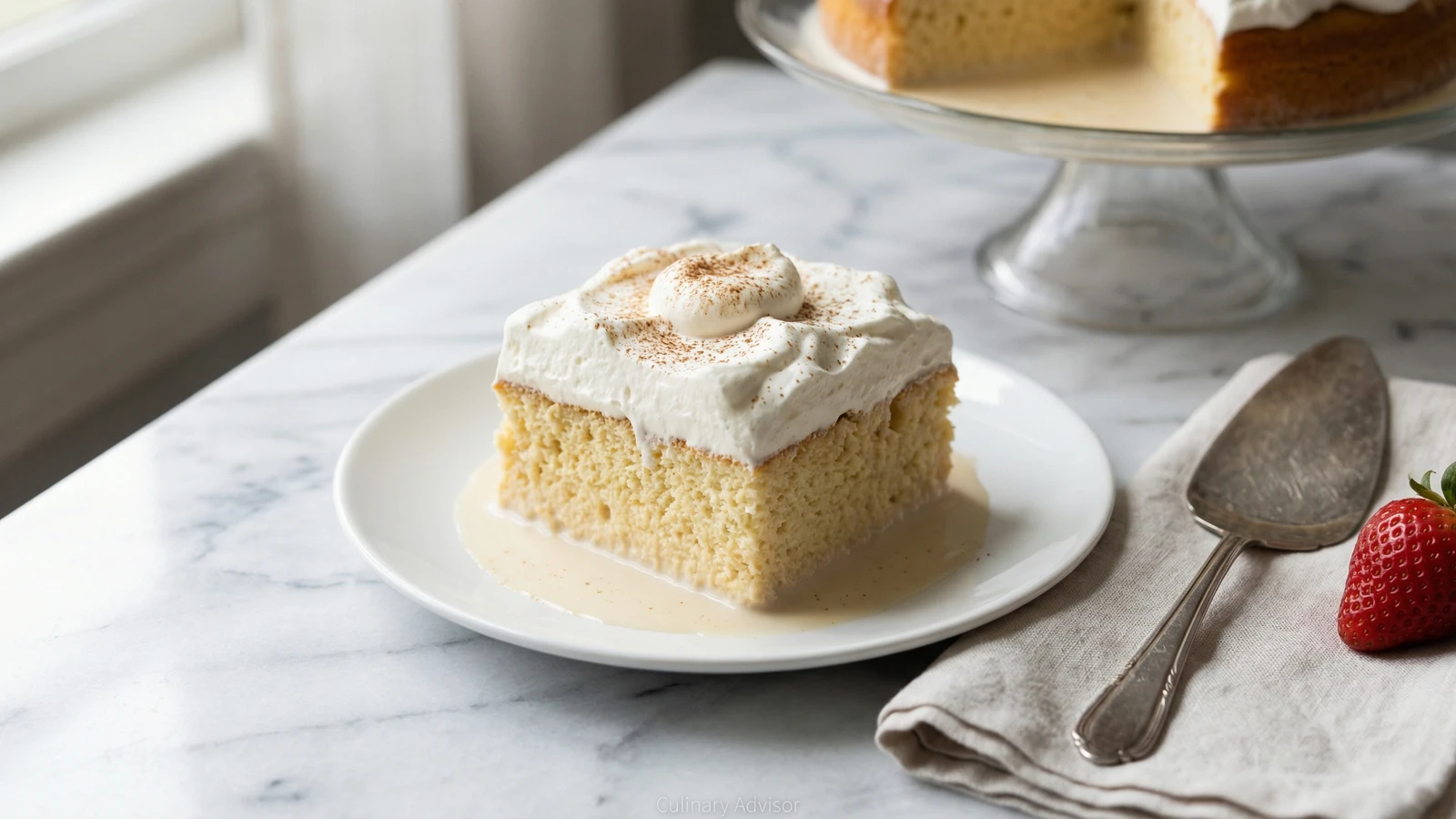
Tres Leches Cake
Created by
A cloud-light sponge cake drenched in a trio of milks until it becomes impossibly moist, then crowned with billowing whipped cream. This is the cake that conquered a continent and will conquer your table.
Tres leches cake is proof that some of the world's greatest recipes come from pantry staples. When canned milk became widely available across Latin America in the early twentieth century, resourceful home cooks discovered that a humble sponge cake transformed into something extraordinary when soaked in a mixture of evaporated milk, sweetened condensed milk, and cream. The result is a dessert that defies physics: impossibly moist yet never soggy, rich yet somehow light, sweet yet not cloying.
The technique requires a specific kind of sponge. You'll beat eggs and sugar until they triple in volume, creating a structure of tiny air bubbles that acts like a sponge. This airy crumb absorbs the milk mixture without collapsing into mush. Rush the egg-beating step and your cake becomes dense. Give it the full five minutes and you'll understand why this recipe works.
I first encountered tres leches in a small bakery in Oaxaca, where an elderly woman sold slices from a battered sheet pan. She told me the secret was patience: the cake must soak overnight. She was right. The flavors marry and mellow, the texture becomes uniform throughout. Make this the day before you serve it and you'll taste the difference.
The technique, the tradition, and the story behind every dish.
Discover Culinary AdvisorIngredients
all-purpose flour
Quantity
1 cup (125g)
baking powder
Quantity
1 1/2 teaspoons
fine sea salt
Quantity
1/4 teaspoon
large eggs
Quantity
5
at room temperature
granulated sugar
Quantity
1 cup (200g)
whole milk (for cake)
Quantity
1/3 cup
at room temperature
pure vanilla extract (for cake)
Quantity
1 teaspoon
sweetened condensed milk
Quantity
1 can (14 oz/396g)
evaporated milk
Quantity
1 can (12 oz/354ml)
heavy cream (for soaking)
Quantity
1 cup
heavy cream (for topping)
Quantity
2 cups
powdered sugar
Quantity
3 tablespoons
pure vanilla extract (for topping)
Quantity
1 teaspoon
ground cinnamon (optional)
Quantity
for dusting
| Ingredient | Quantity |
|---|---|
| all-purpose flour | 1 cup (125g) |
| baking powder | 1 1/2 teaspoons |
| fine sea salt | 1/4 teaspoon |
| large eggsat room temperature | 5 |
| granulated sugar | 1 cup (200g) |
| whole milk (for cake)at room temperature | 1/3 cup |
| pure vanilla extract (for cake) | 1 teaspoon |
| sweetened condensed milk | 1 can (14 oz/396g) |
| evaporated milk | 1 can (12 oz/354ml) |
| heavy cream (for soaking) | 1 cup |
| heavy cream (for topping) | 2 cups |
| powdered sugar | 3 tablespoons |
| pure vanilla extract (for topping) | 1 teaspoon |
| ground cinnamon (optional) | for dusting |
Equipment Needed
- •9x13 inch baking pan
- •Stand mixer or hand mixer with whisk attachment
- •Rimmed serving platter or dish
- •Large rubber spatula
- •Fork or wooden skewer for poking
Instructions
- 1
Prepare your pan
Preheat your oven to 350°F. Butter a 9x13 inch baking dish and line the bottom with parchment paper, then butter the parchment. This cake must release cleanly. Dust lightly with flour and tap out the excess.
A metal pan produces a slightly browned crust that contrasts beautifully with the soaked interior. Glass works but bakes more slowly. - 2
Combine dry ingredients
Whisk together the flour, baking powder, and salt in a medium bowl. Sift if your flour is lumpy. Set aside within arm's reach.
- 3
Beat eggs to ribbon stage
Crack the eggs into the bowl of a stand mixer fitted with the whisk attachment. Beat on medium-high speed, gradually adding the sugar over about one minute. Continue beating for a full five minutes until the mixture triples in volume, turns pale yellow, and falls in thick ribbons when you lift the whisk. This is not optional. Set a timer.
The ribbon test: lift the whisk and let the batter fall back into the bowl. It should hold its shape on the surface for several seconds before sinking in. If it disappears immediately, keep beating. - 4
Add milk and vanilla
With the mixer on low, stream in the milk and vanilla extract. Mix just until incorporated, about fifteen seconds. The batter will thin slightly but should remain voluminous.
- 5
Fold in flour gently
Remove the bowl from the mixer. Sift the flour mixture over the batter in three additions, folding gently with a large rubber spatula after each. Use broad strokes from the bottom of the bowl up and over. Stop the moment you see no dry streaks. Aggressive mixing deflates the air you worked so hard to incorporate.
Folding is not stirring. Think of it as turning the batter over itself, lifting from below and laying it gently on top. - 6
Bake until golden
Pour the batter into your prepared pan and smooth the top gently. Bake for 25 to 30 minutes until the cake is golden, springs back when pressed lightly in the center, and a toothpick inserted comes out clean. The edges will pull slightly away from the pan.
- 7
Cool and poke
Let the cake cool in the pan for ten minutes, then turn it out onto a rimmed serving platter or a clean 9x13 dish. The platter must have a rim to contain the milk mixture. Using a fork or wooden skewer, poke holes all over the top of the cake, about one inch apart. Be thorough. These channels allow the milk to penetrate deeply.
- 8
Make the three milk mixture
Whisk together the sweetened condensed milk, evaporated milk, and one cup of heavy cream until completely combined. This is your tres leches. The sweetened condensed provides richness and sweetness, the evaporated adds caramel depth, and the cream delivers fat and silkiness.
- 9
Soak the cake slowly
While the cake is still slightly warm, pour the milk mixture slowly and evenly over the entire surface. Do this in stages: pour about a third, let it absorb for a minute, then repeat. The cake will seem flooded at first. Trust the process. Cover tightly with plastic wrap and refrigerate for at least eight hours, preferably overnight.
If milk pools stubbornly on top, use a spoon to press gently and encourage absorption. The cake will drink it all eventually. - 10
Whip the cream topping
When ready to serve, combine the remaining two cups of heavy cream, powdered sugar, and vanilla in a chilled bowl. Beat with a hand mixer or whisk until the cream holds soft, billowy peaks. It should mound beautifully but still look natural, not stiff or grainy.
- 11
Top and serve
Spread the whipped cream over the soaked cake in generous swoops, or pipe decoratively if you prefer. Dust lightly with ground cinnamon. The cake should be served cold, cut into squares with a sharp knife dipped in hot water between slices for clean edges.
Chef Tips
- •Room temperature eggs are essential for achieving maximum volume. Set them out an hour before baking, or submerge whole eggs in warm water for ten minutes.
- •The cake actually improves over two to three days as the flavors meld. Make it well ahead for celebrations and top with cream just before serving.
- •For a lighter version, substitute half-and-half for the heavy cream in the soaking mixture. It won't be quite as lush, but still delicious.
- •Leftover cake keeps refrigerated for up to five days. The whipped cream will deflate slightly but the cake itself remains glorious.
- •Some cooks add a tablespoon of rum or brandy to the milk mixture. This is historically appropriate and adds a subtle warmth. Use or omit according to your audience.
Advance Preparation
- •The cake must soak for at least 8 hours and improves with up to 48 hours of refrigeration. Plan accordingly.
- •Bake and soak the cake up to 3 days ahead. Keep tightly covered in the refrigerator.
- •Whip the cream no more than 2 hours before serving. Store covered in the refrigerator until ready to spread.
Frequently Asked Questions
Nutrition Information
1 serving (about 170g)
Where cooking meets culture.
Culinary mentorship, cultural storytelling, and the editorial depth that makes cooking meaningful.
Explore Culinary Advisor