Culinary Advisor
A cooking platform built around craft, culture, and the stories behind what we eat.
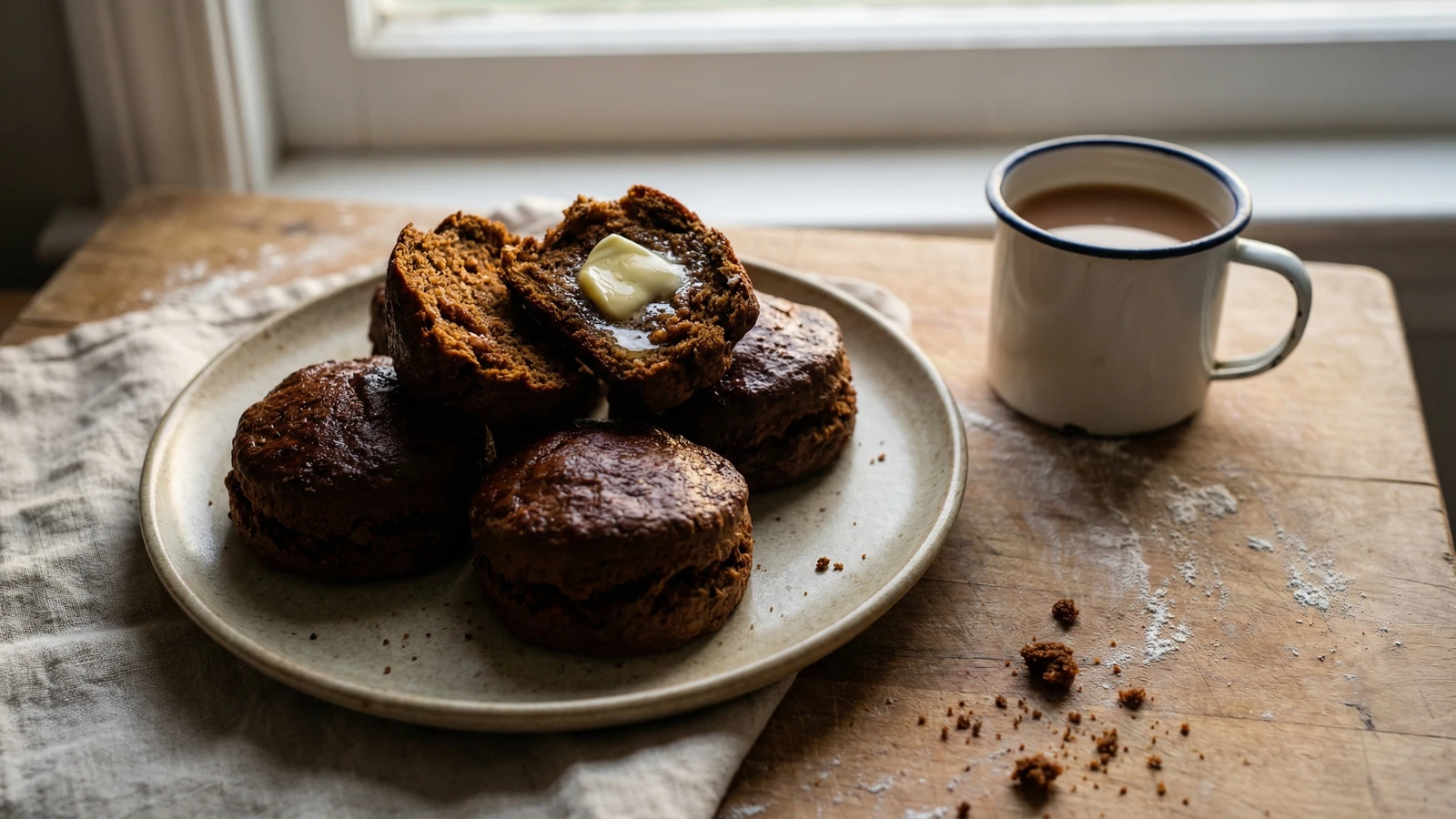
Treacle Scones
Created by Chef Thomas
Dark, spiced Scottish scones the colour of toffee, made for the kind of November evening when the bonfire is going out and someone needs something warm to hold.
It's the first proper cold week of November. The clocks have gone back, it's dark by five, and the kitchen has started doing the thing it does in autumn where it smells of itself again: butter, flour, something warm in the oven. These are the evenings that ask for treacle scones.
They are a Scottish thing, really. Dark with black treacle and warmed with ginger, mixed spice, a whisper of cinnamon. Halfway between a scone and a piece of gingerbread, and better than either. They belong to Halloween and Bonfire Night, to the smell of woodsmoke drifting in from someone else's garden, to the moment you come back inside with cold hands and need something to wrap them around.
They are also one of the quickest things you can bake. Half an hour from the bag of flour to the warm scone in your hand. No proving, no resting, no fuss. A recipe is a conversation, not a contract, and this one is short and friendly. Rub the butter in, stir the treacle through, pat the dough out, cut and bake. We're only making dinner, or whatever it is that happens at four in the afternoon when it's already getting dark and someone puts the kettle on.
I wrote it down in the notebook last November. "Treacle scones. Bonfire night. Salted butter, too much of it. Right food, right evening." I haven't anything to add to that.
The technique, the tradition, and the story behind every dish.
Discover Culinary AdvisorIngredients
self-raising flour
Quantity
350g
plus extra for dusting
baking powder
Quantity
1 teaspoon
ground ginger
Quantity
1 teaspoon
ground mixed spice
Quantity
1 teaspoon
ground cinnamon
Quantity
1/2 teaspoon
fine sea salt
Quantity
1/2 teaspoon
cold unsalted butter
Quantity
75g
cubed
soft dark brown sugar
Quantity
50g
black treacle
Quantity
2 tablespoons
whole milk
Quantity
150ml
plus a little extra for brushing
large egg
Quantity
1
salted butter
Quantity
to serve
| Ingredient | Quantity |
|---|---|
| self-raising flourplus extra for dusting | 350g |
| baking powder | 1 teaspoon |
| ground ginger | 1 teaspoon |
| ground mixed spice | 1 teaspoon |
| ground cinnamon | 1/2 teaspoon |
| fine sea salt | 1/2 teaspoon |
| cold unsalted buttercubed | 75g |
| soft dark brown sugar | 50g |
| black treacle | 2 tablespoons |
| whole milkplus a little extra for brushing | 150ml |
| large egg | 1 |
| salted butter | to serve |
Equipment Needed
- •Large mixing bowl
- •Pastry cutter, around 6cm
- •Baking tray
- •Baking parchment
- •Wire cooling rack
- •Pastry brush
Instructions
- 1
Heat the oven
Set the oven to 220C/200C fan and line a baking tray with parchment. The oven needs to be properly hot before the scones go in. A lukewarm oven is the enemy of a good rise. Trust me on this. Wait until it's actually ready.
If your oven runs cool, give it a few extra minutes. Scones want a sudden hit of heat to lift them. - 2
Rub in the butter
Tip the flour, baking powder, ginger, mixed spice, cinnamon and salt into a wide bowl and give it a quick whisk to distribute the spices. Add the cold butter and rub it in with your fingertips, lifting your hands as you go to keep things cool and airy. Stop when the mixture looks like coarse breadcrumbs with a few larger flecks of butter still visible. Those flecks are what make a scone flaky rather than dense. Stir the brown sugar through.
- 3
Warm the treacle
Spoon the treacle into a small bowl or jug and warm it gently. Ten seconds in the microwave will do it, or stand the bowl in a little hot water for a minute. Cold treacle from the tin is impossible to work with. Warmed, it loosens and pours like dark, slow honey. Whisk the milk and egg into the treacle until you have a glossy, deep brown liquid that smells faintly of bonfire toffee.
A spoon dipped in hot water will release the treacle cleanly from the tin without that long sticky thread. - 4
Bring the dough together
Pour most of the wet mixture into the flour, holding back a few tablespoons. Use a butter knife to cut and fold the dough together with quick, light strokes. Add the rest of the liquid only if it looks dry. You want a soft, slightly tacky dough that just holds itself, not a smooth one. Stop the moment it comes together. Overworked scone dough turns tough and you cannot undo it.
- 5
Shape and cut
Tip the dough onto a lightly floured surface and pat it gently into a round about three centimetres thick. Don't roll it. A rolling pin presses out the air you've worked so hard to keep in. Use a floured cutter to stamp out rounds, pressing straight down without twisting. Twisting seals the edges and stops them rising. Gather the scraps lightly, pat them out again, and cut the rest. The second batch never quite matches the first. That's just how scones are.
- 6
Bake until risen
Place the scones on the lined tray, close together but not touching. Brush the tops with a little milk. Bake for twelve to fifteen minutes, until they've risen tall and the tops are deep mahogany brown and feel firm when you tap them. The kitchen will smell of gingerbread and burnt sugar and the kind of November evenings you remember from childhood. Lift one up. The bottom should sound hollow when you tap it.
Treacle scones colour faster than plain ones because of the dark sugar. Don't mistake the dark top for burnt. Trust your nose. If it smells right, it is right. - 7
Cool briefly and serve
Slide the scones onto a wire rack and let them cool for five minutes, no longer. Split one open while it's still warm enough to melt butter. Salted butter, generous, the kind that pools into the crumb. That's how they should be eaten. Standing in the kitchen, fingers slightly sticky, the next one already calling.
Chef Tips
- •Black treacle is the one to buy, not golden syrup, not molasses. Black treacle has the bitterness and depth that makes these taste of bonfires rather than just sweet bread. A tin lasts for years in the cupboard and earns its keep every autumn.
- •Cold butter, cold hands, hot oven. Those are the three rules of scones, and they don't change. Warm butter makes a heavy dough. A tepid oven makes a flat scone. Get the temperatures right and the rest is forgiveness.
- •These are best on the day they're made, eaten warm with salted butter. If you have any left the next morning, split them and toast them under the grill until the edges crisp. Butter again. They almost improve.
- •If you want to gild the lily, a spoonful of marmalade on a warm treacle scone is one of the better things you can do before noon. The bitterness of the orange peel cuts through the dark sweetness of the treacle in a way that feels deliberate.
Advance Preparation
- •Best eaten on the day they're baked, ideally still warm from the oven. Scones don't really improve with keeping.
- •The dry ingredients can be measured and mixed the night before, ready in a bowl on the counter. Then it's just the wet ingredients to deal with in the morning.
- •If you must keep them, store in an airtight tin for up to two days and refresh in a hot oven for three minutes before serving. They freeze well too, wrapped individually, for up to a month.
Frequently Asked Questions
Nutrition Information
1 serving (about 80g)
Where cooking meets culture.
Culinary mentorship, cultural storytelling, and the editorial depth that makes cooking meaningful.
Explore Culinary Advisor