Culinary Advisor
A cooking platform built around craft, culture, and the stories behind what we eat.
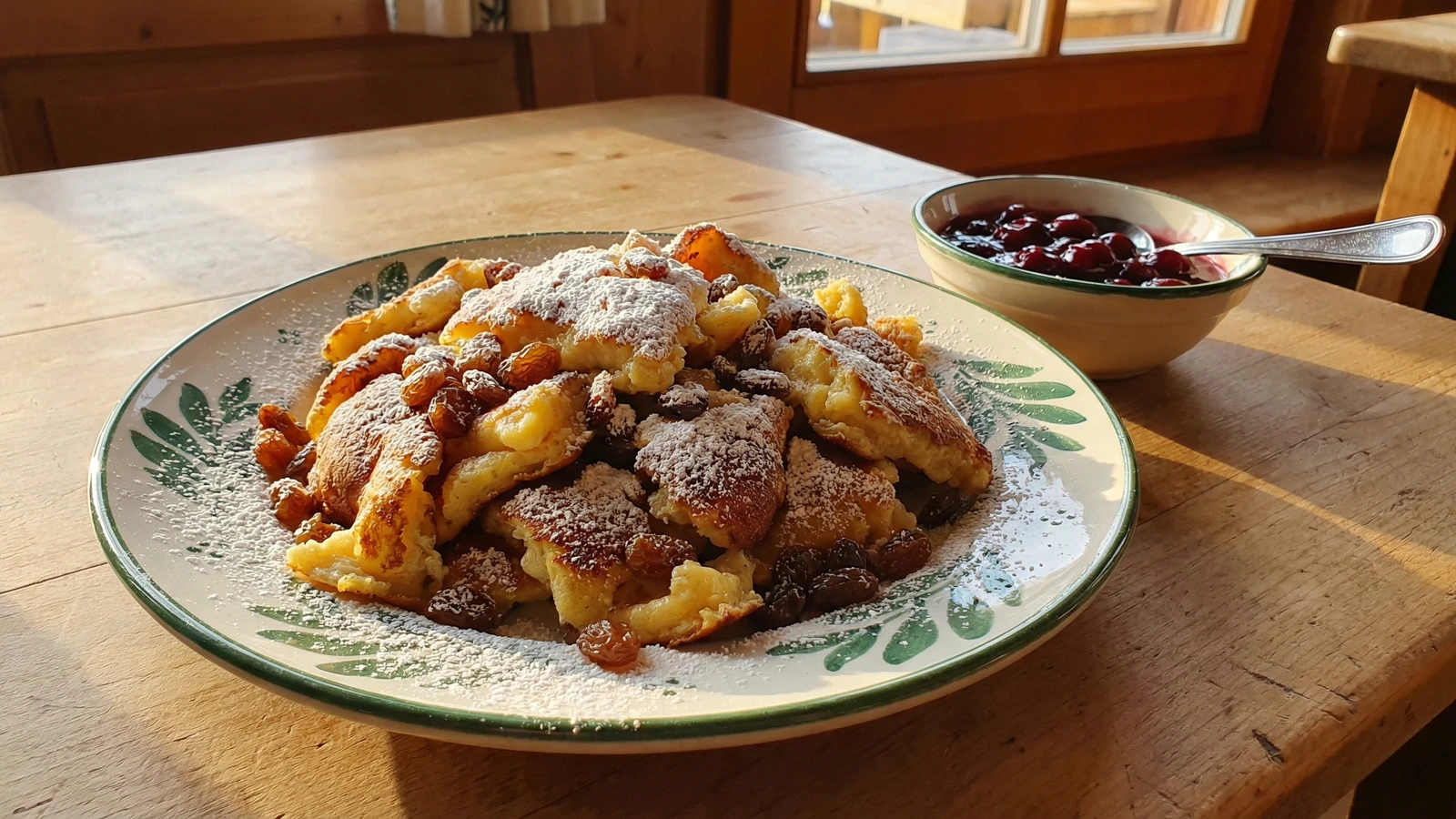
Topfenschmarrn
Created by Chef Elsa
Quark gives this Schmarrn a moist, tangy soul that Kaiserschmarrn can't touch, torn in the pan with too much butter and served with warm fruit compote because Austrians understand that dessert is the point of dinner.
Kaiserschmarrn gets all the fame. It's the one tourists order, the one that ends up on postcards and menus translated into six languages. But if you sit down with an Austrian family in Salzburg or Tyrol, in a proper farmhouse kitchen or a Gasthaus that still cooks like one, chances are they'll put Topfenschmarrn in front of you instead. This is the one they make for themselves.
Topfen is the Austrian word for quark, that thick, tangy fresh curd cheese that sits somewhere between yogurt and ricotta. Mixed into the batter, it does something no amount of egg or milk can do on its own. It makes the Schmarrn moist and tender all the way through, with a gentle sourness that balances the butter and sugar and stops the whole thing from becoming too sweet. The texture is different too. Where Kaiserschmarrn is airy and eggy, Topfenschmarrn has a softer, almost custardy heart. The torn edges still caramelize. The contrast is just more pronounced.
In my grandmother Eva's kitchen, Gretel would make this when she wanted something quick and comforting on a rainy afternoon. She'd press the Topfen through a sieve with the back of a spoon (she was particular about that), fold in whipped egg whites with the kind of patience that made me fidget as a child, and then tear the whole thing apart in a hot pan like she was settling an argument. Five minutes later we'd be eating it with powdered sugar on our sleeves. I still make it the same way. Good butter, good Topfen, a little lemon zest, and the willingness to make a beautiful mess.
Schmarrn dishes originated in Alpine peasant cooking, where torn pancakes stretched simple ingredients into filling meals for farming families. The word Schmarrn itself comes from the Bavarian-Austrian dialect for 'mess' or 'nonsense.' Topfenschmarrn belongs particularly to the Alpine dairy regions of Salzburg, Tyrol, and Styria, where fresh Topfen was a daily staple, and it predates the grander Kaiserschmarrn. Adding quark to the batter was the farmhouse cook's way of using what the cows provided that morning.
The technique, the tradition, and the story behind every dish.
Discover Culinary AdvisorIngredients
Topfen (quark, 20% fat)
Quantity
250g
eggs
Quantity
4 large
separated
granulated sugar
Quantity
40g
vanilla sugar (Vanillezucker)
Quantity
1 teaspoon
salt
Quantity
pinch
lemon
Quantity
1
zested
plain flour
Quantity
40g
sour cream (Sauerrahm)
Quantity
2 tablespoons
raisins (optional)
Quantity
40g
soaked in rum
unsalted butter
Quantity
50g
granulated sugar (for caramelizing)
Quantity
1 tablespoon
powdered sugar
Quantity
for dusting
sour cherry or apricot compote
Quantity
for serving
| Ingredient | Quantity |
|---|---|
| Topfen (quark, 20% fat) | 250g |
| eggsseparated | 4 large |
| granulated sugar | 40g |
| vanilla sugar (Vanillezucker) | 1 teaspoon |
| salt | pinch |
| lemonzested | 1 |
| plain flour | 40g |
| sour cream (Sauerrahm) | 2 tablespoons |
| raisins (optional)soaked in rum | 40g |
| unsalted butter | 50g |
| granulated sugar (for caramelizing) | 1 tablespoon |
| powdered sugar | for dusting |
| sour cherry or apricot compote | for serving |
Equipment Needed
- •Heavy-bottomed ovenproof pan or skillet (26-28cm)
- •Fine sieve for pressing Topfen
- •Hand mixer or stand mixer for egg whites
- •Two forks for tearing
Instructions
- 1
Prepare the Topfen base
Press the Topfen through a fine sieve into a mixing bowl. This takes two minutes and you'll be tempted to skip it. Don't. Unsieved quark leaves lumps in the batter that won't cook through, and you'll taste them as chalky spots in the finished Schmarrn. Once sieved, stir in the egg yolks one at a time, then the sour cream and lemon zest. The mixture should be smooth and thick, with a gentle tang from the quark.
If you can only find low-fat quark, add an extra tablespoon of sour cream. The fat matters here. It keeps the Schmarrn moist and tender instead of dry and crumbly. - 2
Fold in the flour
Sift the flour over the Topfen mixture and fold it in gently with a spatula. You want just enough flour to give the batter some structure, but this is not a pancake batter. It's closer to a soufflé base. Heavy-handed mixing or too much flour will turn it dense and cakey, which defeats the whole purpose of using Topfen in the first place.
- 3
Whip the egg whites
Beat the egg whites with a pinch of salt until they hold stiff, glossy peaks. Add the sugar and Vanillezucker in the last thirty seconds of beating, not at the beginning. Adding sugar too early slows the whipping and can leave you with flat, weepy whites. When they're ready, the peaks should hold their shape when you lift the whisk. Fold the whites into the Topfen batter in three additions. The first addition loosens the base. The second and third you fold with real care, turning the bowl and cutting through the center with your spatula. Stop the moment you can't see white streaks. Every extra fold costs you air.
Gretel always said the bowl and whisk must be spotless. One drop of yolk, one smear of fat, and the whites won't climb. If you crack a yolk into the whites, start over with new eggs. - 4
Cook the Schmarrn
Melt half the butter in a heavy pan over medium heat. When it foams and the foam subsides, pour in the batter and spread it gently to fill the pan. Scatter the rum-soaked raisins over the top if you're using them. Let it cook without touching it for three to four minutes. The bottom should set and turn a warm golden brown. You'll see the edges start to look dry and pull away from the pan. Slide a spatula underneath to check the color. When it's golden, cut the pancake into rough quarters and flip each piece. Cook another two minutes on the second side.
- 5
Tear and caramelize
Now tear it apart. Use two forks and pull the pancake into rough, irregular pieces, some the size of a walnut, some bigger. There is no correct size. There is no uniform shape. This is Schmarrn, which literally means a mess. Add the remaining butter and the tablespoon of sugar. Let the pieces fry in the fresh butter for another minute, tossing them gently so the torn edges catch the heat and turn golden and slightly crisp. The centers stay soft and pillowy, almost like warm Topfenknödel. You'll smell the butter browning and the sugar beginning to caramelize. That's when it's done.
The difference between Topfenschmarrn and Kaiserschmarrn lives in this moment. The quark makes the interior moister, almost custardy, so the contrast between the crisp caramelized edges and the soft tangy center is even more dramatic. Don't overcook it trying to crisp every surface. Some pieces should stay practically creamy inside. - 6
Dust and serve
Pile the torn pieces onto a warm plate. Dust generously with powdered sugar. Set a bowl of warm sour cherry compote or apricot compote alongside. The tartness of the fruit cuts through the richness of the quark and butter and keeps everything in balance. Serve immediately. Topfenschmarrn waits for nobody. Mahlzeit!
Chef Tips
- •The right Topfen makes this dish. Look for full-fat quark (20% fat or higher) at European delis or well-stocked supermarkets. If you can only find the dry, crumbly kind, loosen it with an extra spoonful of sour cream until it's smooth and spreadable. Ricotta is not a substitute here. It's too wet and too mild.
- •Soak your raisins in rum for at least an hour, overnight if you can. Gretel always said raisins that haven't been soaked are just dried fruit sitting in the wrong dish. The rum plumps them and gives them a warmth that sings against the tangy quark.
- •Sour cherry compote is my favorite match. Pit fresh or frozen sour cherries, cook them with a little sugar and a squeeze of lemon until they collapse into a dark, glossy sauce. Ten minutes. If sour cherries aren't in season, use good apricot jam thinned with a splash of water and warmed in a pan.
- •Don't try to make this in a pan smaller than 26 centimeters. The batter needs room to spread thin enough to cook through. Crowding it into a small pan gives you a thick, doughy center that never sets properly.
Advance Preparation
- •Sour cherry or apricot compote can be made up to four days ahead and refrigerated. Reheat gently before serving.
- •Raisins can be soaked in rum overnight. They only improve with time.
- •Topfenschmarrn itself must be made and served immediately. Like all Schmarrn, it does not wait, it does not reheat, and it does not forgive you for trying.
Frequently Asked Questions
Nutrition Information
1 serving (about 300g)
Where cooking meets culture.
Culinary mentorship, cultural storytelling, and the editorial depth that makes cooking meaningful.
Explore Culinary Advisor