Culinary Advisor
A cooking platform built around craft, culture, and the stories behind what we eat.
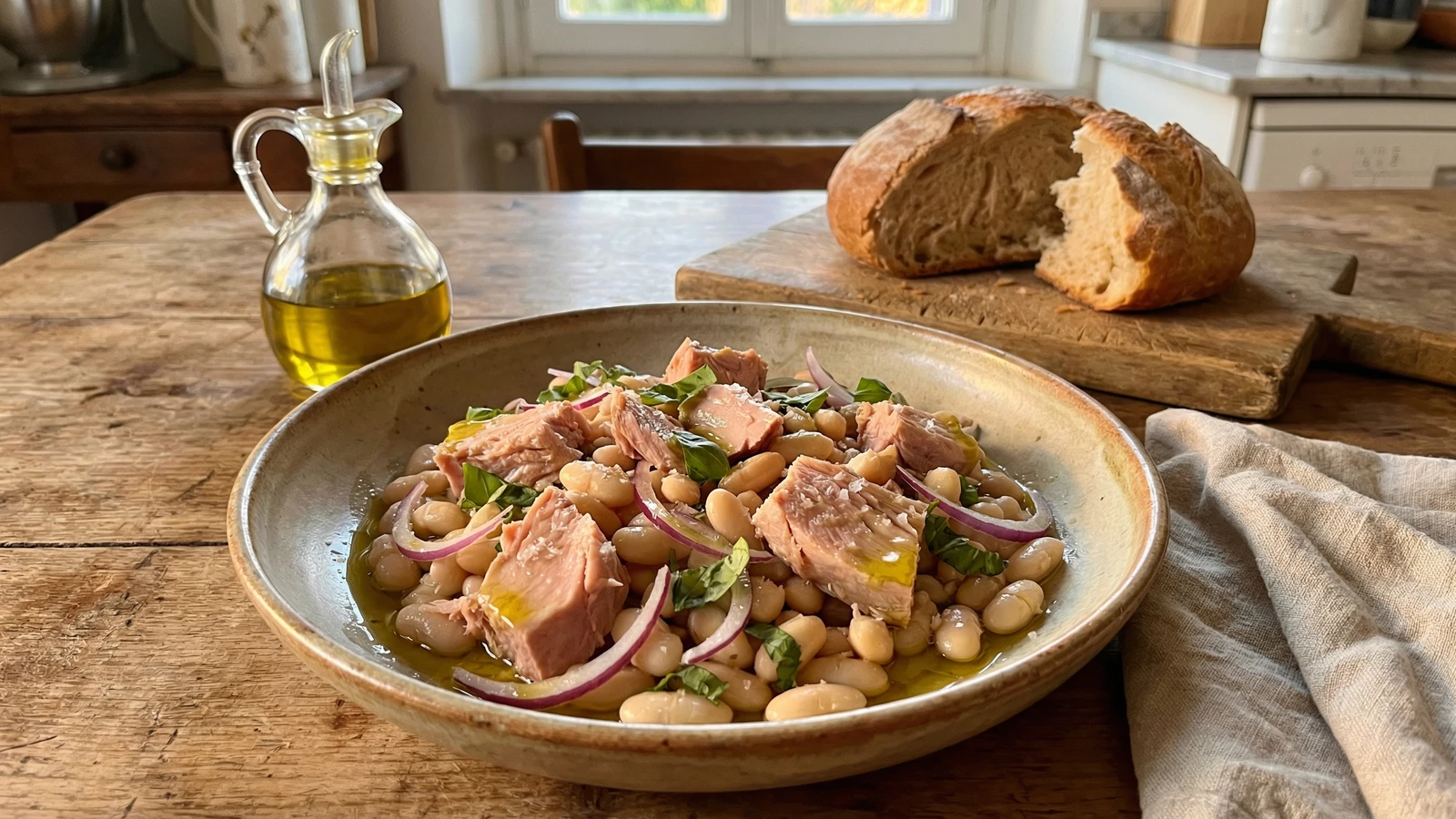
Tonno e Fagioli alla Genovese
Created by Chef Graziella
Liguria's answer to the Tuscan bean and tuna salad, where fresh basil takes the place of excessive onion and the quality of your olive oil matters more than anything else you do.
Every region of Italy claims a version of this salad, and every region insists theirs is correct. The Tuscans use more onion. The Genovese use less onion and add basil, because Genoa cannot imagine a dish without basil. Both are right. Both would argue the point until dinner grew cold.
What cannot be argued is the tuna. It must be Italian tuna packed in olive oil. Not water. Water-packed tuna is an insult to the beans. The oil carries flavor, protects the texture, and becomes part of the dressing. Those little tins of ventresca, the belly meat, are worth seeking out. The price reflects the quality.
This is not a composed salad for a restaurant menu. It is food for a hot afternoon when you cannot face the stove. It is what a Ligurian fisherman's wife might put together when the boats come in late. Simple does not mean careless. Every ingredient earns its place.
Tonno e fagioli belongs to the cucina povera tradition of Italian coastal towns, where preserved fish extended the value of dried legumes. The Genovese variation reflects Liguria's obsession with basil and its lighter hand with raw alliums, a sharp contrast to the more assertive Tuscan palate that prefers abundant raw onion.
The technique, the tradition, and the story behind every dish.
Discover Culinary AdvisorIngredients
Italian tuna packed in olive oil
Quantity
2 cans (5 ounces each)
cannellini beans
Quantity
2 cans (15 ounces each)
drained and rinsed
red onion
Quantity
1/4 small
sliced paper-thin
fresh basil
Quantity
1 large bunch (about 1 ounce)
leaves torn
extra virgin olive oil
Quantity
1/4 cup, plus more for drizzling
red wine vinegar
Quantity
2 tablespoons
flaky sea salt
Quantity
to taste
black pepper
Quantity
to taste
freshly ground
| Ingredient | Quantity |
|---|---|
| Italian tuna packed in olive oil | 2 cans (5 ounces each) |
| cannellini beansdrained and rinsed | 2 cans (15 ounces each) |
| red onionsliced paper-thin | 1/4 small |
| fresh basilleaves torn | 1 large bunch (about 1 ounce) |
| extra virgin olive oil | 1/4 cup, plus more for drizzling |
| red wine vinegar | 2 tablespoons |
| flaky sea salt | to taste |
| black pepperfreshly ground | to taste |
Equipment Needed
- •Wide shallow serving bowl
- •Small bowl for soaking onion
Instructions
- 1
Prepare the onion
Place the paper-thin onion slices in a small bowl of cold water. Let them soak for 10 minutes. This removes the harsh bite while preserving the flavor. Drain thoroughly and pat dry with a clean towel. The Genovese use less onion than the Tuscans. This is deliberate.
If you skip this step, the raw onion will overwhelm everything else. The tuna and beans deserve better. - 2
Drain the tuna properly
Open the tuna and drain off most of the packing oil, but not all of it. Reserve about a tablespoon of the oil in each can. This oil has flavor. It has absorbed the essence of the fish during its time in the tin. Gently break the tuna into large chunks with a fork. Do not shred it into flakes. You want pieces that hold their shape.
- 3
Dress the beans
Place the drained beans in a wide shallow bowl. Add the olive oil and vinegar. Season with salt and pepper. Toss gently with your hands or a large spoon. The beans should glisten but not swim. Let them sit for five minutes to absorb the dressing.
The beans are porous. They will drink up the dressing. This is why you dress them first and let them rest before adding the other ingredients. - 4
Combine and finish
Add the tuna chunks, soaked onion slices, and most of the torn basil leaves to the beans. Toss gently once or twice. Overcombining will turn this into mush. Transfer to a serving plate or individual dishes. Scatter the remaining basil on top. Drizzle with more olive oil. Serve at cool room temperature, not cold from the refrigerator.
Chef Tips
- •Seek out Italian tuna from Sicily or Sardinia, packed in olive oil. Ortiz, Flott, and Callipo are reliable brands. The difference between good canned tuna and mediocre canned tuna is the difference between wanting seconds and pushing the plate away.
- •If you cook your own beans from dried, dress them while still warm. They absorb flavor more readily. Use two cups of cooked cannellini, drained but not rinsed.
- •The basil must be fresh and fragrant. Smell it before you buy it. If it smells like nothing, it will taste like nothing. Tear the leaves rather than cutting them. The knife bruises the edges and turns them black.
- •This salad does not improve with time. Make it within an hour of serving. The beans grow mushy, the basil wilts, the tuna loses its definition. What was fresh becomes tired.
Advance Preparation
- •The onion can be sliced and soaked up to two hours ahead. Keep it in the cold water until ready to use.
- •The beans can be drained, rinsed, and refrigerated for several hours, but bring them to room temperature before dressing.
- •Do not assemble the complete salad until just before serving. The components can wait. The finished dish cannot.
Frequently Asked Questions
Nutrition Information
1 serving (about 210g)
Where cooking meets culture.
Culinary mentorship, cultural storytelling, and the editorial depth that makes cooking meaningful.
Explore Culinary Advisor