Culinary Advisor
A cooking platform built around craft, culture, and the stories behind what we eat.
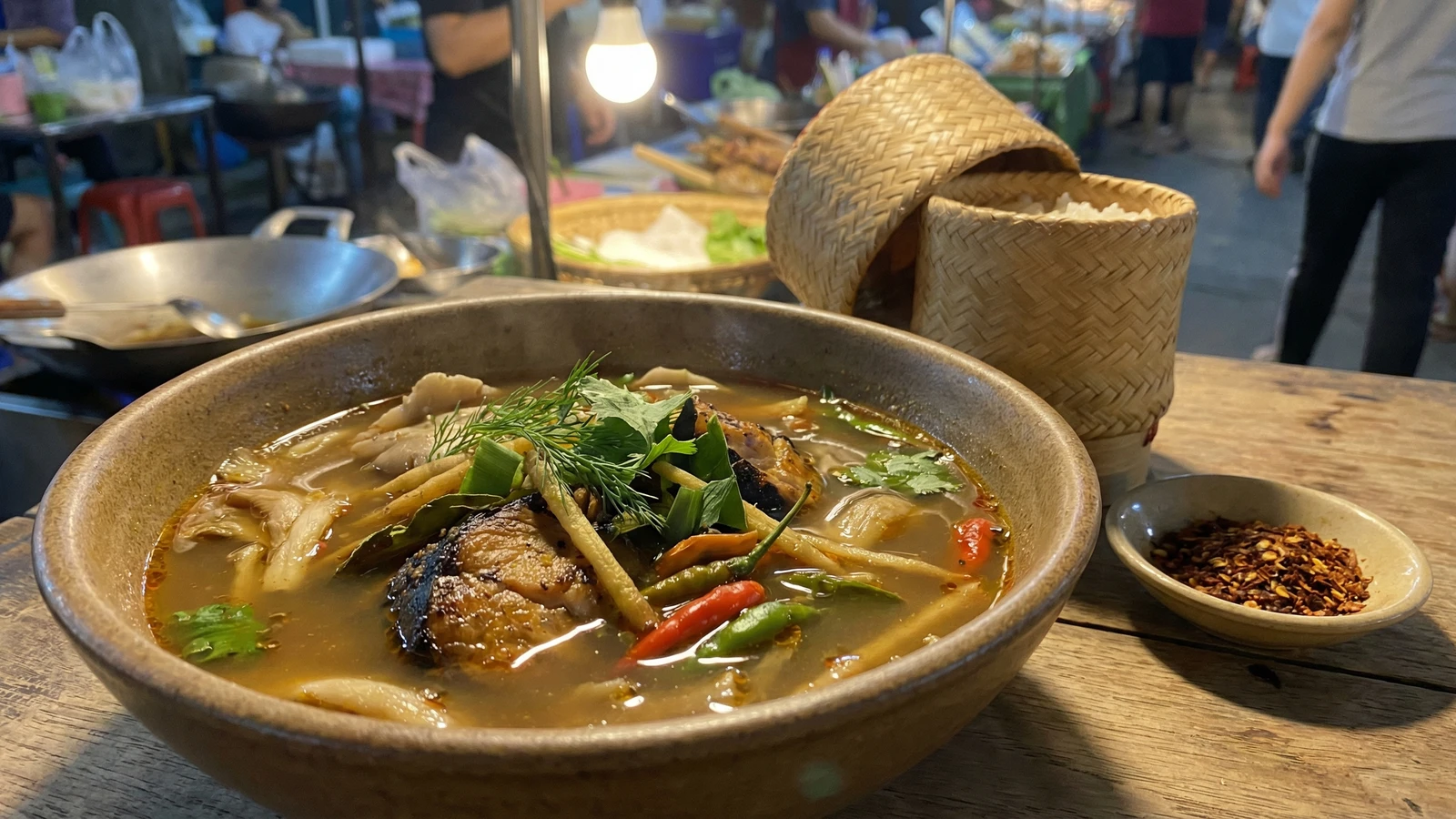
Smoked Fish Sour Soup (Tom Khlong)
Created by
Tamarind, not lime. Smoked fish, not fresh shrimp. Roasted aromatics, not raw. Tom khlong follows Isan's own rules, and the sooner you stop comparing it to tom yum, the sooner you'll understand what this soup actually is.
Tom khlong is the soup that breaks every Central Thai assumption you've ever had about Thai sour soups. No coconut cream. No lime as the acid. No raw lemongrass thrown into a boiling pot. This is Isan cooking, and Isan cooking follows a different governing system.
The acid here is makham (tamarind). Tamarind gives a rounder, deeper sourness than lime. Lime is sharp, bright, immediate. Tamarind is mellow, fruity, with a gentle sweetness underneath. That difference defines the entire character of this soup. Ajarn always said: the choice of acid tells you which region you're in. Lime says Central Thai. Tamarind says Isan or the South. Know your acids, know your geography.
The fish is smoked. Pla yang, grilled dried fish, usually catfish or snakehead. That smokiness is the backbone of the whole dish. You can't substitute fresh fish and call it tom khlong. The smoking does something to the proteins, concentrates the umami, adds a layer of char and depth that fresh fish simply does not have. The fish goes into the broth and it transforms the water into something rich and murky and alive.
Here's what really separates this from tom yum: the aromatics are roasted. Shallots, lemongrass, galangal. You char them over a flame or in a dry pan until they're blackened on the outside and soft inside. Then they go into the pot. Roasting changes the chemistry. It caramelizes the sugars, mellows the sharpness, creates new flavor compounds through the Maillard reaction. Raw lemongrass is sharp and citrusy. Roasted lemongrass is sweet, smoky, complex. Same ingredient, different technique, completely different soup.
This is village food. Water from the pot, fish from the smoker, herbs from the garden, tamarind from the tree in the yard. Isan cooks don't need a shopping list. They need a backyard and a fire. That simplicity is not poverty. It's a system refined over centuries to make the most of what the land provides.
Tom khlong belongs to the family of Isan water-based soups that predates the coconut-enriched curries of Central Thailand, reflecting the northeastern plateau's historically limited access to coconut palms. The word 'khlong' (โคล้ง) refers to the method of using roasted or charred aromatics, a technique common across Isan and Lao cooking that likely developed from the practice of cooking over open wood fires. Smoked and dried fish preservation was essential in Isan before refrigeration, and tom khlong represents one of the most direct expressions of that tradition: the preserved fish itself becomes the soup's foundation, not merely an ingredient in it.
The technique, the tradition, and the story behind every dish.
Discover Culinary AdvisorIngredients
smoked dried fish (pla yang)
Quantity
1 whole, about 300g
catfish or snakehead preferred
water
Quantity
6 cups
tamarind paste (makham piak)
Quantity
3 tablespoons
dissolved in 1/2 cup warm water, strained
shallots (hom daeng)
Quantity
6
unpeeled
lemongrass (takhrai)
Quantity
3 stalks
cut into 3-inch pieces
galangal (kha)
Quantity
5 slices
1/4 inch thick
bird's eye chilies (prik khi nu)
Quantity
5
lightly bruised
dried red chilies (prik haeng)
Quantity
3
dry-roasted
fish sauce (nam pla)
Quantity
2 tablespoons
padaek (fermented fish sauce)
Quantity
1 tablespoon
palm sugar (nam tan pip)
Quantity
1 teaspoon
oyster mushrooms (het nangfa)
Quantity
200g
torn into strips
grachai (fingerroot)
Quantity
1 cup
cut into matchsticks
kaffir lime leaves (bai makrut)
Quantity
3
torn
sawtooth coriander (pak chi farang)
Quantity
1/2 cup
cut into 1-inch pieces
green onions (ton hom)
Quantity
1/4 cup
sliced
fresh dill (pak chi lao)
Quantity
1/4 cup
roughly torn
| Ingredient | Quantity |
|---|---|
| smoked dried fish (pla yang)catfish or snakehead preferred | 1 whole, about 300g |
| water | 6 cups |
| tamarind paste (makham piak)dissolved in 1/2 cup warm water, strained | 3 tablespoons |
| shallots (hom daeng)unpeeled | 6 |
| lemongrass (takhrai)cut into 3-inch pieces | 3 stalks |
| galangal (kha)1/4 inch thick | 5 slices |
| bird's eye chilies (prik khi nu)lightly bruised | 5 |
| dried red chilies (prik haeng)dry-roasted | 3 |
| fish sauce (nam pla) | 2 tablespoons |
| padaek (fermented fish sauce) | 1 tablespoon |
| palm sugar (nam tan pip) | 1 teaspoon |
| oyster mushrooms (het nangfa)torn into strips | 200g |
| grachai (fingerroot)cut into matchsticks | 1 cup |
| kaffir lime leaves (bai makrut)torn | 3 |
| sawtooth coriander (pak chi farang)cut into 1-inch pieces | 1/2 cup |
| green onions (ton hom)sliced | 1/4 cup |
| fresh dill (pak chi lao)roughly torn | 1/4 cup |
Equipment Needed
- •Charcoal grill, gas flame, or cast-iron pan for charring aromatics
- •Medium stockpot
- •Slotted spoon
- •Fine strainer for tamarind
Instructions
- 1
Roast the aromatics
Place the unpeeled shallots, lemongrass pieces, and galangal slices directly on a charcoal grill, under a broiler, or in a dry cast-iron pan over high heat. Char them until the skins are blackened and blistered, turning occasionally. The shallots need about 8 minutes, turning every couple of minutes until soft inside and charred outside. Lemongrass and galangal need about 5 minutes, until fragrant and spotted black. The kitchen should smell smoky and sweet. This roasting step is what makes it tom khlong. Skip it and you've made a different soup entirely.
If you have a gas stove, hold the shallots with tongs directly in the flame. That's how village cooks do it. Direct fire gives the best char. An oven broiler works if that's what you have, but get them as close to the element as possible. - 2
Prepare the smoked fish
If your smoked fish is very dry and stiff, grill or broil it briefly for 3 minutes per side to warm it through and reactivate the smoky aroma. Let it cool enough to handle, then flake the flesh off the bones into large chunks. Don't shred it fine. You want substantial pieces that hold their shape in the broth. Pick through carefully for bones. Reserve the head and bones for the stock. That's where the deepest flavor lives.
Smoked catfish (pla duk yang) is the most traditional choice. Smoked snakehead (pla chon yang) is also excellent. Find these at Southeast Asian grocery stores, usually in the freezer section or hanging near the dried goods. The quality of the fish determines the quality of the soup. There's no way around it. - 3
Build the broth
Bring the water to a boil in a pot. Add the fish head and bones, the charred shallots (peeled now, outer burnt skin removed, the soft caramelized flesh inside is what you want), the charred lemongrass, and the charred galangal. Add the dry-roasted dried chilies. Let this simmer for 10 minutes. The broth will turn cloudy and golden, pulling smokiness from the fish and sweetness from the roasted aromatics. This is the foundation. Taste the broth at this point. It should already taste like something. If it's flat, your fish wasn't smoky enough or your aromatics weren't charred enough.
- 4
Add tamarind and season
Pour the strained tamarind water into the broth. Add the fish sauce and padaek. Stir once. The broth will deepen in color, turning from golden to a murky amber-brown. That's correct. Add the palm sugar, just a pinch, enough to round the edges of the tamarind's sourness without making it sweet. Taste now. The balance should be: sour first and foremost, salty from the fish sauce and padaek backing it up, with the smokiness threading through everything. This is not the sharp bright sourness of tom yum. This is a deeper, slower sour. Adjust the tamarind if you need more acid. Adjust the padaek if you need more funk.
Padaek is not the same as nam pla. Fish sauce is clear, refined, salty. Padaek is cloudy, thick, funky, with chunks of fermented fish. It delivers umami and a fermented depth that fish sauce alone cannot replicate. If you're cooking Isan food seriously, padaek is not optional. Find it at any Thai or Lao grocery. The jar will look murky and smell aggressive. That's how you know it's right. - 5
Add mushrooms and fish
Remove the fish head and bones from the broth with a slotted spoon. Add the torn oyster mushrooms and the grachai matchsticks. Simmer for 2 minutes until the mushrooms soften. Then add the flaked smoked fish pieces. Cook for just 1 minute more. The fish is already cooked. You're warming it through and letting it absorb the broth. Don't stir aggressively or the fish will break apart into nothing.
- 6
Finish with herbs
Remove the pot from the heat. Add the bruised bird's eye chilies, torn kaffir lime leaves, sawtooth coriander, green onions, and fresh dill. Stir gently once. The herbs go in off the heat so they wilt but don't cook. They should still be bright and fragrant when the soup hits the bowl. Ladle into bowls, making sure each serving gets a good portion of fish, mushrooms, and herbs. Serve immediately with sticky rice (khao niew). Not jasmine rice. Sticky rice. That's the Isan way.
Chef Tips
- •Tom khlong and tom yum are not related dishes with minor differences. They're built on completely different systems. Tom yum uses raw aromatics infused in broth, with lime as the acid. Tom khlong uses roasted aromatics, with tamarind as the acid. The protein in tom yum is fresh. The protein in tom khlong is smoked. Understanding that these are different systems, not variations of the same dish, is how you start to understand Isan cooking on its own terms.
- •Tamarind sourness and lime sourness are not interchangeable. Tamarind (makham) gives a round, fruity, slightly sweet acidity that builds slowly. Lime gives a sharp, bright, immediate hit. Tom khlong requires tamarind. If you use lime, you've made a different soup. Ajarn always said: the acid defines the dish. Know your acids.
- •Sawtooth coriander (pak chi farang) and fresh dill (pak chi lao) are structural herbs in Isan cooking, not garnishes. Pak chi lao literally means 'Lao coriander,' which tells you exactly where this herb tradition comes from. If you can't find sawtooth coriander, regular cilantro is an acceptable substitute. Dill has no substitute. Find it or leave it out and acknowledge the gap.
- •The smoked fish quality determines everything. A good pla yang should smell deeply smoky, with firm flesh that flakes into substantial chunks. Avoid fish that's been dried to the point of being brittle and tasteless. If the fish doesn't smell like it's been near a fire, it won't do its job in the soup.
Advance Preparation
- •The aromatics can be charred up to a few hours ahead. Keep at room temperature.
- •Tamarind water can be prepared and strained a day ahead. Refrigerate.
- •The smoked fish can be flaked and bones separated ahead of time. Keep refrigerated.
- •Do not add the fresh herbs until the moment of serving. They lose their aroma and color within minutes of contact with hot broth.
Frequently Asked Questions
Nutrition Information
1 serving (about 450g)
Where cooking meets culture.
Culinary mentorship, cultural storytelling, and the editorial depth that makes cooking meaningful.
Explore Culinary Advisor