Culinary Advisor
A cooking platform built around craft, culture, and the stories behind what we eat.
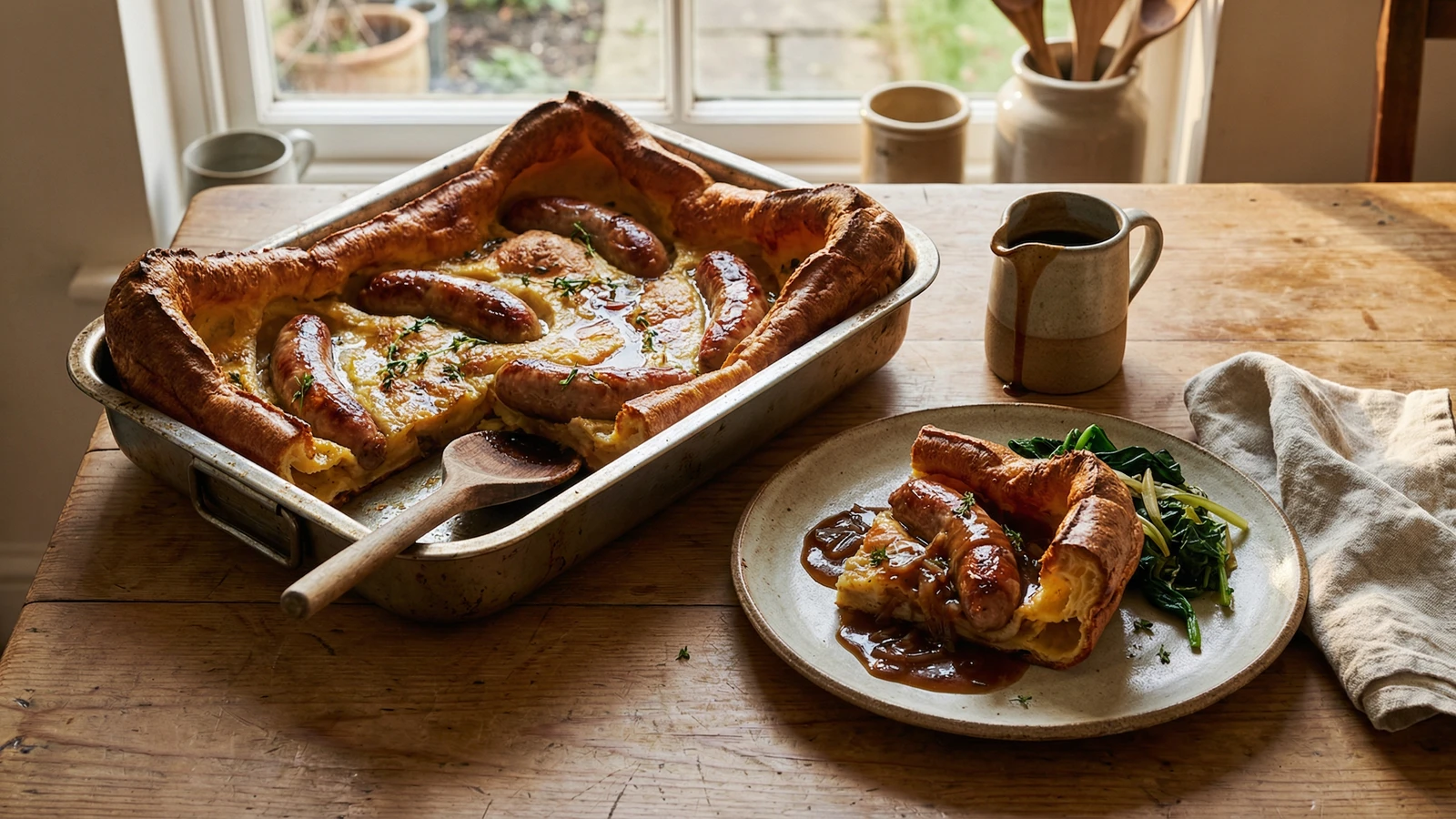
Toad in the Hole
Created by Chef Thomas
Proper sausages baked in a well-risen Yorkshire pudding batter until golden and puffed at the edges, with a dark, sticky onion gravy poured over everything. The name is ridiculous. The dish is one of the best things you can eat on a cold night.
October rain on the kitchen window and the oven ticking as it heats. That's when this dish belongs. Toad in the hole is one of those meals that sounds like a joke and eats like a blessing: good sausages sunk into Yorkshire pudding batter and baked until the whole thing puffs up, golden and crisp at the edges, soft and savoury underneath where the batter has caught the fat.
The name is absurd. Nobody knows where it came from and I've stopped caring. What matters is the cooking, and the cooking is simple if you respect the two things it asks of you: a batter that's had time to rest, and fat that's had time to get properly, furiously hot. That's it. That's the whole secret. Everything else is just sausages in a tin.
I make this when the evenings draw in and the kitchen needs filling with the smell of something solid and good. There are few better feelings than pulling the tin from the oven, puffed and bronzed, and putting it straight on the table in front of someone whose shoulders drop half an inch at the sight of it. Onion gravy over the lot. Greens on the side. We're only making dinner.
Get the best sausages you can. This is the place where it matters most. A good butcher's sausage with a high meat content and a proper seasoning will repay you. Supermarket value sausages leak water into the batter and the whole thing weeps. The sausages carry the dish. Spend accordingly.
The technique, the tradition, and the story behind every dish.
Discover Culinary AdvisorIngredients
pork sausages
Quantity
6-8
the best you can find
plain flour
Quantity
140g
large eggs
Quantity
4
whole milk
Quantity
200ml
fine sea salt
Quantity
to taste
beef dripping or sunflower oil
Quantity
2 tablespoons
onions
Quantity
3 large
halved and thinly sliced
unsalted butter
Quantity
30g
plain flour (for gravy)
Quantity
1 tablespoon
beef stock
Quantity
500ml
Dijon mustard
Quantity
1 teaspoon
Worcestershire sauce
Quantity
a splash
fresh thyme (optional)
Quantity
a few sprigs
| Ingredient | Quantity |
|---|---|
| pork sausagesthe best you can find | 6-8 |
| plain flour | 140g |
| large eggs | 4 |
| whole milk | 200ml |
| fine sea salt | to taste |
| beef dripping or sunflower oil | 2 tablespoons |
| onionshalved and thinly sliced | 3 large |
| unsalted butter | 30g |
| plain flour (for gravy) | 1 tablespoon |
| beef stock | 500ml |
| Dijon mustard | 1 teaspoon |
| Worcestershire sauce | a splash |
| fresh thyme (optional) | a few sprigs |
Equipment Needed
- •Medium roasting tin (approximately 25 by 30cm)
- •Large mixing bowl and whisk
- •Heavy-bottomed frying pan for the onion gravy
- •Pouring jug for batter
Instructions
- 1
Make the batter
Tip the flour into a large bowl with a good pinch of salt. Make a well in the centre. Crack in the eggs and pour in a splash of the milk. Whisk from the middle outwards, pulling flour from the edges as you go, adding the rest of the milk gradually until you have a smooth, thin batter with no lumps. It should be about the consistency of single cream. Pour it into a jug, cover, and leave it to rest for at least thirty minutes. An hour is better. The batter needs this time. Don't skip it.
Room temperature ingredients make a better batter. Take the eggs and milk out of the fridge when you start thinking about dinner, not when you start making it. - 2
Start the onion gravy
While the batter rests, melt the butter in a heavy pan over a low heat. Add the onions and a pinch of salt. Stir them through the butter, then let them be. This takes thirty minutes, sometimes forty. You want them soft, collapsed, and a deep sticky amber. Stir now and then, but mostly leave them alone. The worst thing you can do to onions is rush them. When they smell sweet and look jammy, stir in the tablespoon of flour and cook for a minute. Pour in the stock gradually, stirring as you go. Add the mustard, the Worcestershire sauce, and the thyme leaves stripped from their stalks. Let it simmer gently while the toad cooks. It will thicken as it goes. Season and taste. Then taste again.
- 3
Heat the tin and brown the sausages
Set the oven to 220C/200C fan. Put the dripping or oil into a medium roasting tin, about 25 by 30 centimetres, and place it in the oven. Give it ten minutes to get properly, fiercely hot. While the tin heats, brown the sausages in a dry frying pan over a medium heat. You don't need to cook them through, just give them some colour all over. When the tin is smoking hot, carefully lay the browned sausages in the fat, spacing them apart.
The fat must be smoking. Not warm. Not hot. Smoking. This is the single most important moment of the whole dish. If the fat isn't hot enough, the batter will sit, sag, and never rise. Give it the heat it needs. - 4
Pour the batter and bake
Give the rested batter a brief stir, then pour it quickly into the hot tin around the sausages. Don't hesitate and don't rearrange anything. Close the oven door immediately. Bake for thirty to thirty-five minutes. Do not open the oven for the first twenty-five minutes. Not to check on it. Not to peek. Not for any reason. The batter needs that uninterrupted blast of heat to puff and rise. When it's done, the pudding will be deeply golden, risen dramatically at the edges, and slightly less puffed in the middle where the sausages sit. The sausages should be bronzed and splitting slightly at the seams.
- 5
Serve with gravy
Bring the whole tin to the table. It looks best while it's still slightly puffed, though it will settle within a minute or two. Cut generous portions, making sure everyone gets sausages and a good amount of the crisp, golden batter. Pour the onion gravy over everything. Serve with greens: steamed cabbage, wilted kale, whatever the season gives you. This isn't a dish that needs much else.
Chef Tips
- •The sausages are everything. Find a butcher who makes their own, with a high pork content and a natural casing. Cumberland, Lincolnshire, or a good herbed sausage all work well. What won't work is anything that lists water as a main ingredient. If you squeeze a sausage and it feels loose, put it back.
- •Beef dripping gives the best flavour and the best rise. It's what your grandmother would have used, and she was right. If you can't get dripping, sunflower oil works, but avoid olive oil here. The smoke point is too low and the flavour fights with the batter.
- •The batter must rest. Thirty minutes at a minimum, an hour if you can manage it. This isn't superstition. Resting lets the flour hydrate fully and the gluten relax, which is what gives you that rise and that crispness at the edges. Impatience here costs you the best part of the dish.
- •Serve this the moment it comes from the oven. A toad in the hole that sits on the counter deflates and turns sad. Bring the tin to the table while the batter is still slightly puffed and the kitchen smells like the kind of evening you want to stay in for.
Advance Preparation
- •The batter can be made and rested in the fridge for up to twenty-four hours ahead. Give it a stir before pouring.
- •The onion gravy can be made a day in advance and reheated gently. It improves overnight as the flavours settle.
- •The toad itself must be baked and served immediately. This is not a dish that reheats well. The glory is in the fresh rise.
Frequently Asked Questions
Nutrition Information
1 serving (about 390g)
Where cooking meets culture.
Culinary mentorship, cultural storytelling, and the editorial depth that makes cooking meaningful.
Explore Culinary Advisor