Culinary Advisor
A cooking platform built around craft, culture, and the stories behind what we eat.
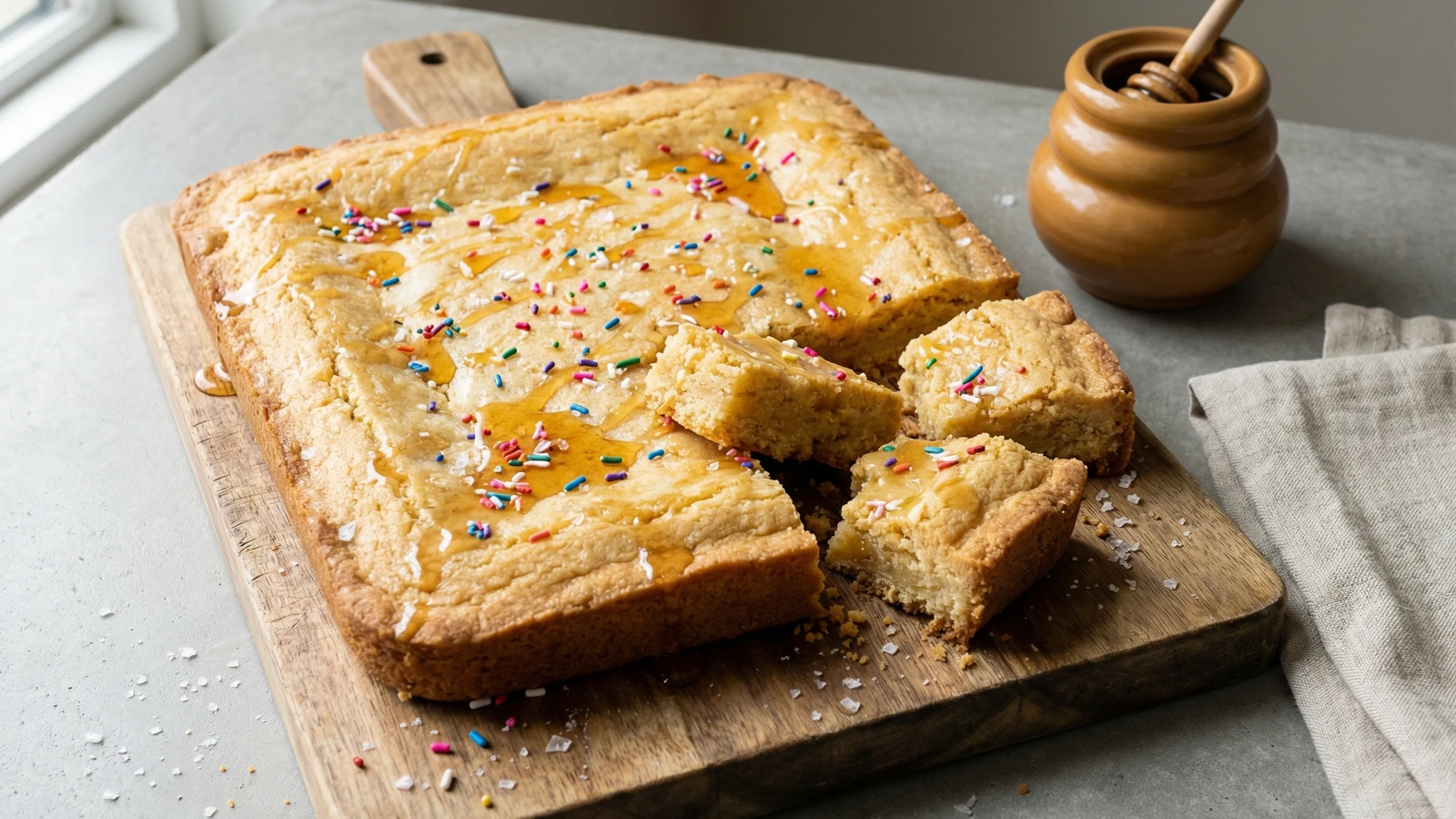
TikTok Butter Board Cookies
Created by
A massive, golden shortbread slab spread with soft butter and scattered with honey, sprinkles, and flaky salt. The internet discovered what Scottish grandmothers always knew: butter on butter is never wrong.
The butter board arrived like a fever dream in late 2022. Someone spread softened butter on a wooden board, drizzled it with honey, scattered it with everything from herbs to edible flowers, and told the internet to dip bread straight into it. The food world lost its collective mind. Within weeks, the inevitable evolution occurred: why not make the bread and butter into one glorious, shareable cookie?
This is that cookie. A proper shortbread base, golden and honest, pressed into a sheet pan and baked until the edges turn the color of summer hay. While still warm, you spread more butter across the top. It melts into the surface, creating pockets of richness. Then come the toppings: a drizzle of honey that catches the light, rainbow sprinkles for joy, flaky salt for that essential savory punch that makes sweet things sing.
The genius here isn't culinary innovation. Scottish shortbread has existed for centuries. What the internet stumbled upon is the theater of communal eating. There's something deeply satisfying about gathering around a board, breaking off pieces, arguing over who gets the corner with the most sprinkles. This is food as social experience, which is the oldest purpose food has ever served.
I've adapted the viral concept into something that actually works. The original recipes floating around produced cookies that were either too thick to break cleanly or too thin to support toppings. This version strikes the balance: sturdy enough to pick up, tender enough to shatter when you bite through.
The technique, the tradition, and the story behind every dish.
Discover Culinary AdvisorIngredients
unsalted butter, softened
Quantity
2 cups (4 sticks)
divided
powdered sugar
Quantity
1 cup
pure vanilla extract
Quantity
1 teaspoon
fine sea salt
Quantity
1/2 teaspoon
all-purpose flour
Quantity
3 1/2 cups
honey
Quantity
3 tablespoons
for drizzling
rainbow sprinkles
Quantity
2 tablespoons
flaky sea salt (Maldon or similar)
Quantity
1 teaspoon
mini chocolate chips (optional)
Quantity
2 tablespoons
freeze-dried raspberries (optional)
Quantity
1 tablespoon
crushed
| Ingredient | Quantity |
|---|---|
| unsalted butter, softeneddivided | 2 cups (4 sticks) |
| powdered sugar | 1 cup |
| pure vanilla extract | 1 teaspoon |
| fine sea salt | 1/2 teaspoon |
| all-purpose flour | 3 1/2 cups |
| honeyfor drizzling | 3 tablespoons |
| rainbow sprinkles | 2 tablespoons |
| flaky sea salt (Maldon or similar) | 1 teaspoon |
| mini chocolate chips (optional) | 2 tablespoons |
| freeze-dried raspberries (optional)crushed | 1 tablespoon |
Equipment Needed
- •9x13 inch quarter sheet pan
- •Stand mixer or hand mixer
- •Offset spatula
- •Parchment paper
- •Wooden serving board or large platter
Instructions
- 1
Cream butter and sugar
In a large bowl or stand mixer fitted with the paddle attachment, beat 1 3/4 cups (3 1/2 sticks) of the softened butter with the powdered sugar on medium speed until pale and fluffy, about 3 minutes. Scrape down the sides of the bowl. The mixture should look like thick frosting, with no visible butter chunks. Add the vanilla and fine sea salt, beating until incorporated.
Butter that's too cold will leave lumps. Too warm and it will be greasy. Press your finger into it: there should be an indent but no oil on your fingertip. - 2
Add flour gradually
With the mixer on low speed, add the flour in three additions, mixing just until each portion disappears. Stop the moment the dough comes together in a shaggy mass. Overworking develops gluten, which turns tender shortbread into tough crackers. The dough will look slightly crumbly but should hold together when pressed.
- 3
Press into pan
Line a quarter sheet pan (9x13 inches) with parchment paper, leaving overhang on two sides for easy lifting. Transfer the dough to the pan and press it into an even layer using your hands or the bottom of a measuring cup. Take your time here. Aim for consistent thickness, especially in the corners, or your edges will overbake while the center stays pale. Use a fork to dock the entire surface with holes spaced about an inch apart. This prevents dramatic puffing.
Lightly flour your hands if the dough sticks. Cold hands help too. - 4
Chill the dough
Refrigerate the pan for at least 30 minutes, or up to overnight. This step is essential. Cold dough holds its shape in the oven and produces cleaner edges. Skip it and you'll have a spreading, bubbling mess that's still delicious but lacks the visual impact this cookie demands.
- 5
Bake until golden
Preheat your oven to 325°F. Position a rack in the center. Bake the chilled shortbread for 22 to 28 minutes, rotating the pan halfway through. You're looking for edges that have turned golden brown and a center that's set but still pale. The surface should look matte, not shiny. Don't wait for the whole thing to brown; it will firm as it cools.
Every oven lies. Trust your eyes over the timer. Golden edges with a pale center is correct. - 6
Apply the butter topping
Remove from oven and let cool for exactly 5 minutes. You want the shortbread warm enough to melt butter but not so hot that everything slides off. Cut the remaining 1/4 cup (half stick) butter into thin slices and distribute them across the surface. Let sit for 1 minute, then use an offset spatula or the back of a spoon to spread the melting butter into a thin, even layer. It will soak into the warm shortbread, creating pockets of extra richness.
- 7
Add toppings
Working quickly while the butter is still tacky, drizzle the honey across the surface in long, artistic strokes. Scatter the rainbow sprinkles evenly. Finish with a generous pinch of flaky salt, crushing the flakes slightly between your fingers as they fall. If using, add the mini chocolate chips and crushed freeze-dried raspberries now. The toppings should stick to the butter; if they're sliding off, the surface has cooled too much.
- 8
Cool and serve
Let the shortbread cool in the pan for at least 20 minutes before attempting to move it. Use the parchment overhang to lift the entire slab onto a wooden cutting board or serving platter. Cut into rough squares or rectangles using a sharp knife, or present the whole board and let guests break off their own pieces. This is communal food. Encourage people to get their hands in.
Chef Tips
- •European-style butter with higher fat content produces an even more tender result. Kerrygold or Plugrá are widely available options.
- •For a salted caramel variation, drizzle store-bought dulce de leche instead of honey and add chopped roasted pecans.
- •The topping possibilities are endless: crushed pretzels for crunch, mini M&Ms for kids' parties, lavender honey with bee pollen for something elegant. Let the occasion guide you.
- •If you want to serve this at a party, bake the shortbread base up to two days ahead and store at room temperature, tightly wrapped. Add the butter and toppings just before serving for maximum visual impact.
- •A wooden board presentation is part of the appeal, but any large platter works. The goal is communal eating, not authenticity to a TikTok video.
Advance Preparation
- •Shortbread dough can be pressed into the pan and refrigerated for up to 2 days before baking.
- •Baked shortbread base (without toppings) keeps at room temperature, tightly wrapped, for 3 days.
- •Fully topped butter board cookies are best served within 4 hours. The honey will absorb into the shortbread over time, which is delicious but less visually dramatic.
- •Do not freeze with toppings. Freeze the baked base only, wrapped tightly, for up to 1 month. Thaw at room temperature and add toppings fresh.
Frequently Asked Questions
Nutrition Information
1 serving (about 28g)
Where cooking meets culture.
Culinary mentorship, cultural storytelling, and the editorial depth that makes cooking meaningful.
Explore Culinary Advisor