Culinary Advisor
A cooking platform built around craft, culture, and the stories behind what we eat.
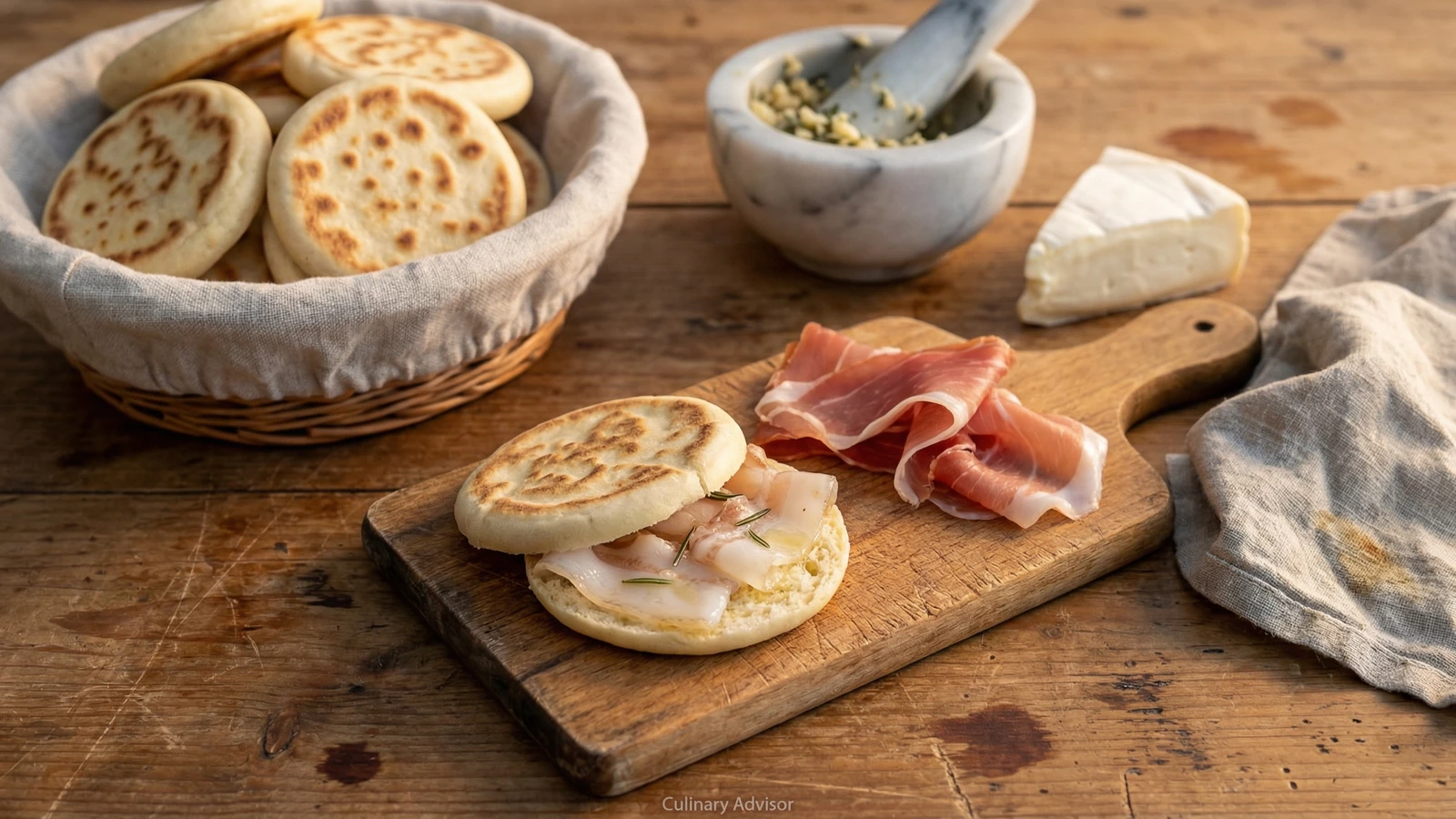
Tigelle Modenesi
Created by Chef Graziella
The mountain bread of Modena, cooked between heated molds until golden and puffed, split while still warm and filled with lardo that melts into the crumb.
In the Apennine mountains above Modena, families still gather around tables with baskets of these small round breads. The tigelliera, the traditional mold, was made of terracotta and heated directly in the fire. You pressed the dough between the hot disks and waited. The bread puffed. The house filled with that particular scent of flour and lard meeting heat. This is my region's bread.
Tigelle require simplicity in their making and generosity in their eating. The dough contains lard because mountain people kept pigs. They cured the fat into lardo, pounded it with rosemary and garlic, and spread this battuto into warm tigelle. The heat melted the fat into the crumb. Nothing could be simpler. Nothing could be more satisfying.
Americans sometimes call these crescentine, which creates confusion. In Bologna they make crescentine that are fried. In Modena we make tigelle that are cooked between molds. Same region, different traditions, different names. Do not let anyone tell you Italian cuisine is one thing. It never has been.
Tigelle originated with charcoal burners and chestnut farmers in the Apennine mountains between Modena and Bologna, who needed portable bread that could be made with simple tools over fire. The name comes from the terracotta molds, tigelliere, which bear a distinctive decorative pattern on one side. By the mid-20th century, the bread had moved from mountain necessity to regional pride, served in the trattorias of Modena as a symbol of humble origins honored.
The technique, the tradition, and the story behind every dish.
Discover Culinary AdvisorIngredients
tipo 00 flour
Quantity
500g
lard
Quantity
75g
softened (or substitute extra virgin olive oil)
active dry yeast
Quantity
7g
whole milk
Quantity
250ml
lukewarm
fine sea salt
Quantity
10g
baking powder
Quantity
1/2 teaspoon
Lardo di Colonnata
Quantity
for serving
thinly sliced
Prosciutto di Modena
Quantity
for serving
Stracchino cheese
Quantity
for serving
| Ingredient | Quantity |
|---|---|
| tipo 00 flour | 500g |
| lardsoftened (or substitute extra virgin olive oil) | 75g |
| active dry yeast | 7g |
| whole milklukewarm | 250ml |
| fine sea salt | 10g |
| baking powder | 1/2 teaspoon |
| Lardo di Colonnatathinly sliced | for serving |
| Prosciutto di Modena | for serving |
| Stracchino cheese | for serving |
Equipment Needed
- •Kitchen scale for measuring
- •Large cast iron griddle or heavy 12-inch skillet
- •Rolling pin
- •Clean kitchen towels
Instructions
- 1
Activate the yeast
Dissolve the yeast in the lukewarm milk and let it stand for five minutes. The milk should feel like bathwater on your wrist, no warmer. Hot milk kills yeast. You will see small bubbles form on the surface when the yeast awakens.
- 2
Make the dough
Mound the flour on your work surface and make a well in the center. Add the softened lard, the yeast mixture, salt, and baking powder to the well. Using a fork, begin incorporating flour from the inner walls of the well, working outward. When the dough becomes too stiff for the fork, use your hands. Knead until you have a smooth, soft ball that springs back when pressed. This takes ten minutes of steady work.
The lard is traditional and creates the characteristic tender crumb. Olive oil makes a slightly different texture, still good but not quite the same. Mountain people used what they had, and they had pigs. - 3
Let the dough rise
Shape the dough into a ball and place it in a lightly oiled bowl. Cover with a clean kitchen towel and let it rise in a warm place until doubled, about one and a half hours. The dough is ready when a finger pressed into it leaves an impression that slowly springs back.
- 4
Shape the tigelle
Turn the risen dough onto a lightly floured surface. Do not punch it down aggressively. Divide it into 16 equal pieces, about 50g each. A kitchen scale removes guesswork. Roll each piece into a ball, then flatten with your palm or a rolling pin to form disks about 8 centimeters across and just under one centimeter thick. They should be uniform. Uneven thickness means uneven cooking.
- 5
Rest the shaped disks
Arrange the disks on a floured towel, not touching. Cover with another towel and let rest for 20 minutes. This relaxes the gluten and allows the disks to puff properly during cooking.
- 6
Cook the tigelle
Heat a cast iron griddle or heavy skillet over medium heat. Traditional tigelliere, the terracotta molds, are heated in the fire and the disks pressed between them. We adapt. Place the disks on the dry griddle without crowding. Cook until the bottom develops golden brown spots and the disk puffs slightly, about three minutes. Flip and cook the second side. The tigella should feel light when lifted, with a soft interior.
If you have a panini press or electric griddle that closes, use it. This mimics the traditional method of cooking between two heated surfaces. Adjust the heat to medium so they cook through without burning. - 7
Serve immediately
Stack the finished tigelle in a basket lined with a cloth to keep them warm. Bring them to the table still warm. Each person splits a tigella horizontally and fills it as they wish. The classic filling is lardo, pounded with rosemary and garlic until it becomes a paste. The heat of the bread softens the fat. Prosciutto and stracchino are equally traditional. Cold tigelle are acceptable but lack the soul of warm ones.
Chef Tips
- •Weigh your ingredients. Precision matters in bread. The ratio of flour to liquid determines whether your tigelle are tender or tough.
- •The lard must be at room temperature and soft enough to incorporate smoothly. Cold lard creates pockets in the dough.
- •If making many tigelle for a gathering, keep finished ones warm in a low oven, wrapped in a towel. They are meant to be eaten warm, not hot or cold.
- •For the battuto filling: pound 100g of lardo with one garlic clove and rosemary leaves until it becomes a spreadable paste. This is the authentic filling. The fat should melt into the warm bread.
Advance Preparation
- •The dough can be made and refrigerated overnight after the first rise. Bring to room temperature for one hour before shaping.
- •Shaped disks can rest, covered, at room temperature for up to one hour before cooking.
- •Cooked tigelle are best eaten within two hours. They can be rewarmed briefly on a dry skillet, but freshly cooked is always superior.
Frequently Asked Questions
Nutrition Information
1 serving (about 53g)
Where cooking meets culture.
Culinary mentorship, cultural storytelling, and the editorial depth that makes cooking meaningful.
Explore Culinary Advisor