Culinary Advisor
A cooking platform built around craft, culture, and the stories behind what we eat.
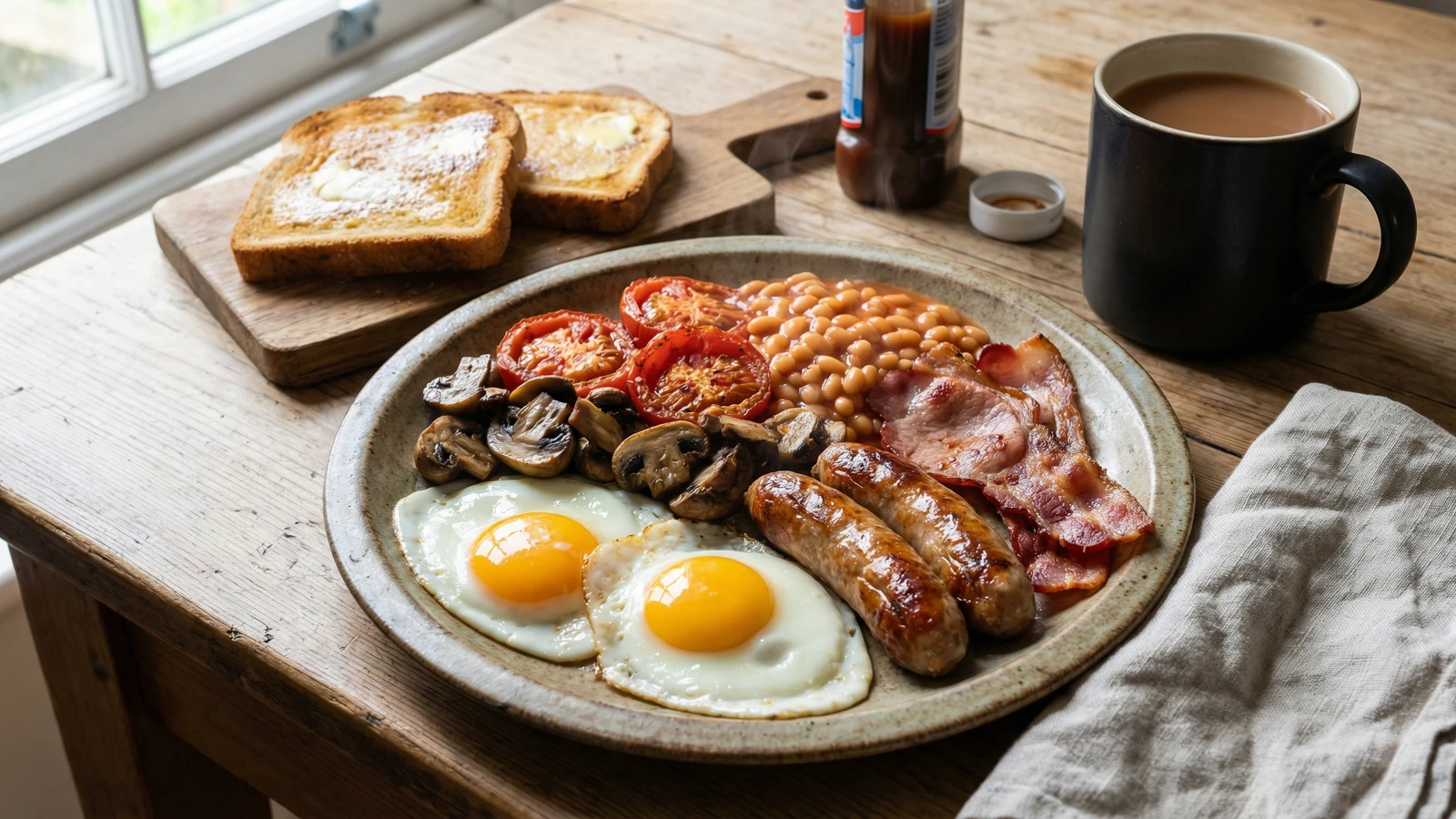
The Full English
Created by Chef Thomas
Bacon, sausages, eggs, mushrooms, tomatoes, beans, and toast, all arriving together on a warm plate. The kind of morning where someone in the kitchen is quietly telling you the day will be all right.
The smell reaches you before anything else. Bacon in a hot pan, that particular salty, sweet smoke that fills the kitchen and drifts through the house. It's Saturday. Or it isn't, and you've decided that today needs a proper start regardless. Either way, someone is in the kitchen paying attention, and that counts for something.
A full English is not a recipe. It's an act of orchestration. Everything needs to arrive at the table at the same moment, hot and ready, on a warm plate. The sausages take longest, so they go first. The bacon wants a few minutes of steady heat. The eggs go last because a cold fried egg is a sad thing and nobody deserves one. In between, you're managing mushrooms, tomatoes, beans, toast, and the kettle. It sounds like a lot. It isn't. It's just timing, and timing is just attention.
Buy properly. This is not the morning to economise. Dry-cured back bacon from a butcher who can tell you where it came from. Sausages with a high meat content that snap when you bite into them, not the pallid, breadcrumb-padded sort. Free-range eggs with deep orange yolks. A tin of beans is fine. There is no shame in a tin of beans. Good bread, toasted properly, buttered while it's still hot enough to melt it through. That's the whole thing.
I wrote it down once, years ago: "Full English. Sunday. Rain. Everyone quiet until the second cup of tea." Some meals don't need more description than that.
The technique, the tradition, and the story behind every dish.
Discover Culinary AdvisorIngredients
pork sausages
Quantity
4
good butcher's sausages, high meat content
dry-cured back bacon
Quantity
4 rashers
free-range eggs
Quantity
4 large
chestnut or field mushrooms
Quantity
200g
thickly sliced
vine-ripened tomatoes
Quantity
2
halved
baked beans
Quantity
1 tin (400g)
good bread
Quantity
4 slices
for toast
butter
Quantity
generously
olive oil or dripping
Quantity
a little
fine sea salt
Quantity
to taste
black pepper
Quantity
to taste
black pudding (optional)
Quantity
2-4 slices
| Ingredient | Quantity |
|---|---|
| pork sausagesgood butcher's sausages, high meat content | 4 |
| dry-cured back bacon | 4 rashers |
| free-range eggs | 4 large |
| chestnut or field mushroomsthickly sliced | 200g |
| vine-ripened tomatoeshalved | 2 |
| baked beans | 1 tin (400g) |
| good breadfor toast | 4 slices |
| butter | generously |
| olive oil or dripping | a little |
| fine sea salt | to taste |
| black pepper | to taste |
| black pudding (optional) | 2-4 slices |
Equipment Needed
- •Large heavy frying pan, 28cm or bigger
- •Second frying pan or grill for tomatoes
- •Small saucepan for beans
- •Oven set low for warming plates
Instructions
- 1
Start the sausages
Put your plates in a low oven to warm. This matters more than you think. A full English on a cold plate is a full English that gives up halfway through. Set a large frying pan over a medium heat with a little oil or dripping. Lay the sausages in and let them cook slowly, turning every few minutes, for twelve to fifteen minutes total. You want them a deep, even golden brown all over, tight-skinned and sizzling. Don't prick them. The juices stay inside where they belong. If you're using black pudding, give it three minutes a side in the same pan towards the end, until it's crisp at the edges and just heated through.
The sausages set the clock for everything else. They take longest, so they go first. Everything after this is just slotting things in around them. - 2
Cook the bacon
When the sausages are about halfway done, push them to one side of the pan and lay the bacon rashers in the space. Let them cook without fiddling for two or three minutes, until the fat turns translucent and the edges begin to curl and crisp. Flip once. How long depends on how you like it: soft and yielding, or brittle and salty. There's no wrong answer, only your answer. Move the finished bacon and sausages to the warm plates in the oven while you carry on.
- 3
Cook mushrooms and tomatoes
The pan will be slick with bacon fat. Good. Turn the heat up. Add the mushrooms in a single layer and leave them alone. Don't stir, don't shake the pan, don't crowd them. You want proper colour, a deep golden brown on the cut side, and that only happens with contact and patience. Two or three minutes without touching, then turn them. Season with salt now, not before, because salt draws out moisture and wet mushrooms don't brown. At the same time, in a second pan or under the grill, cook the tomato halves cut-side down in a little oil until they soften and catch colour, then flip them. They want to be warm and yielding, not collapsed.
Slice the mushrooms thickly. Thin slices disappear in the pan and you end up with nothing to put on the plate. A thick slab of caramelised mushroom is one of the best things on the whole plate, given the chance. - 4
Warm the beans
Tip the beans into a small saucepan over a low heat. Let them warm through gently, stirring now and then so they don't catch on the bottom. They need nothing added. A tin of beans is an honest thing and doesn't require improvement. When they're hot and the sauce has thickened slightly, they're done. Keep them warm.
- 5
Fry the eggs
This is the last job, and the one that waits for nobody. Wipe the frying pan clean if needed and set it over a medium heat. Add a generous knob of butter. When it foams and the foam subsides, crack the eggs in gently. They should sizzle the moment they touch the pan, but not spit. If they spit, it's too hot. Tilt the pan slightly and spoon the hot butter over the whites as they set, which cooks the top without flipping. The whites should be set and lacy at the edges, the yolks still liquid. Season with a little salt. This takes two minutes at most. Don't walk away.
Crack eggs into a small cup first, then slide them into the pan. It gives you control and stops you fishing shell fragments out of hot butter, which is nobody's idea of a calm morning. - 6
Toast, assemble, and serve
While the eggs are frying, toast the bread. Properly. Golden brown, not pale. Butter it immediately, while it's hot enough to melt the butter through to the other side. Pull the warm plates from the oven. Lay everything out without fuss: sausages and bacon on one side, eggs where the yolk won't run into the beans before you're ready, mushrooms and tomatoes wherever they fit, toast on the side. Don't overthink the arrangement. It's breakfast, not a still life. Bring it to the table with a mug of strong tea and sit down. There are few better feelings than putting a warm plate like this in front of someone.
Chef Tips
- •The sausages are everything. Find a butcher who makes their own, with a high pork content and a natural casing. The difference between a good sausage and a bad one is the difference between a breakfast worth getting up for and one that just fills you up. Ask what's in them. If the answer takes more than a sentence, move on.
- •Warm the plates. I'll say it again. Warm the plates. A full English goes cold faster than almost any meal because the components are small and spread out. A plate from a low oven buys you ten minutes of warmth, and that's ten minutes of someone eating properly instead of racing the temperature.
- •The order of operations is the only technique you need. Sausages first, bacon second, mushrooms and tomatoes third, beans warming gently throughout, eggs last, toast while the eggs fry. Once you've done it twice, it becomes instinct. Your kitchen, your rules, but this sequence works.
- •Don't be afraid of the bacon fat. It's there for a reason. The mushrooms cooked in it will taste better than mushrooms cooked in anything else. The fat is flavour, and a full English without it is just ingredients on a plate.
Advance Preparation
- •Get everything out of the fridge and onto the counter before you light a single burner. The full English is a timing exercise, and rummaging in the fridge halfway through is how you end up with cold toast and overcooked eggs.
- •If cooking for more than two, use two pans. Trying to fit everything into one creates a traffic jam that ends with half the plate lukewarm and half the cook's patience gone.
Frequently Asked Questions
Nutrition Information
1 serving (about 750g)
Where cooking meets culture.
Culinary mentorship, cultural storytelling, and the editorial depth that makes cooking meaningful.
Explore Culinary Advisor