Culinary Advisor
A cooking platform built around craft, culture, and the stories behind what we eat.
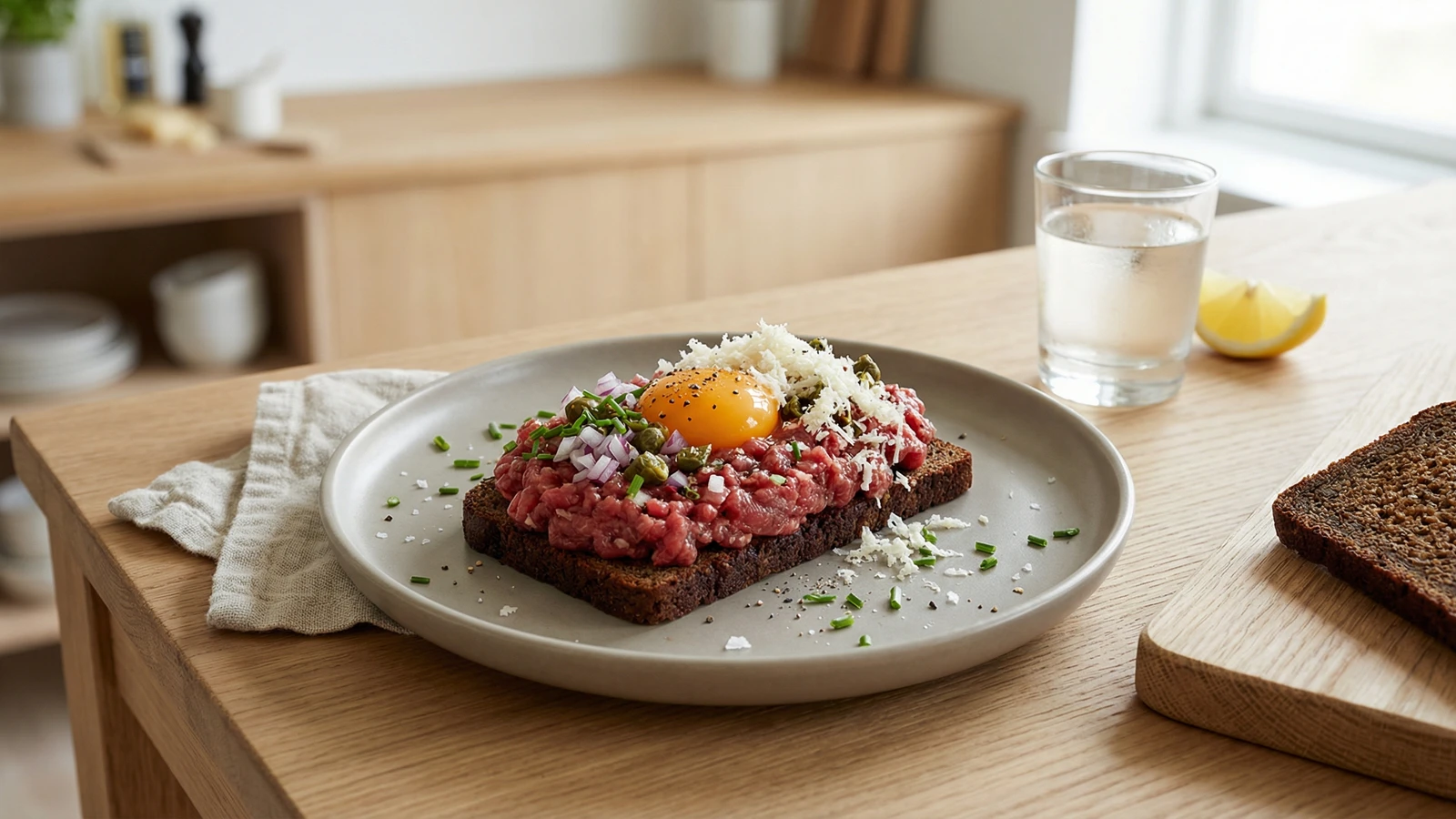
Tatar paa Rugbrod
Created by Chef Freja
Hand-chopped raw beef on dark rugbrod, crowned with a golden egg yolk, capers, grated fresh horseradish, and raw onion. The bold piece of smorrebrod that opens the meat course at a proper Danish lunch.
There is a moment in a long Danish lunch when the herring plates are cleared and the meat course begins. The aquavit has done its work. The conversation has loosened. And the piece that arrives next is almost always tatar paa rugbrod, raw beef on dark rye, crowned with a yolk so orange it looks lit from inside.
This is the bold move of the smorrebrod repertoire. It announces the shift from fish to meat, from cold kitchen to something heartier, and it does so with absolute confidence. Raw beef, dark bread, sharp condiments, nothing hidden. Every element is visible, and the grammar of the dish is written in the arrangement: the mound of beef, the well in the centre, the yolk, the scattered capers and onion, the drift of fresh horseradish over the top. Nothing extra. Nothing missing.
Tatar is a dish about temperature and trust. Trust in the beef you buy, trust in the butcher who trimmed it, trust in your own knife. The season decides less here than for most Danish food, but the horseradish quietly points you toward the cooler months, when the root is at its most fragrant and the dish feels right on a table lit by low afternoon light.
I'll walk you through every step, including the ones nobody explains. Why the board goes in the freezer. Why you chop by hand and never use a processor. Why the butter on the rugbrod matters more than you'd think. The dish is simple, but simple dishes are the ones that reward attention. You'll know when it's right because each element will taste like itself.
Beef tartare arrived in Denmark through French culinary influence in the mid-1800s, when the restaurant culture of Copenhagen looked to Paris for its vocabulary. Danish cooks absorbed the idea and rebuilt it for their own table, moving it off the plate and onto rugbrod, adding the egg yolk and the fresh horseradish that belongs to the cold Scandinavian kitchen. By the time the smorrebrodsjomfru, the formally trained women of the Copenhagen lunch restaurants, had codified the serving order of smorrebrod in the late nineteenth century, tatar had secured its place as the opening piece of the meat course, the moment when the meal's centre of gravity shifted from the sea to the land.
The technique, the tradition, and the story behind every dish.
Discover Culinary AdvisorIngredients
beef tenderloin
Quantity
400g
very fresh, trimmed of all sinew
dark rugbrod
Quantity
4 thick slices
unsalted butter
Quantity
30g
softened
egg yolks
Quantity
4
very fresh, separated just before serving
red onion
Quantity
1 small
finely chopped
capers
Quantity
2 tablespoons
drained and roughly chopped
fresh horseradish root
Quantity
1 small piece
peeled
flaky sea salt
Quantity
to taste
black pepper
Quantity
freshly ground, to taste
chives
Quantity
small bunch
finely snipped
lemon (optional)
Quantity
1
cut into wedges
| Ingredient | Quantity |
|---|---|
| beef tenderloinvery fresh, trimmed of all sinew | 400g |
| dark rugbrod | 4 thick slices |
| unsalted buttersoftened | 30g |
| egg yolksvery fresh, separated just before serving | 4 |
| red onionfinely chopped | 1 small |
| capersdrained and roughly chopped | 2 tablespoons |
| fresh horseradish rootpeeled | 1 small piece |
| flaky sea salt | to taste |
| black pepper | freshly ground, to taste |
| chivesfinely snipped | small bunch |
| lemon (optional)cut into wedges | 1 |
Equipment Needed
- •Sharp chef's knife, freshly sharpened
- •Heavy wooden or plastic cutting board
- •Small mixing bowl
- •Microplane grater for the horseradish
Instructions
- 1
Chill everything
Put your knife, your cutting board, and a small mixing bowl in the freezer for fifteen minutes before you start. Keep the beef in the coldest part of the fridge until the very last moment. Raw beef is a dish about temperature and texture, and warm meat on a warm board starts to break down before you've even finished chopping. Cold tools give you clean cuts and clean flavor.
If the beef has any silvery sinew left on it, trim it off now. Sinew is chewy when raw and it ruins the texture. You want muscle only, deep red and fine-grained. - 2
Hand-chop the beef
Take the beef out, place it on the cold board, and slice it into thin strips. Then cut the strips into fine dice, and then go over the dice with the knife until you have something between a mince and a rough chop. Never use a food processor. The blades heat the meat and turn it to paste, and paste is not what you want. You want grain, a little give, a little bite. Work quickly and with confidence. Three minutes of chopping is enough.
A sharp knife is not a suggestion, it's a requirement. A dull knife crushes the fibers instead of cutting them, and the meat weeps and goes grey. Sharpen before you start. - 3
Season the meat
Tip the chopped beef into the cold mixing bowl. Season with a good pinch of flaky salt and several turns of black pepper. Don't add anything else yet. No oil, no mustard, no Worcestershire. The Danish version trusts the beef to carry itself, and the condiments arrive on top at the table, not mixed through. Stir gently with a spoon, just enough to distribute the seasoning, and put the bowl back in the fridge while you prepare the bread.
- 4
Butter the rugbrod
Spread each slice of rugbrod with a thin, even layer of softened butter, going right to the edges. This step is not optional and it is not decorative. The butter is the waterproof layer between the bread and the beef, and without it the juices from the meat soak straight into the rye and turn it soggy. Cold butter tears the bread. Soft butter glides. Take your time with it.
- 5
Shape the beef on the bread
Divide the beef into four equal portions and shape each one into a neat oval mound on top of a slice of rugbrod. Don't flatten it into a puck and don't let it spill over the edges. You want a generous dome of meat in the centre of the bread, with a clear frame of dark rye showing around it. Make a shallow well in the top of each mound with the back of a spoon, deep enough to hold an egg yolk but not so deep it goes through to the bread.
- 6
Crown and garnish
Separate the yolks one at a time, cupping each one in your hand and letting the white slip through your fingers, then slide the yolk gently into its well. Scatter the chopped onion and capers around the yolk. Grate a generous blanket of fresh horseradish over the top of each piece, using a microplane, so it falls like snow. Finish with snipped chives, a last pinch of flaky salt, and another turn of black pepper.
Fresh horseradish is the whole point. Jarred horseradish is vinegary and flat, and the dish loses its heat. If you can only find jarred, use less and expect a quieter result. Fresh root grates into something alive and sharp and perfumed, and you'll taste the difference immediately. - 7
Serve immediately
Bring the plates to the table at once, with lemon wedges alongside and a cold beer or a glass of aquavit if the moment calls for it. Tatar is eaten with a knife and fork. The diner breaks the yolk themselves, folding it through the meat at the table, and that small gesture is part of the pleasure of the dish. Tak for mad.
Chef Tips
- •The beef is the whole dish, so buy it from a butcher you trust and tell them what you're making. Ask for a centre-cut piece of tenderloin, trimmed clean, and use it the same day. This is not a dish where corners can be cut on sourcing.
- •The yolk should be as fresh as you can find. If you can get eggs from a farm or a market where you know the date, that's what you want. The colour of a truly fresh yolk is the colour this dish depends on.
- •Grate the horseradish at the very last second, directly over the plate. It loses its aroma within minutes of being grated, and half the pleasure of the dish lives in that first sharp breath when you lean over it.
- •A cold pilsner or a small glass of aquavit is the drink for tatar. Red wine overwhelms it. The dish wants something clean and bracing to sit beside the richness of the raw beef and the yolk.
Advance Preparation
- •Chop the onion and the capers up to two hours ahead and keep them covered in the fridge.
- •Butter the rugbrod slices up to an hour before serving, but no earlier. The butter needs to stay soft and the bread needs to stay fresh.
- •The beef itself must be chopped no more than thirty minutes before serving. Raw meat starts to oxidize and darken the moment it's cut, and the bright red colour is part of the dish.
Frequently Asked Questions
Nutrition Information
1 serving (about 210g)
Where cooking meets culture.
Culinary mentorship, cultural storytelling, and the editorial depth that makes cooking meaningful.
Explore Culinary Advisor