Culinary Advisor
A cooking platform built around craft, culture, and the stories behind what we eat.
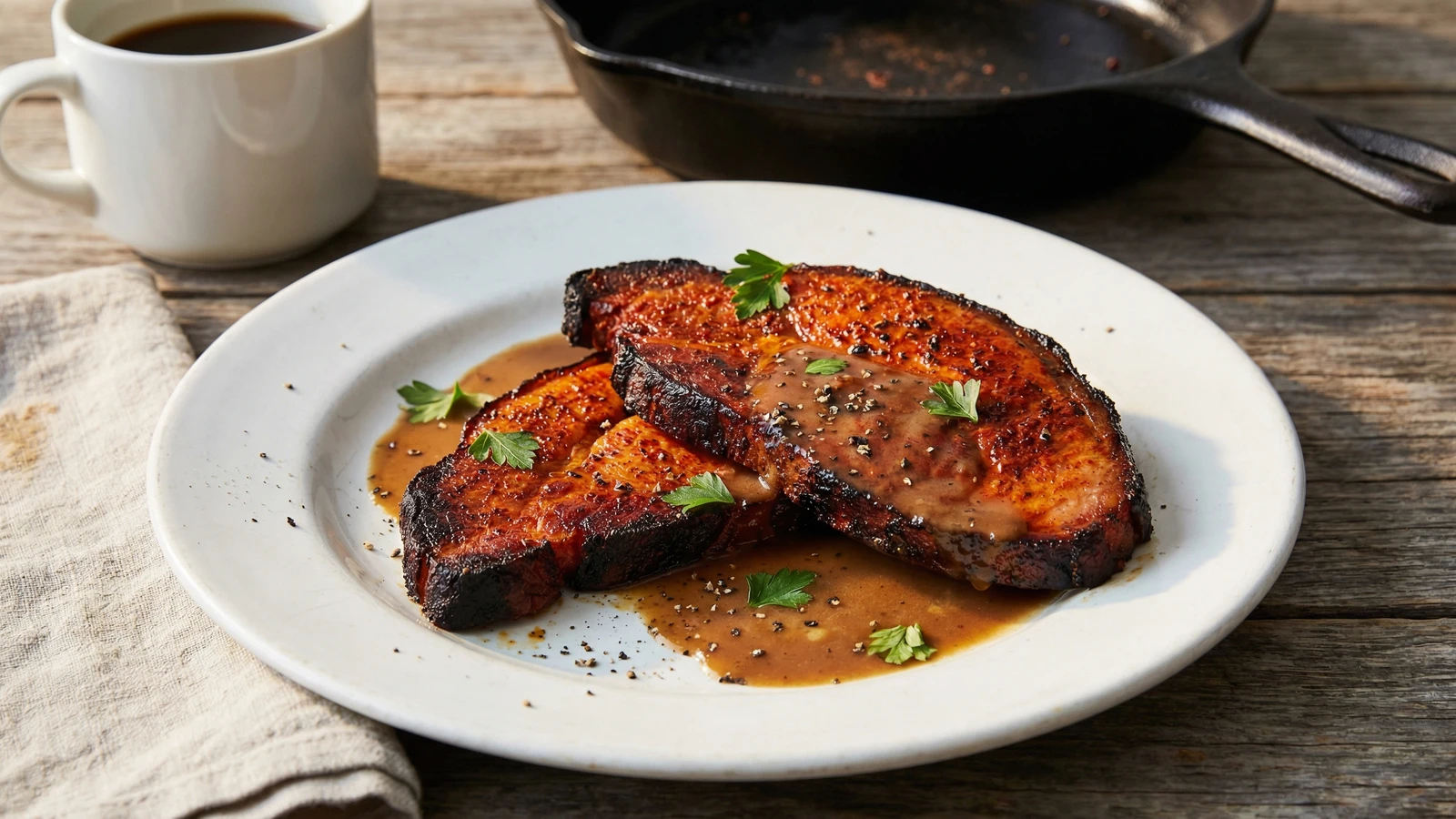
Tasso Ham Steaks with Red-Eye Gravy
Created by Chef Remy
Thick slabs of smoky, spice-rubbed tasso ham seared until the edges turn dark and crispy, then bathed in a thin, bitter-sweet gravy made from strong coffee and all those beautiful pan drippings.
Tasso is Louisiana in a single bite. This heavily spiced, oak-smoked pork shoulder carries enough cayenne and garlic to wake you up before the coffee does. Cut it thick, sear it hard, and you have got breakfast worth getting out of bed for.
Red-eye gravy comes from the old Southern tradition of deglazing the ham pan with coffee. The name comes from that little circle of fat that floats on top, staring back at you like a bleary eye. Some folks think it is too simple to be called a gravy. Those folks have never tasted it done right. The coffee cuts through the smokiness of the tasso, the bitterness balances the salt and spice, and the whole thing comes together in about three minutes flat.
At Lagniappe, we serve this alongside grits and eggs on Sunday mornings. The regulars know to get there early because we only make so much tasso each week, and when it is gone, it is gone. My grandmother Evangeline made her own tasso in the smokehouse behind her bayou kitchen. She would slice it thick as your thumb and fry it until the house smelled like heaven and cayenne. That smell is what Louisiana mornings are supposed to be.
The technique, the tradition, and the story behind every dish.
Discover Culinary AdvisorIngredients
tasso ham
Quantity
1 pound
sliced into 1/2-inch thick steaks
unsalted butter
Quantity
1 tablespoon
strong black coffee
Quantity
1 cup
hot
water or chicken stock
Quantity
1/4 cup
black pepper
Quantity
1/2 teaspoon
coarsely ground
brown sugar (optional)
Quantity
1 teaspoon
fresh parsley (optional)
Quantity
for garnish
chopped
| Ingredient | Quantity |
|---|---|
| tasso hamsliced into 1/2-inch thick steaks | 1 pound |
| unsalted butter | 1 tablespoon |
| strong black coffeehot | 1 cup |
| water or chicken stock | 1/4 cup |
| black peppercoarsely ground | 1/2 teaspoon |
| brown sugar (optional) | 1 teaspoon |
| fresh parsley (optional)chopped | for garnish |
Equipment Needed
- •12-inch cast iron skillet
- •Wooden spoon or spatula
- •Sharp knife for slicing tasso
Instructions
- 1
Slice the tasso
Cut your tasso ham into steaks about half an inch thick. You want substantial slabs here, not deli slices. Tasso is already fully cooked and cured, so we are searing for flavor and texture, not food safety. Thicker cuts give you more surface area to caramelize without drying out the center.
If your tasso is cold from the refrigerator, let it sit at room temperature for ten minutes. It will sear more evenly. - 2
Heat your skillet
Set a cast iron skillet over medium-high heat and let it get properly hot, about two minutes. Add the butter and swirl it around. The butter should foam and sizzle immediately. If it just sits there looking sad, your pan is not ready. Wait.
- 3
Sear the tasso
Lay the tasso steaks in the hot pan without crowding them. You should hear an aggressive sizzle the moment they hit the iron. Let them cook undisturbed for two to three minutes until the undersides develop a dark, caramelized crust. Flip and repeat on the second side. The spices in the cure will bloom in the heat, filling your kitchen with smoke and the smell of Louisiana.
Do not press down on the ham with your spatula. You will squeeze out moisture and prevent proper browning. Patience. - 4
Remove and rest the ham
Transfer the seared tasso to a warm plate. The steaks will have released some of their rendered fat into the pan along with caramelized bits of spice and meat. This fond is pure gold. Do not wash that skillet.
- 5
Build the red-eye gravy
With the skillet still over medium heat, pour in the hot coffee. It will sputter and steam violently, so stand back. Use a wooden spoon to scrape up every bit of fond from the bottom of the pan. Add the water or stock and the black pepper. If you want a touch of sweetness to balance the bitter coffee and spicy ham, stir in the brown sugar now.
The coffee must be hot when it hits the pan. Cold coffee drops the temperature too fast and you lose the deglaze. - 6
Reduce the gravy
Let the gravy simmer for two to three minutes until it reduces by about a third. It should be thin, almost like a broth, but intensely flavored. Taste it. The gravy should be smoky, slightly bitter from the coffee, salty from the tasso drippings, with a gentle heat in the background. Adjust with more pepper if needed.
- 7
Serve immediately
Arrange the tasso steaks on warm plates and spoon the red-eye gravy generously over the top. The gravy will pool around the ham, ready to be soaked up by grits, biscuits, or toast. Scatter a little fresh parsley if you like, though the dish is complete without it. Serve while everything is hot and the coffee aroma still hangs in the air.
Chef Tips
- •Real tasso is essential here. Do not substitute regular ham or Canadian bacon. The heavy spicing and smoking of tasso is what makes this dish sing. Look for it at specialty grocers, Cajun markets, or order it from Louisiana online.
- •Brew your coffee strong. Weak diner coffee makes weak gravy. I use a dark roast, almost espresso strength, with chicory if I have it. That's the New Orleans way.
- •Red-eye gravy is thin by design. If you want a thicker gravy, you are making something else entirely. Trust the tradition.
- •This dish pairs beautifully with stone-ground grits, fried eggs with runny yolks, and hot buttermilk biscuits. At Lagniappe, we call that the Full Bayou Breakfast.
Advance Preparation
- •Tasso can be sliced and stored refrigerated up to three days ahead. Bring to room temperature before searing.
- •Red-eye gravy cannot be made ahead. It takes three minutes and must be served immediately. The coffee flavor fades as it sits.
Frequently Asked Questions
Nutrition Information
1 serving (about 130g)
Where cooking meets culture.
Culinary mentorship, cultural storytelling, and the editorial depth that makes cooking meaningful.
Explore Culinary Advisor