Culinary Advisor
A cooking platform built around craft, culture, and the stories behind what we eat.
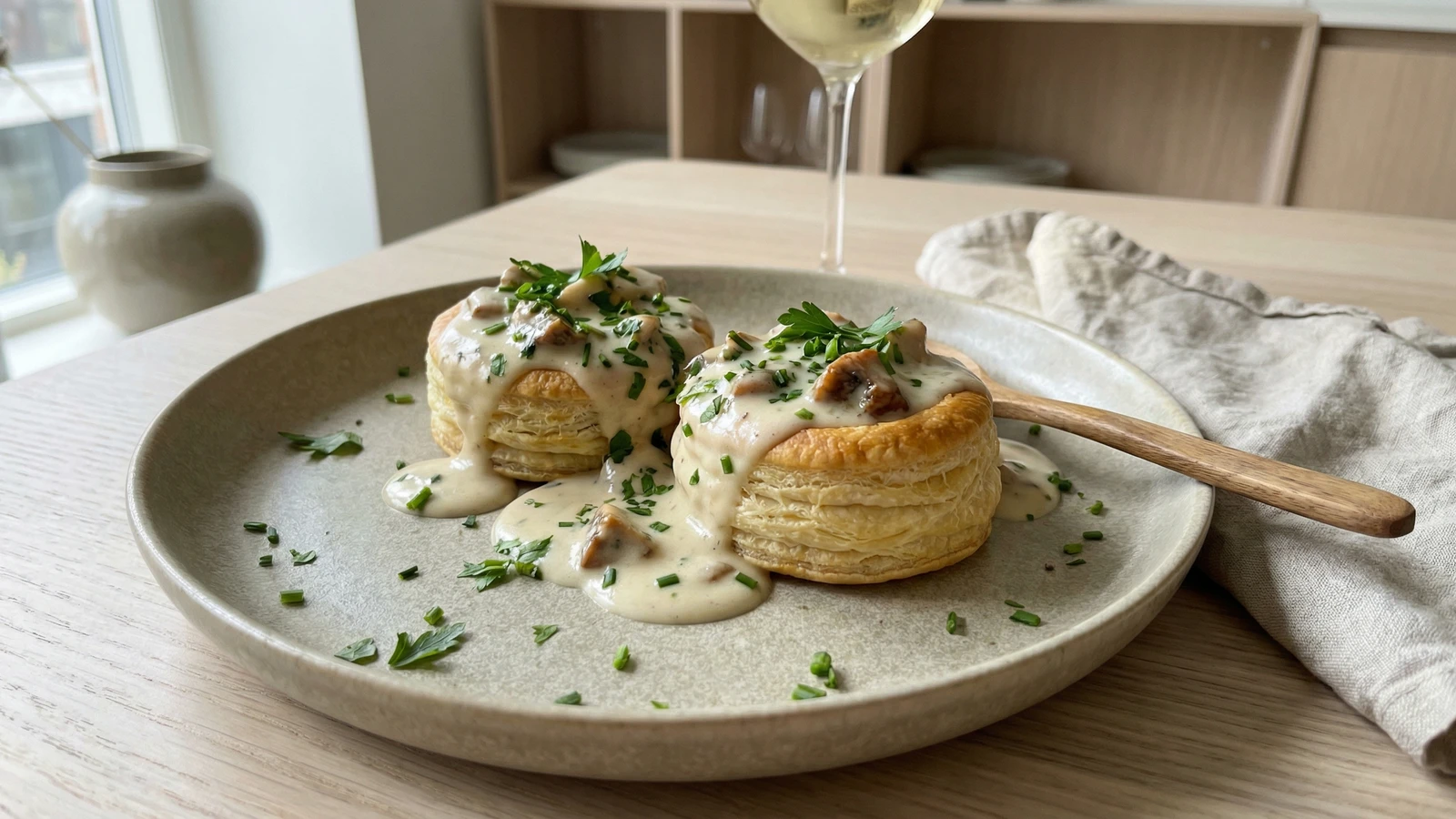
Tarteletter med Svampestuvning
Created by Chef Freja
Crisp Danish puff pastry shells filled with creamed mushrooms, button mushrooms for a weeknight, chanterelles when autumn turns the forests gold. The honest vegetarian tarteletter, served with care and a little lemon to lift it.
There's a moment in late August when the chanterelles start appearing at the market. Yellow and ruffled, smelling faintly of apricots, piled up in shallow wooden boxes by the people who know where to find them. This is the week tarteletter come back to my kitchen.
Tarteletter are celebratory food in Denmark. You see them at confirmations, at birthdays, at the long Sunday lunches that stretch into the afternoon and end with coffee and small cakes. The classic filling is chicken and asparagus, but there's another version, older than people realize and just as loved, made with mushrooms in a creamy sauce. This is the one I cook most often. It's simpler, it suits the seasons better, and when chanterelles are in, nothing in the Danish kitchen tastes more like the forest.
The technique has two parts and they each matter. First, the mushrooms. You brown them properly, in a hot pan with butter and patience, until the edges go gold and the flavor concentrates. Second, the sauce. A béchamel built slowly, with white wine for sharpness and cream for body, and a squeeze of lemon at the end that wakes the whole thing up. I'll walk you through both, and I'll tell you exactly what to watch for so you never have to guess.
When chanterelles are out of season, use the best fresh button mushrooms you can find. They make a tarteletter that's honest, satisfying, and entirely worth the effort. The joy of waiting belongs to the chanterelles. The rest of the year, the dish stands on its own.
The tartelet shell came to Denmark from French haute cuisine in the 1800s, when Danish kitchens absorbed the techniques of the great European cooking schools and made them their own. By the early twentieth century, ready-made puff pastry shells were sold in every Danish grocery, and the dish became fixed in the celebratory Danish repertoire, served at confirmations, weddings, and the grand cold table buffets. The traditional filling was hons i asparges, chicken in white asparagus sauce, but the mushroom version has its own lineage in the Danish kitchen, born from the autumn forest harvests of Sjaelland and Jutland where wild chanterelles, ceps, and trompetsvampe have been gathered since long before refrigeration made the chicken version possible year-round.
The technique, the tradition, and the story behind every dish.
Discover Culinary AdvisorIngredients
puff pastry tartelet shells
Quantity
8
ready-made
mushrooms
Quantity
500g
button mushrooms, or chanterelles when in season
shallot
Quantity
1 small
finely chopped
unsalted butter
Quantity
60g
plain flour
Quantity
30g
dry white wine
Quantity
100ml
whole milk
Quantity
250ml
double cream
Quantity
150ml
fresh lemon juice
Quantity
1 teaspoon
freshly grated nutmeg
Quantity
pinch
fine sea salt
Quantity
to taste
white pepper
Quantity
freshly ground, to taste
flat-leaf parsley
Quantity
small bunch
finely chopped
chives
Quantity
small bunch
snipped
| Ingredient | Quantity |
|---|---|
| puff pastry tartelet shellsready-made | 8 |
| mushroomsbutton mushrooms, or chanterelles when in season | 500g |
| shallotfinely chopped | 1 small |
| unsalted butter | 60g |
| plain flour | 30g |
| dry white wine | 100ml |
| whole milk | 250ml |
| double cream | 150ml |
| fresh lemon juice | 1 teaspoon |
| freshly grated nutmeg | pinch |
| fine sea salt | to taste |
| white pepper | freshly ground, to taste |
| flat-leaf parsleyfinely chopped | small bunch |
| chivessnipped | small bunch |
Equipment Needed
- •Wide heavy frying pan, 28cm or larger
- •Heavy-bottomed saucepan for the sauce
- •Wooden spoon
- •Baking sheet for warming the shells
Instructions
- 1
Clean the mushrooms
Wipe the mushrooms clean with a dry cloth or a soft brush. Don't wash them under the tap. Mushrooms are sponges, and water gets into the flesh and stays there. When the wet mushrooms hit a hot pan, they steam instead of brown, and you lose half the flavor before you've started. If they really need rinsing, do it quickly and dry them at once. Slice button mushrooms into quarters. If you're using chanterelles, leave small ones whole and tear larger ones in half so the irregular edges catch the butter.
The season decides which mushroom you reach for. Chanterelles arrive in Danish forests from late July through October, and during those weeks they belong in this dish. The rest of the year, good fresh button mushrooms make a tarteletter you'll be proud of. - 2
Brown the mushrooms
Melt half the butter in a wide heavy frying pan over medium-high heat. When the butter foams and starts to smell of hazelnuts, add the mushrooms in a single layer. Don't crowd the pan. Crowded mushrooms release their water and stew, and you want the opposite. You want them golden at the edges and concentrated in flavor. Leave them undisturbed for two minutes, then stir and let them go for another three. Season with salt only at the end. Salt too early pulls the water out before the heat has a chance to drive it off. Tip the browned mushrooms into a bowl and set aside.
- 3
Sweat the shallot
Lower the heat under the pan. Add the rest of the butter and the chopped shallot. Cook gently for two or three minutes until the shallot is soft and translucent, never browned. Browned shallot tastes sharp and competes with the mushrooms, and the mushrooms are the dish.
- 4
Build the sauce
Sprinkle the flour over the shallot and butter and stir it through. Cook the flour for a full minute, stirring constantly. This step matters. Raw flour tastes pasty and chalky, and a minute on the heat is what removes that. Pour in the white wine and stir hard. It will seize and thicken almost instantly. Keep stirring as you add the milk in three additions, letting each one come to a simmer before the next. Then stir in the cream. The sauce should coat the back of a spoon and hold a clean line when you draw your finger through it. If it feels too thick, add a splash more milk. If it's too thin, simmer for another minute.
This is a French béchamel technique that came into the Danish kitchen in the nineteenth century and stayed. Once you understand the rhythm, butter, flour, liquid in stages, you can make the sauce for any creamed filling, savory or sweet. - 5
Finish the svampestuvning
Tip the browned mushrooms back into the sauce, along with any juices that have collected in the bowl. Stir gently so the mushrooms warm through but don't break up. Add the lemon juice, the pinch of nutmeg, and season with salt and white pepper. Taste it. Adjust. The lemon is the detail that makes the dish lift off the plate. It cuts through the richness and brightens the mushrooms. Without it the filling tastes flat, and you'll know when it's right because the flavor sharpens and wakes up.
- 6
Warm the shells
While the filling comes together, heat the oven to 180C and place the tartelet shells on a baking sheet. Warm them for five to seven minutes until they smell buttery and feel crisp to the touch. Cold shells from the box go soggy the moment you fill them. Warm shells stay crisp long enough to reach the table.
- 7
Fill and serve
Set two warmed tarteletter on each plate. Spoon the creamy mushroom filling generously into each shell, letting a little spill over the rim. That spill is part of the look. Scatter the chopped parsley and chives over the top. Serve immediately, while the shells are still crisp and the filling steams quietly into the spoon. Tak for mad.
Chef Tips
- •Buy the tartelet shells. Danish home cooks have been doing this for generations and there's no shame in it. The puff pastry shells from a good brand are excellent, and making your own from scratch turns a 45-minute dish into a half-day project. Save your effort for the filling, which is where the dish lives.
- •If you can find a mix of mushrooms, use it. Chanterelles for color and perfume, ceps for depth, a few button mushrooms for body. The variety gives the filling a complexity that one type alone can't match.
- •A glass of crisp dry white wine alongside is the natural pairing. A Riesling, a Sancerre, or a Danish-style apple cider if you want to keep the meal close to home.
Advance Preparation
- •The mushroom filling can be made up to a day ahead. Cool it completely, store covered in the fridge, and reheat gently over low heat with a splash of milk to loosen it before serving.
- •Warm the tartelet shells just before serving. They go soggy the moment they're filled, so the filling and the shells should meet at the table, not before.
Frequently Asked Questions
Nutrition Information
1 serving (about 250g)
Where cooking meets culture.
Culinary mentorship, cultural storytelling, and the editorial depth that makes cooking meaningful.
Explore Culinary Advisor