Culinary Advisor
A cooking platform built around craft, culture, and the stories behind what we eat.
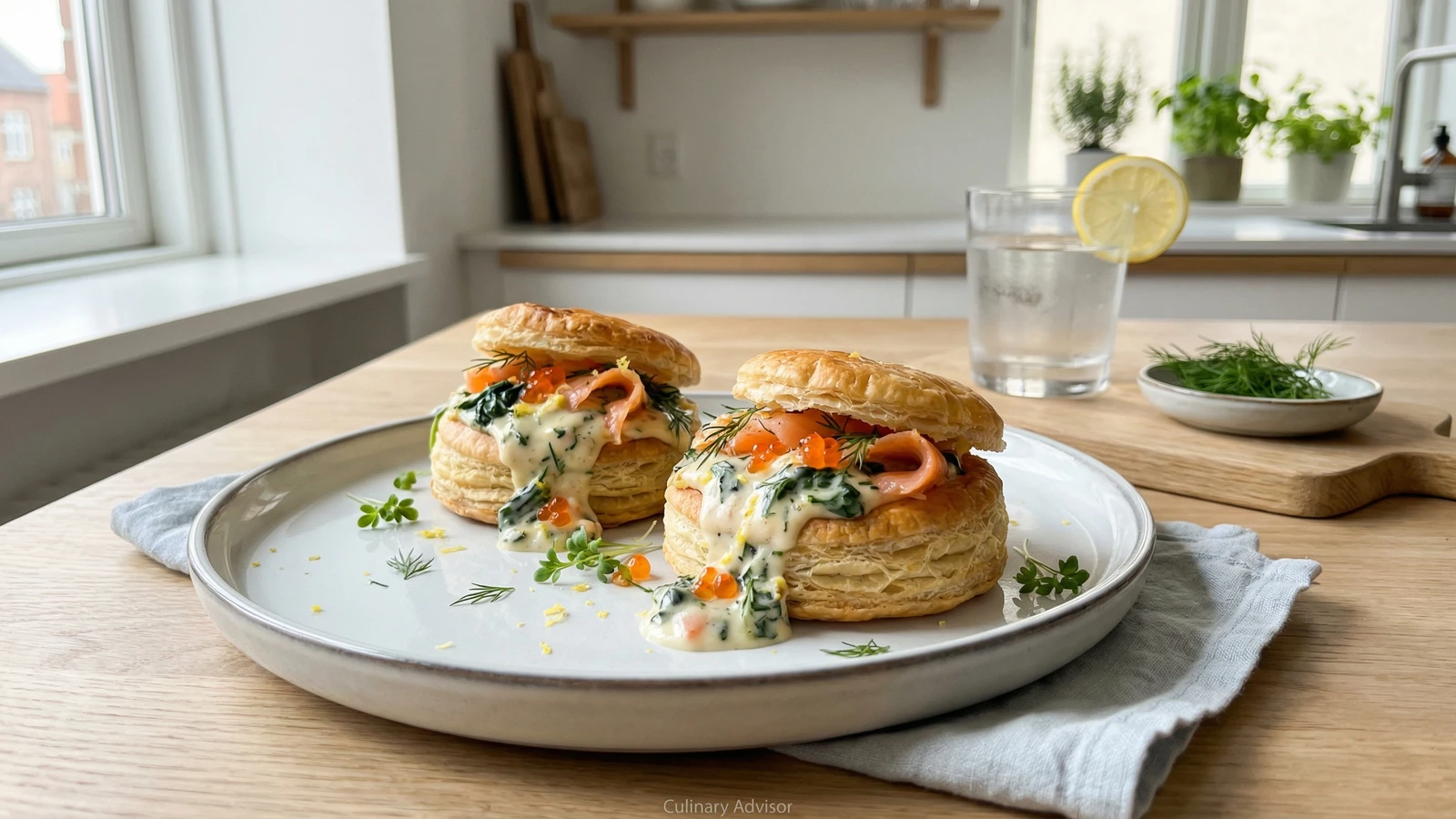
Tarteletter med Roget Laks og Spinat
Created by Chef Freja
The modern Danish tarteletter: crisp pastry shells filled with cold-smoked salmon and wilted spinach in a dill cream sauce, the dinner-party dish that carries a beloved tradition forward.
Tarteletter belong to celebration in Denmark. Birthdays, confirmations, the long Sunday lunch that turns into the long Sunday afternoon. When the small crisp pastry shells appear on the table, you know the meal matters to someone. They are the dish a Danish host reaches for when they want to give the people at their table something a little more than ordinary, without disappearing into the kitchen for hours.
The classic version is hons i asparges, chicken and white asparagus in a delicate cream sauce, and it remains one of the great dishes of Danish home cooking. But tarteletter are not a museum piece. They are a vessel, and Danish cooks have been pouring new things into them for decades. This version, with cold-smoked salmon and wilted spinach in a dill cream sauce, is one of the modern variations that has earned its place. The salmon brings the sea, the spinach brings the green of early spring, the dill ties it back to every Danish kitchen you've ever stood in.
What I want you to pay attention to is the moment the salmon meets the sauce. You take the pan off the heat first. Always. Cold-smoked salmon is already cured and silky, and the second it cooks in hot cream it turns chalky and sad. The residual warmth of the sauce is enough. The salmon should stay soft and just barely warmed through, almost translucent. Get that right and the rest is generosity: warm shells, a generous spoonful, dill on top. You'll know when it's right.
Tarteletter arrived in Denmark in the 19th century as part of the wave of French culinary influence that reshaped European bourgeois cooking, and they were quickly adopted into the Danish festive repertoire. By the early 20th century, hons i asparges i tarteletter had become so fixed in Danish celebration cooking that it earned its own near-sacred place at confirmations and birthdays, often served as the warm course before the cold table. The shift toward modern fillings, smoked salmon and spinach, mushrooms and leek, shellfish in saffron cream, began in the 1980s as Danish home cooks started treating the shells as a frame for whatever the season offered, a quietly radical move that kept the tradition alive by refusing to freeze it.
The technique, the tradition, and the story behind every dish.
Discover Culinary AdvisorIngredients
tarteletter shells
Quantity
8
ready-made
cold-smoked salmon
Quantity
200g
sliced
fresh spinach
Quantity
300g
washed, stems trimmed
unsalted butter
Quantity
40g, plus a knob for the spinach
plain flour
Quantity
30g
whole milk
Quantity
300ml
double cream
Quantity
150ml
dry white wine
Quantity
100ml
shallot
Quantity
1 small
finely minced
fresh dill
Quantity
2 tablespoons, plus extra fronds to finish
finely chopped
Dijon mustard
Quantity
1 teaspoon
lemon
Quantity
zest of half, plus a small squeeze of juice
fine sea salt
Quantity
to taste
white pepper
Quantity
to taste
cress or extra dill (optional)
Quantity
a few sprigs
salmon roe (optional)
Quantity
to finish
| Ingredient | Quantity |
|---|---|
| tarteletter shellsready-made | 8 |
| cold-smoked salmonsliced | 200g |
| fresh spinachwashed, stems trimmed | 300g |
| unsalted butter | 40g, plus a knob for the spinach |
| plain flour | 30g |
| whole milk | 300ml |
| double cream | 150ml |
| dry white wine | 100ml |
| shallotfinely minced | 1 small |
| fresh dillfinely chopped | 2 tablespoons, plus extra fronds to finish |
| Dijon mustard | 1 teaspoon |
| lemon | zest of half, plus a small squeeze of juice |
| fine sea salt | to taste |
| white pepper | to taste |
| cress or extra dill (optional) | a few sprigs |
| salmon roe (optional) | to finish |
Equipment Needed
- •Heavy-bottomed saucepan, 2 litre
- •Wide frying pan for the spinach
- •Whisk
- •Fine sieve
- •Baking sheet lined with parchment
Instructions
- 1
Warm the shells
Heat the oven to 160C. Place the tarteletter on a baking sheet lined with parchment and warm them for six to eight minutes. This isn't really baking. It's reviving. Pastry shells lose their crackle the minute they sit on a shelf in a packet, and a few minutes in a low oven brings the layers back to life. They should feel light and dry, not toasted.
Don't fill the shells until the very last moment. The point of tarteletter is the contrast between crisp pastry and warm filling. Soggy shells are the one thing that ruins this dish. - 2
Wilt the spinach
Melt a knob of butter in a wide pan over medium heat. Add the spinach in handfuls, turning it gently with tongs as each handful collapses. It looks like a mountain at first and ends up as almost nothing. That's normal. Once it's all wilted and dark green, tip it into a sieve set over a bowl and press lightly with the back of a spoon to drain. Wet spinach in the sauce makes everything weep, and that's not the texture you want.
- 3
Sweat the shallot
In the same pan, melt the 40g of butter over a gentle heat. Add the minced shallot and let it soften for two or three minutes until translucent. No color. Browned shallot tastes of caramel and changes the direction of the sauce, and the direction we want is clean and fresh, not sweet.
- 4
Build the roux
Sprinkle the flour over the butter and shallot and stir continuously for a full minute. The mixture should look like wet sand and smell faintly nutty, never raw. This minute is what cooks out the floury taste. Skip it and you'll taste raw flour in the finished sauce, and once it's there you can't take it out.
- 5
Make the sauce
Pour in the white wine and whisk hard. The mixture will tighten at first and look alarming. Keep whisking. Then add the milk in a slow, steady stream, still whisking, and finally the cream. Bring it to a gentle simmer and let it thicken for three or four minutes until it coats the back of a spoon. Stir in the Dijon mustard and the lemon zest. Season with salt and white pepper. Taste it. The sauce should taste round and bright at the same time, rich from the cream and lifted by the wine and lemon.
- 6
Add the spinach
Take the pan off the heat. Stir in the drained spinach and the chopped dill. Give it one gentle squeeze of lemon juice, no more. The acid wakes the whole thing up. Taste again and adjust the salt. The sauce is ready when the spinach is folded through evenly and the green has loosened the colour of the cream just slightly.
- 7
Fold in the salmon
This is the step that matters most. Tear the cold-smoked salmon into rough strips with your fingers, never with a knife. Fold the salmon into the warm sauce off the heat. The residual warmth is enough to take the chill off the fish without cooking it. The moment salmon cooks in cream, it goes from silk to chalk, and you cannot bring it back. You'll know when it's right because the salmon stays soft and translucent, just barely warmed through.
- 8
Fill and serve
Place two warm tarteletter on each plate. Spoon the salmon and spinach filling generously into each shell, letting it spill a little over the edge. That overflow is part of the look, the sign of a generous hand. Top each one with a few dill fronds, a small spoonful of salmon roe if you're using it, and a sprig of cress. Serve immediately, while the shells are still crisp and the filling is still warm. Tak for mad.
Chef Tips
- •Buy the tarteletter shells. This is not a corner cut. Even Danish home cooks who bake everything else from scratch buy the shells, and the brands sold in Danish supermarkets are genuinely good. Making puff pastry vol-au-vents at home is a project for a different day.
- •The salmon must be cold-smoked, not hot-smoked. Cold-smoked salmon is silky and translucent, the kind sliced thin for smorrebrod. Hot-smoked salmon is opaque and flaky and belongs in a different dish entirely.
- •Dill is not optional and basil is not a substitute. The herb is part of the structure of this dish. If you cannot find fresh dill, make something else.
- •An aquavit alongside is traditional and works beautifully. A crisp dry Riesling or a good Danish pilsner are the other natural choices.
Advance Preparation
- •The dill cream sauce can be made up to a day ahead, without the spinach and without the salmon. Cool, cover, and refrigerate. Reheat gently over a low flame, whisking, then fold in the wilted spinach and salmon just before serving.
- •The spinach can be wilted and drained earlier in the day and kept covered in the fridge.
- •Never assemble the tarteletter in advance. The shells go soft within minutes of meeting the filling. Warm the shells, fold the salmon into the sauce, and fill at the table if you can.
Frequently Asked Questions
Nutrition Information
1 serving (about 330g)
Where cooking meets culture.
Culinary mentorship, cultural storytelling, and the editorial depth that makes cooking meaningful.
Explore Culinary Advisor