Culinary Advisor
A cooking platform built around craft, culture, and the stories behind what we eat.
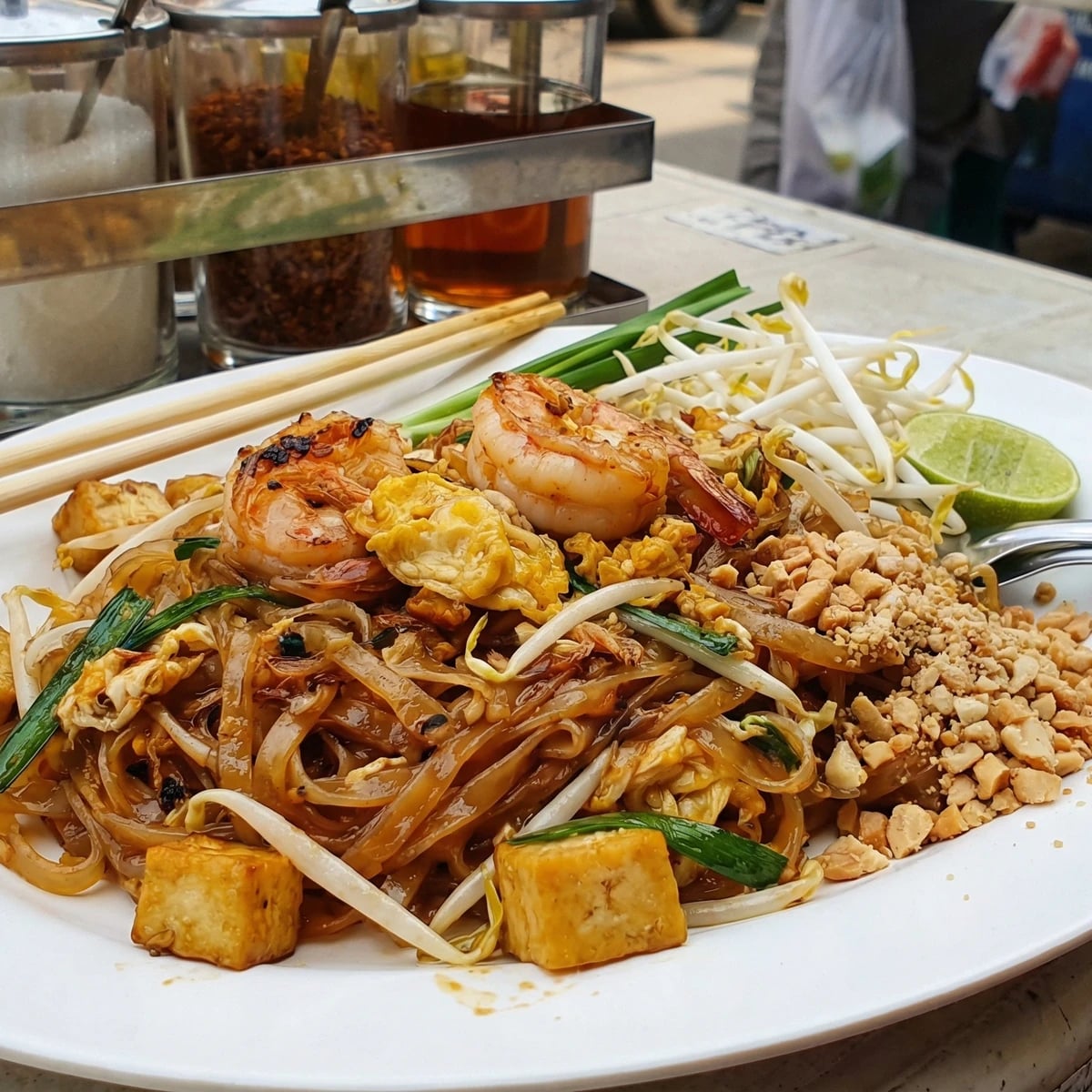
Tamarind Pad Thai (Pad Thai)
Created by Chef Fai
Three ingredients make the sauce: tamarind for sour, fish sauce for salt, palm sugar for sweet. That's the entire foundation. Get the sauce right and the noodles follow. Get it wrong and no amount of peanuts will save you.
Pad thai is the most famous Thai dish on earth, and it's the one most people have never actually tasted. What passes for pad thai in most restaurants is ketchup noodles. Tomato sauce, Sriracha, maybe some soy sauce. That's not pad thai. That's noodles wearing a costume.
The real pad thai is built on a sauce of three ingredients: makham (tamarind paste) for sour, nam pla (fish sauce) for salt, nam tan pip (palm sugar) for sweet. That's it. Three of the four pillars in a single sauce. The fourth, heat, comes from dried chili flakes on the side. Ajarn always said: "If you understand the sauce, you understand the dish." Pad thai is proof.
Here's what nobody tells you about pad thai: the dried shrimp (goong haeng) and preserved radish (chai poh) are not garnish. They're structural ingredients. The dried shrimp gives depth, umami, a briny chew that anchors the whole dish. The preserved radish gives a salty-sweet crunch that cuts through the tamarind's tang. Without them, you have stir-fried noodles. With them, you have pad thai. Same way the kreung tam is the foundation of a curry, these ingredients are the foundation of this noodle plate.
I teach pad thai at every Fai Thai workshop because it's the dish that exposes the gap between what people think Thai food is and what it actually is. When someone tastes real pad thai for the first time, that moment of "wait, this is what it's supposed to taste like?", that's the moment they start understanding the system. The sauce is dark amber, tangy, with a sweetness that doesn't clobber you. The noodles are separate, not clumped. The egg is set but still silky. The peanuts are crushed, not whole. Every element has a job. Principles, not recipes.
Ingredients
dried thin rice noodles (sen lek)
Quantity
150g
soaked in room-temperature water for 30 minutes, drained
tamarind paste (makham piak)
Quantity
3 tablespoons
seedless
fish sauce (nam pla)
Quantity
2 tablespoons
| Ingredient | Quantity |
|---|---|
| dried thin rice noodles (sen lek)soaked in room-temperature water for 30 minutes, drained | 150g |
| tamarind paste (makham piak)seedless | 3 tablespoons |
| fish sauce (nam pla) | 2 tablespoons |