Culinary Advisor
A cooking platform built around craft, culture, and the stories behind what we eat.
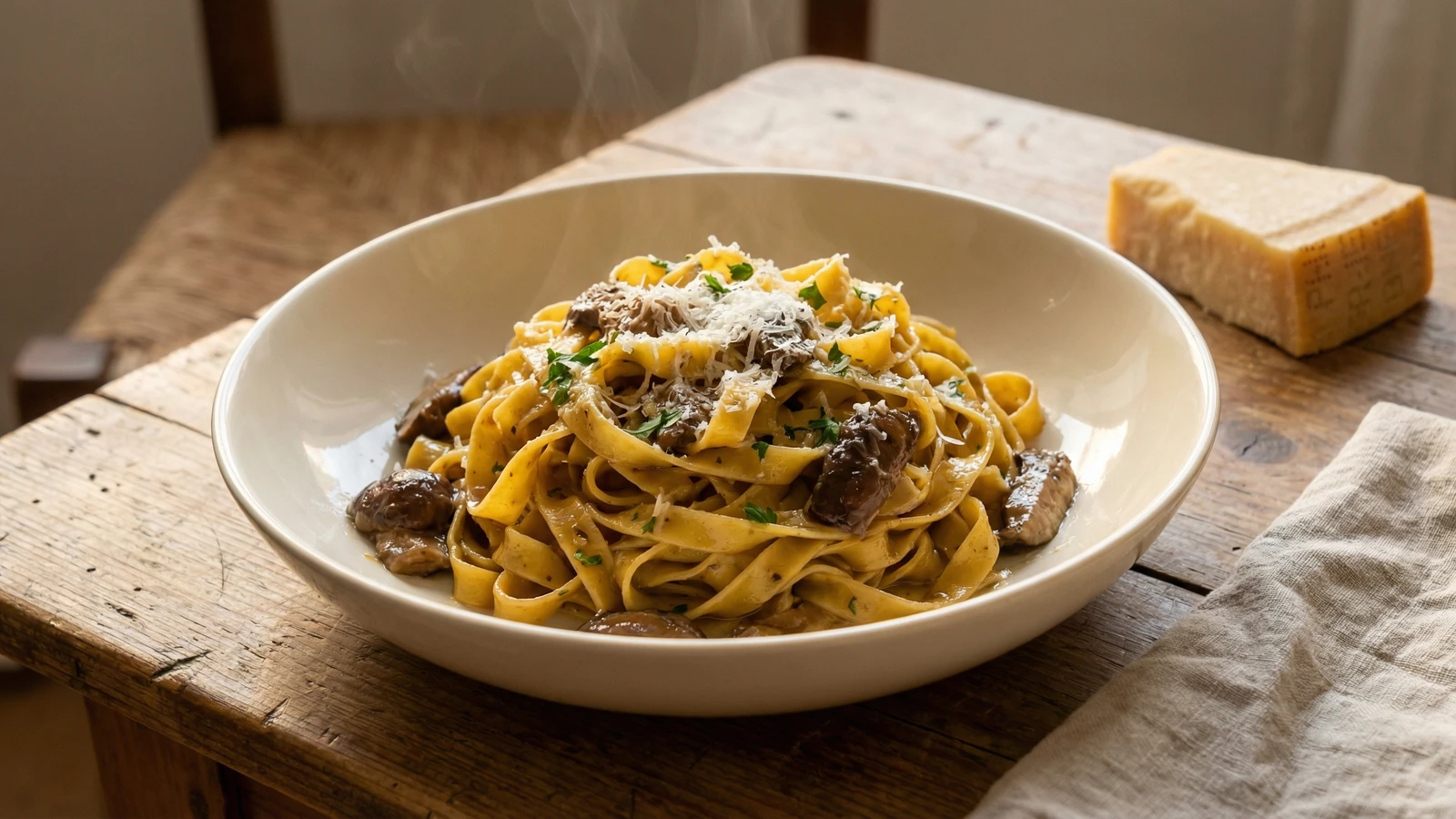
Tagliatelle ai Funghi Porcini
Created by Chef Graziella
Fresh egg pasta ribbons dressed with dried porcini reconstituted into something magnificent, their soaking liquid transformed into a sauce that tastes like the forest floor after rain.
Dried porcini are not a substitute for fresh. They are a different ingredient entirely, with deeper, more concentrated flavor than any fresh mushroom can provide. When you soak them in warm water, that liquid becomes as valuable as the mushrooms themselves. Discard it and you discard half the dish.
This is autumn cooking in Emilia-Romagna, when the forests in the Apennines yield their treasures and every trattoria in Bologna serves some version of this dish. The combination of fresh egg pasta and woodsy mushrooms is one of those marriages that needs nothing else. No cream. No excessive herbs. No garlic overwhelming the delicate porcini.
The technique is simple: reconstitute the mushrooms properly, build flavor in stages, and let the pasta finish cooking in the sauce so it absorbs everything. Simple does not mean easy. The timing must be precise. The pasta water must be properly salted. The butter must emulsify into the sauce, not separate into grease. Get these things right and you will understand why this dish has been made the same way for generations.
Porcini mushrooms have been gathered in the forests of Emilia-Romagna since medieval times, when foragers supplied the wealthy tables of Bologna and Parma. The practice of drying porcini developed as a way to preserve the autumn harvest through winter, and cooks discovered that drying intensified the flavor rather than diminished it. Tagliatelle ai funghi porcini became a regional classic by the 19th century, served in homes and osterie throughout the Apennine foothills.
The technique, the tradition, and the story behind every dish.
Discover Culinary AdvisorIngredients
dried porcini mushrooms
Quantity
1 ounce
warm water
Quantity
2 cups
for soaking
fresh tagliatelle
Quantity
1 pound
unsalted butter
Quantity
4 tablespoons
divided
extra virgin olive oil
Quantity
2 tablespoons
shallot
Quantity
1 medium
minced fine
garlic clove
Quantity
1
lightly crushed and peeled
dry white wine
Quantity
1/2 cup
kosher salt
Quantity
to taste
black pepper
Quantity
to taste
freshly ground
flat-leaf Italian parsley
Quantity
2 tablespoons
chopped
Parmigiano-Reggiano
Quantity
3/4 cup, plus more for serving
freshly grated
| Ingredient | Quantity |
|---|---|
| dried porcini mushrooms | 1 ounce |
| warm waterfor soaking | 2 cups |
| fresh tagliatelle | 1 pound |
| unsalted butterdivided | 4 tablespoons |
| extra virgin olive oil | 2 tablespoons |
| shallotminced fine | 1 medium |
| garlic clovelightly crushed and peeled | 1 |
| dry white wine | 1/2 cup |
| kosher salt | to taste |
| black pepperfreshly ground | to taste |
| flat-leaf Italian parsleychopped | 2 tablespoons |
| Parmigiano-Reggianofreshly grated | 3/4 cup, plus more for serving |
Equipment Needed
- •Large skillet or sauté pan (12-inch)
- •Fine-mesh strainer
- •Paper towel or coffee filter for straining
- •Large pot for pasta
- •Slotted spoon or spider
Instructions
- 1
Soak the porcini
Place the dried porcini in a bowl and cover with 2 cups warm water. Not hot, not cold. Warm. Let them soak for at least 30 minutes, until completely softened and pliable. The water will turn the color of dark tea. This liquid is precious.
Quality matters here more than quantity. One ounce of good dried porcini, with large tan and cream colored slices and an intense woodsy fragrance, will outperform two ounces of inferior product. Smell them before buying if you can. - 2
Strain and reserve the liquid
Lift the softened mushrooms from the soaking water with a slotted spoon or your fingers. Squeeze them gently over the bowl to extract excess liquid. Chop the mushrooms roughly into bite-sized pieces. Line a fine-mesh strainer with a paper towel or coffee filter and strain the soaking liquid into a clean bowl. Grit settles at the bottom of dried porcini. You do not want it in your sauce.
- 3
Start the pasta water
Bring a large pot of water to a boil and salt it generously. It should taste like the sea. Fresh pasta cooks quickly, so do not add it until your sauce is nearly ready.
- 4
Build the base
In a large skillet or sauté pan, heat 2 tablespoons of the butter with the olive oil over medium heat. When the butter foam subsides, add the minced shallot and the crushed garlic clove. Cook gently until the shallot is soft and translucent, about 4 minutes. The shallot should not color. Remove and discard the garlic clove. It has done its work.
The garlic here is a whisper, not a shout. It perfumes the fat and departs. This is the difference between using garlic correctly and overwhelming a dish with it. - 5
Cook the mushrooms
Add the chopped porcini to the pan and raise the heat to medium-high. Sauté for 3 to 4 minutes, stirring frequently, until the mushrooms begin to brown at the edges and any remaining moisture evaporates. You should hear them sizzle, not steam.
- 6
Add the wine
Pour in the white wine and let it bubble until almost completely evaporated, about 2 minutes. The raw alcohol smell should disappear entirely. Scrape the bottom of the pan to release any browned bits.
- 7
Add the soaking liquid
Pour in the strained porcini soaking liquid. Bring to a simmer and cook until reduced by about half, 5 to 7 minutes. The sauce will darken and intensify. Season with salt and several grinds of black pepper. Reduce heat to low.
- 8
Cook the pasta
Drop the fresh tagliatelle into the boiling water. Fresh pasta cooks in 2 to 3 minutes. Begin checking after 90 seconds. You want it tender but with a slight resistance at the center. Reserve one cup of pasta water before draining.
Dried tagliatelle may be used if fresh is unavailable. Cook according to package directions until just shy of al dente. The pasta will finish cooking in the sauce. - 9
Marry the pasta and sauce
Transfer the drained pasta directly to the pan with the mushroom sauce. Add the remaining 2 tablespoons butter, cut into pieces. Toss vigorously over low heat for one minute, adding splashes of pasta water as needed to create a glossy, clinging sauce. The butter must emulsify into the liquid, not melt into grease. Keep the pasta moving.
- 10
Finish and serve immediately
Remove from heat. Add the Parmigiano-Reggiano and chopped parsley. Toss again to combine. The cheese should melt into the sauce, not clump. Taste and adjust salt. Divide among warmed bowls and serve at once. Once the pasta is sauced, serve it promptly, inviting your guests and family to put off talking and start eating. Pass additional cheese at the table.
Chef Tips
- •Seek out porcini from Italy if possible. They are sold in packages at specialty stores and good Italian markets. The slices should be large, tan to cream colored, and smell intensely of the forest. Avoid packages with dark, crumbly pieces.
- •The porcini soaking liquid contains concentrated flavor. Straining it properly is essential. Any grit that escapes into your sauce will announce itself unpleasantly between your teeth.
- •Fresh tagliatelle from a good pasta shop is ideal. If you make your own, roll it thin and cut ribbons about one-quarter inch wide. The wider surface area catches more sauce than narrow pasta.
- •Do not add cream. I know you want to. Resist. The butter and pasta water create all the silkiness this dish needs. Cream would muffle the porcini flavor you worked to develop.
Advance Preparation
- •The porcini can be soaked up to 8 hours ahead. Strain the liquid and refrigerate both mushrooms and liquid separately.
- •The sauce base through step 7 can be prepared several hours ahead and reheated gently while the pasta cooks.
- •This dish does not reheat well. The pasta absorbs the sauce and becomes heavy. Make it and eat it.
Frequently Asked Questions
Nutrition Information
1 serving (about 270g)
Where cooking meets culture.
Culinary mentorship, cultural storytelling, and the editorial depth that makes cooking meaningful.
Explore Culinary Advisor