Culinary Advisor
A cooking platform built around craft, culture, and the stories behind what we eat.
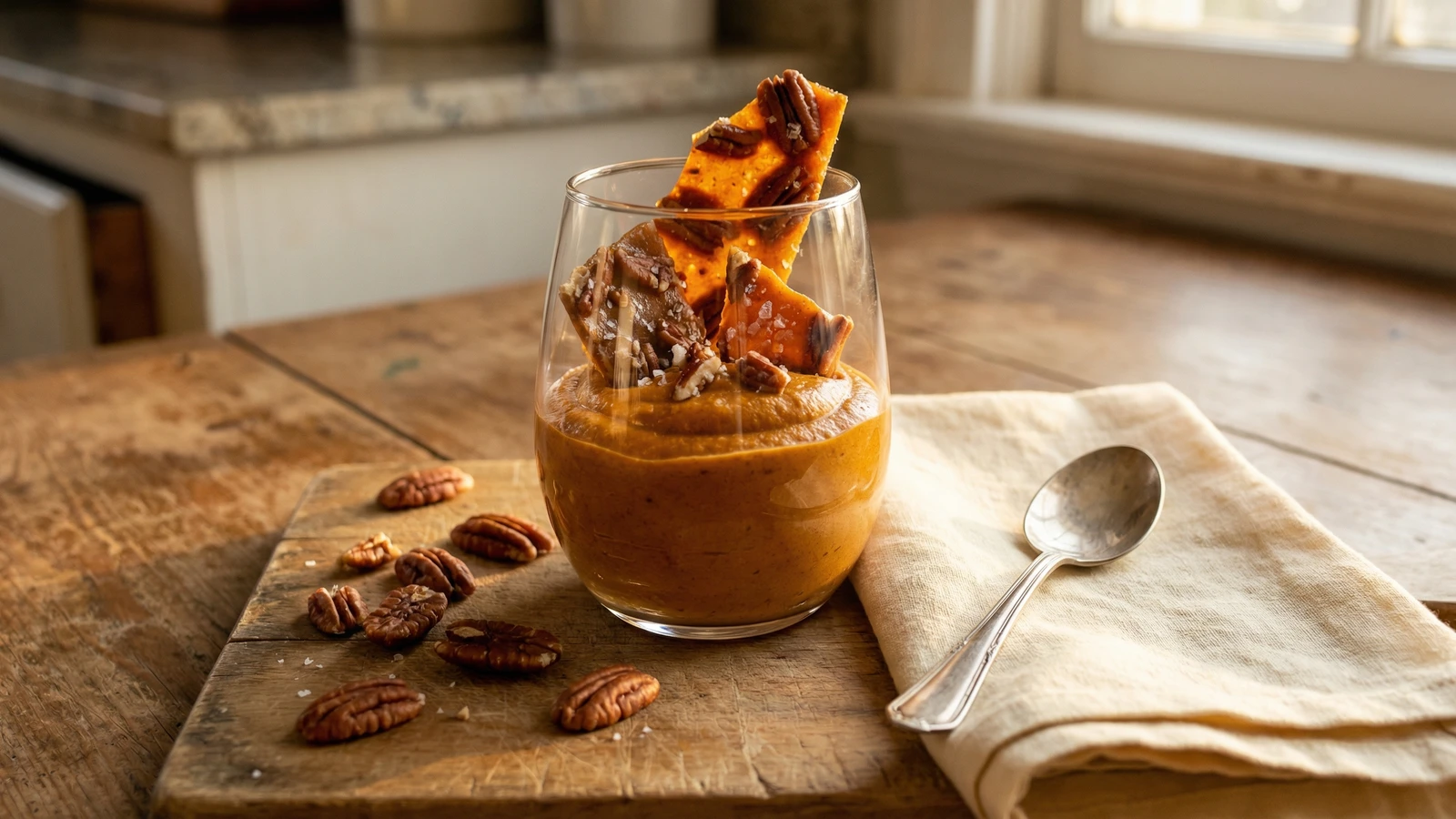
Sweet Potato Mousse with Pecan Praline
Created by Chef Remy
Velvet-smooth mousse infused with roasted sweet potato and warm holiday spices, topped with shattered golden praline that crackles against your spoon, the kind of dessert that makes people close their eyes and ask for the recipe.
Sweet potato pie has been on every holiday table in Louisiana for as long as anyone can remember. My grandmother Evangeline made hers with potatoes she grew in her own garden, and she would not dream of using anything from a can. This mousse takes all those beloved flavors and lifts them into something lighter, more refined, but every bit as satisfying.
The secret is roasting your sweet potatoes until they nearly collapse. This concentrates their natural sugars and develops a depth of flavor you cannot achieve any other way. Then you fold that spiced puree into clouds of whipped cream, creating something that tastes like the soul of sweet potato pie but feels like silk on your tongue.
At Lagniappe, we top this with praline made fresh every morning. The pecans must be toasted first, the caramel cooked to that perfect amber moment before bitterness sets in, and the whole thing finished with a shower of flaky salt. That salt is not optional. It wakes up every other flavor and keeps the sweetness honest. When you take a bite that catches mousse and praline together, you will understand why this dessert has been on our holiday menu for twenty years.
The technique, the tradition, and the story behind every dish.
Discover Culinary AdvisorIngredients
sweet potatoes
Quantity
2 pounds (about 3 medium)
heavy cream
Quantity
1 cup
very cold
cream cheese
Quantity
4 ounces
softened
dark brown sugar
Quantity
1/2 cup
packed
ground cinnamon
Quantity
1 teaspoon
nutmeg
Quantity
1/2 teaspoon
freshly grated
ground ginger
Quantity
1/4 teaspoon
ground allspice
Quantity
1/8 teaspoon
fine sea salt
Quantity
1/4 teaspoon
pure vanilla extract
Quantity
2 teaspoons
bourbon (optional)
Quantity
2 tablespoons
granulated sugar
Quantity
1 cup
water
Quantity
1/4 cup
unsalted butter
Quantity
2 tablespoons
pecan halves
Quantity
1 cup
toasted
flaky sea salt
Quantity
1/2 teaspoon
baking soda
Quantity
1/4 teaspoon
| Ingredient | Quantity |
|---|---|
| sweet potatoes | 2 pounds (about 3 medium) |
| heavy creamvery cold | 1 cup |
| cream cheesesoftened | 4 ounces |
| dark brown sugarpacked | 1/2 cup |
| ground cinnamon | 1 teaspoon |
| nutmegfreshly grated | 1/2 teaspoon |
| ground ginger | 1/4 teaspoon |
| ground allspice | 1/8 teaspoon |
| fine sea salt | 1/4 teaspoon |
| pure vanilla extract | 2 teaspoons |
| bourbon (optional) | 2 tablespoons |
| granulated sugar | 1 cup |
| water | 1/4 cup |
| unsalted butter | 2 tablespoons |
| pecan halvestoasted | 1 cup |
| flaky sea salt | 1/2 teaspoon |
| baking soda | 1/4 teaspoon |
Equipment Needed
- •Food processor or high-powered blender
- •Stand mixer or hand mixer
- •Heavy-bottomed saucepan (2-3 quart)
- •Silicone baking mat or parchment paper
- •8 serving glasses or small jars (6-8 ounce capacity)
Instructions
- 1
Roast the sweet potatoes
Preheat your oven to 400F. Scrub the sweet potatoes clean and pierce each one six or seven times with a fork. Set them on a foil-lined baking sheet and roast until completely tender when squeezed, about one hour depending on size. You want them collapsing, almost caramelizing in spots. The house will smell like Thanksgiving morning. Let them cool until you can handle them without burning yourself.
Roasting concentrates the sugars and develops a deeper flavor than boiling ever could. This step is worth every minute. - 2
Prepare the sweet potato base
Split the cooled sweet potatoes lengthwise and scoop the flesh into a food processor. Discard the skins. Add the softened cream cheese, brown sugar, cinnamon, nutmeg, ginger, allspice, salt, vanilla, and bourbon if using. Process until completely smooth, stopping to scrape down the sides twice. The mixture should be silky with no lumps, the color of sunset over the bayou. Taste it now. Adjust the spices if needed. Transfer to a large bowl and let it cool to room temperature.
- 3
Whip the cream
Pour the very cold heavy cream into a chilled bowl. Using a hand mixer or stand mixer with the whisk attachment, beat on medium-high speed until soft peaks form, about three minutes. The cream should hold its shape when you lift the whisk but still look billowy and gentle, not stiff. Overwhipped cream turns grainy and will not fold properly.
Chill your bowl and beaters in the freezer for ten minutes before whipping. Cold equipment makes lighter cream. - 4
Fold to create the mousse
Add about one third of the whipped cream to the sweet potato mixture and stir vigorously to lighten it. This sacrificial portion loosens the base so the rest folds in without deflating. Now add the remaining whipped cream in two additions, folding gently with a large spatula. Cut down through the center, sweep along the bottom, fold over the top. Rotate the bowl and repeat until no white streaks remain. Work quickly but gently. Air is your friend here.
- 5
Chill the mousse
Divide the mousse among eight serving glasses, wine glasses, or small mason jars. Cover each with plastic wrap and refrigerate for at least four hours, preferably overnight. The mousse needs time to set and for the flavors to marry. It will firm up to a spoonable, cloud-like texture.
The mousse tastes even better on day two. Make it the night before your dinner party and sleep soundly. - 6
Toast the pecans
Spread the pecan halves on a baking sheet and toast in a 350F oven for eight to ten minutes, shaking the pan halfway through. They should smell fragrant and turn a shade darker. Watch them closely in the final minutes. Burned pecans are bitter and there is no saving them. Let them cool completely before making the praline.
- 7
Make the praline
Line a baking sheet with a silicone mat or buttered parchment. Combine the granulated sugar and water in a heavy-bottomed saucepan. Stir gently to moisten all the sugar, then stop stirring entirely. Place over medium-high heat and let the sugar dissolve and begin to bubble. Swirl the pan occasionally but do not stir, or the sugar will crystallize and turn grainy. Cook until the caramel reaches a deep amber color, like good Louisiana cane syrup, about eight to ten minutes.
Caramel goes from perfect to burned in seconds. Stay at the stove and trust your nose. When it smells like toasted sugar, not bitter smoke, you are there. - 8
Finish the praline
Remove the pan from heat immediately. Working quickly, stir in the butter until melted, then add the baking soda. It will foam up dramatically. Stir in the toasted pecans and flaky salt. Pour the mixture onto your prepared baking sheet and spread it thin with a spatula. The caramel sets fast, so move with purpose. Let it cool completely, about twenty minutes, until hard and brittle.
- 9
Break and serve
Break the praline into rough shards and irregular pieces. Some should be bite-sized, others larger for drama. To serve, remove the mousse from the refrigerator and top each portion with a generous tumble of praline pieces. The contrast of cold, creamy mousse against crunchy, buttery praline is what makes this dessert sing. Serve immediately after adding the praline so it stays crisp.
Chef Tips
- •Louisiana sweet potatoes have a richer, more complex flavor than other varieties. Beauregard or Jewel are worth seeking out if you can find them.
- •The bourbon is traditional and adds warmth without making the dessert boozy. If you are serving children or prefer to skip it, add an extra teaspoon of vanilla instead.
- •Praline absorbs humidity and softens within hours. Make it the day you plan to serve, or store shards in an airtight container with a silica packet.
- •For a dinner party, pipe the mousse into glasses using a pastry bag for a more polished presentation. Or spoon it in rustic and generous, the way we do it at home.
Advance Preparation
- •Sweet potatoes can be roasted up to three days ahead and refrigerated. Bring to room temperature before processing.
- •The mousse base (before folding in cream) can be made two days ahead and refrigerated. Whip cream and fold just before chilling the finished mousse.
- •Completed mousse keeps refrigerated for up to four days. The flavor actually improves after the first night.
- •Praline should be made the day of serving for maximum crunch. Store at room temperature in an airtight container, never refrigerated.
Frequently Asked Questions
Nutrition Information
1 serving (about 190g)
Where cooking meets culture.
Culinary mentorship, cultural storytelling, and the editorial depth that makes cooking meaningful.
Explore Culinary Advisor