Culinary Advisor
A cooking platform built around craft, culture, and the stories behind what we eat.
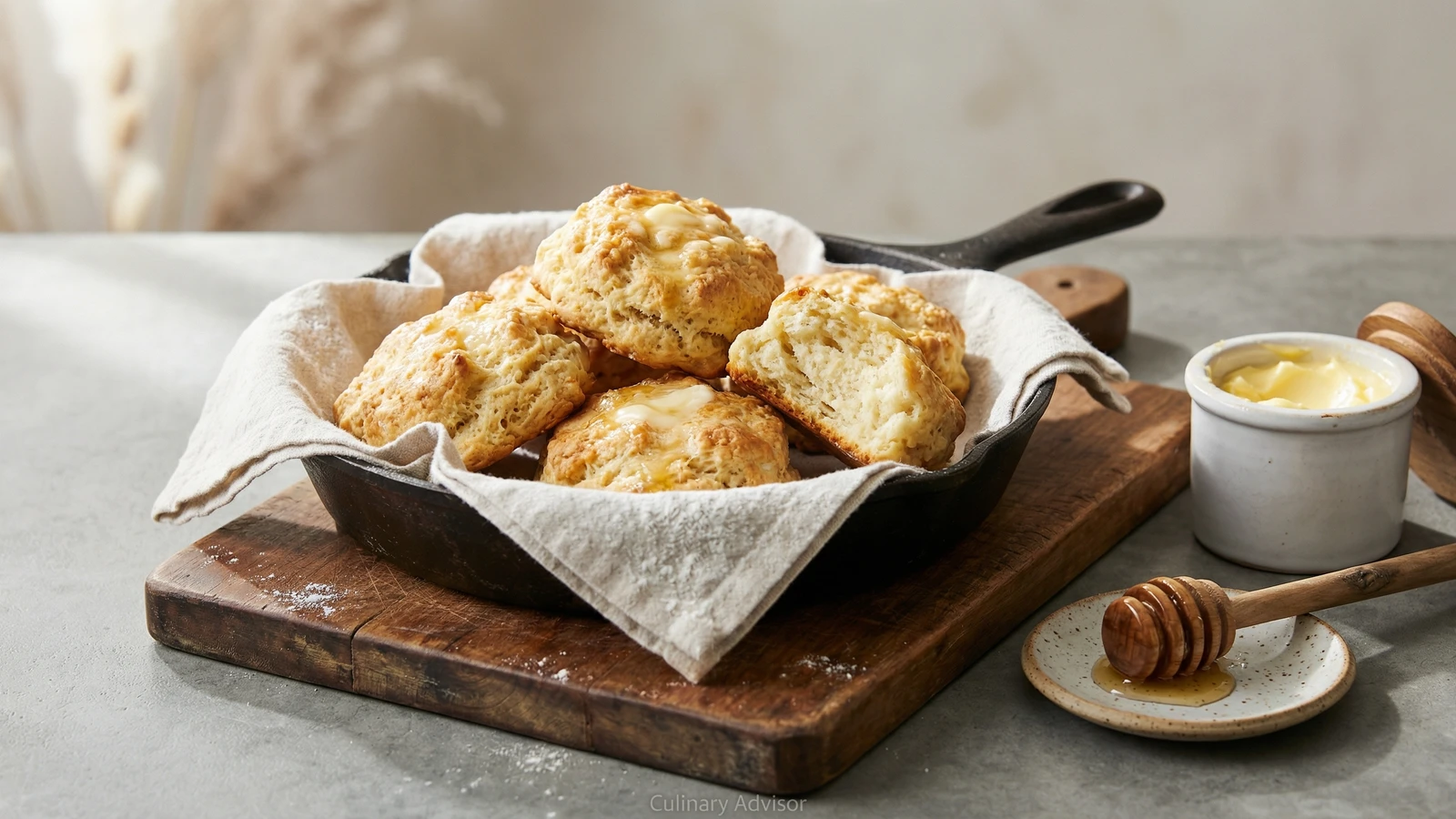
Sweet Cream Drop Biscuits
Created by
Golden drop biscuits made with nothing but flour, leavening, and cold heavy cream, baked until their craggy tops turn the color of summer wheat. No biscuit cutter required, no chilled butter, no fuss.
Drop biscuits are the great democratizer of American baking. They ask nothing of you but a bowl, a spoon, and fifteen minutes of your time. No marble slab for rolling. No careful cutting. No anxiety about whether you've overworked the dough. You stir, you drop, you bake. The cream does the rest.
This recipe traces its lineage to farmhouse kitchens where women fed large families with limited time and endless resourcefulness. Heavy cream served double duty as both fat and liquid, producing biscuits of startling tenderness without the fussy technique of cutting cold butter into flour. The method survived because it works. It has always worked.
I've watched nervous first-time bakers produce perfect biscuits with this recipe on their initial attempt. The cream's fat coats the flour proteins, preventing gluten development that would toughen the crumb. You cannot overwork this dough because the cream protects you from yourself. That's the genius of it.
Serve these warm from the oven with butter and honey, or split them for strawberry shortcake when summer arrives. They belong at breakfast beside eggs and bacon, at dinner soaking up pot roast gravy, at midnight with a smear of jam when the house is quiet and you need something good.
The technique, the tradition, and the story behind every dish.
Discover Culinary AdvisorIngredients
all-purpose flour
Quantity
2 cups (250g)
baking powder
Quantity
1 tablespoon
granulated sugar
Quantity
2 teaspoons
fine sea salt
Quantity
3/4 teaspoon
heavy cream
Quantity
1 1/2 cups (360ml)
cold
melted butter (optional)
Quantity
2 tablespoons
for brushing
| Ingredient | Quantity |
|---|---|
| all-purpose flour | 2 cups (250g) |
| baking powder | 1 tablespoon |
| granulated sugar | 2 teaspoons |
| fine sea salt | 3/4 teaspoon |
| heavy creamcold | 1 1/2 cups (360ml) |
| melted butter (optional)for brushing | 2 tablespoons |
Equipment Needed
- •Large mixing bowl
- •Whisk
- •Wooden spoon or rubber spatula
- •Rimmed baking sheet
- •Quarter-cup measure or large spoon
- •Pastry brush (optional)
Instructions
- 1
Heat the oven
Position a rack in the upper third of your oven and preheat to 450°F. This aggressive heat is essential. Drop biscuits need immediate, intense warmth to set their structure before they spread. A timid oven produces flat, dense pucks instead of tall, tender rounds.
If your oven runs cool, push the temperature to 475°F. Know your equipment. - 2
Combine dry ingredients
Whisk together the flour, baking powder, sugar, and salt in a large bowl. The whisking matters more than you think. It distributes the leavening evenly so every biscuit rises uniformly. Clumps of baking powder create bitter spots and uneven lift.
- 3
Add the cream
Pour the cold cream into the flour mixture all at once. Stir with a wooden spoon or rubber spatula using broad, folding strokes. Work quickly but not frantically. The dough will look shaggy at first, then come together into a thick, slightly sticky mass. Stop the moment no dry flour remains visible. Twenty strokes should do it.
Cold cream is not optional. Warm cream melts too quickly, producing a slack dough that spreads in the oven. Straight from the refrigerator is right. - 4
Drop the biscuits
Line a baking sheet with parchment paper. Using a quarter-cup measure or a large spoon, scoop mounds of dough and drop them onto the sheet, spacing about two inches apart. The mounds should be rough and craggy, not smoothed or shaped. Those peaks and valleys become golden and crisp in the oven. You should get twelve biscuits.
- 5
Bake until golden
Slide the baking sheet into the hot oven and bake for 12 to 14 minutes. The biscuits are done when their tops turn the color of toasted wheat and their bottoms show golden brown when you lift one with a spatula. They should feel set but yield slightly when pressed. Do not underbake. Pale biscuits taste of raw flour.
- 6
Brush and serve
Remove from the oven and immediately brush tops with melted butter if you're using it. The butter soaks into the craggy surface, adding richness and shine. Transfer to a cloth-lined basket and serve while still warm. These biscuits wait for no one. They are at their peak the moment they leave the oven.
The butter brush is traditional but not mandatory. The biscuits are rich enough from the cream to stand on their own.
Chef Tips
- •Heavy cream with at least 36% butterfat produces the most tender results. Ultra-pasteurized works fine here, unlike in whipped cream applications where it can be troublesome.
- •For cheese biscuits, fold in three-quarters cup of sharp cheddar, grated, along with the cream. A pinch of cayenne does no harm.
- •Self-rising flour devotees can substitute two cups of it for the flour, baking powder, and salt. The results are nearly identical, and I won't judge you.
- •These biscuits make superior strawberry shortcake. Split them while warm, pile on macerated berries and softly whipped cream, and you have a dessert worthy of any celebration.
Advance Preparation
- •The dry ingredients can be whisked together up to a week ahead and stored in an airtight container. When the craving strikes, you need only add cream.
- •Unbaked dough mounds can be frozen on the baking sheet, then transferred to a freezer bag for up to two months. Bake directly from frozen at 425°F for 18 to 20 minutes.
- •Leftover biscuits reheat beautifully. Split them, place cut-side up on a baking sheet, and warm at 350°F for five minutes until the edges crisp again.
Frequently Asked Questions
Nutrition Information
1 biscuit (about 48g)
Where cooking meets culture.
Culinary mentorship, cultural storytelling, and the editorial depth that makes cooking meaningful.
Explore Culinary Advisor