Culinary Advisor
A cooking platform built around craft, culture, and the stories behind what we eat.
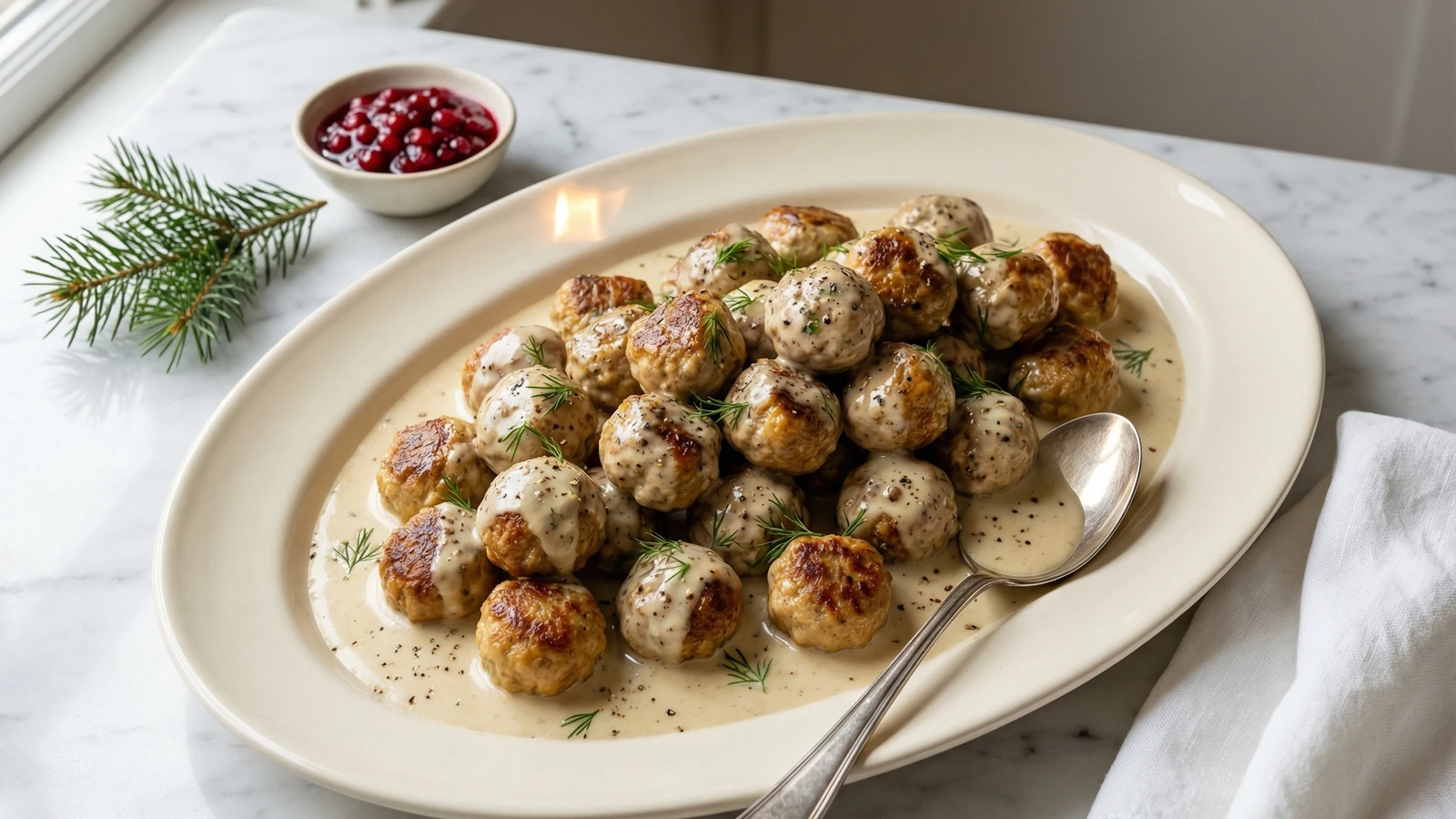
Swedish Meatballs with Cream Sauce
Created by
Impossibly tender meatballs kissed with allspice and nutmeg, swimming in a silken cream gravy that begs for crusty bread. This is the dish that turns Christmas Eve into a proper celebration.
The Swedes understood something fundamental about meatballs that most of America missed entirely. They knew the secret was in the panade, that simple paste of breadcrumbs and cream that transforms ground meat from dense and chewy into something ethereally light. One bite and you'll understand why this dish anchors Scandinavian Christmas tables from Stockholm to Minnesota.
Swedish immigrants brought these meatballs to the Upper Midwest in the nineteenth century, where they became as American as the families who made them. My students from Minneapolis describe Christmas Eves built around platters of these, the cream gravy ladled generously, lingonberries cutting through the richness with their bright acidity. Food like this carries memory in every bite.
The technique rewards patience but demands nothing complicated. You'll sauté onions until they're sweet and golden, build a panade that does the real work, and brown your meatballs in batches. Small batches. Crowding the pan steams the meat instead of browning it, and browning is where flavor lives. That fond, those caramelized bits stuck to the bottom of your pan, becomes the foundation of your sauce.
This recipe scales beautifully for large gatherings. Make the meatballs a day ahead, refrigerate them on sheet pans, and brown them just before serving. The sauce comes together in fifteen minutes while your meatballs warm through. Your guests will think you've been cooking for days.
The technique, the tradition, and the story behind every dish.
Discover Culinary AdvisorIngredients
ground beef (80% lean)
Quantity
1 pound
ground pork
Quantity
1 pound
fresh breadcrumbs
Quantity
1 cup
heavy cream (for panade)
Quantity
3/4 cup
large egg
Quantity
1
beaten
yellow onion
Quantity
1 medium
finely minced
unsalted butter
Quantity
4 tablespoons, divided
kosher salt
Quantity
1 1/2 teaspoons
white pepper
Quantity
1/2 teaspoon
freshly ground
ground allspice
Quantity
1/2 teaspoon
nutmeg
Quantity
1/4 teaspoon
freshly grated
all-purpose flour
Quantity
1/4 cup
beef stock
Quantity
2 cups
heavy cream (for sauce)
Quantity
1 cup
soy sauce
Quantity
1 tablespoon
fresh dill (optional)
Quantity
for garnish
lingonberry preserves
Quantity
for serving
| Ingredient | Quantity |
|---|---|
| ground beef (80% lean) | 1 pound |
| ground pork | 1 pound |
| fresh breadcrumbs | 1 cup |
| heavy cream (for panade) | 3/4 cup |
| large eggbeaten | 1 |
| yellow onionfinely minced | 1 medium |
| unsalted butter | 4 tablespoons, divided |
| kosher salt | 1 1/2 teaspoons |
| white pepperfreshly ground | 1/2 teaspoon |
| ground allspice | 1/2 teaspoon |
| nutmegfreshly grated | 1/4 teaspoon |
| all-purpose flour | 1/4 cup |
| beef stock | 2 cups |
| heavy cream (for sauce) | 1 cup |
| soy sauce | 1 tablespoon |
| fresh dill (optional) | for garnish |
| lingonberry preserves | for serving |
Equipment Needed
- •12-inch heavy skillet (cast iron or stainless steel)
- •Rimmed sheet pans
- •Food processor (for fresh breadcrumbs)
- •Instant-read thermometer
- •Large mixing bowl
Instructions
- 1
Build the panade
Combine the breadcrumbs and 3/4 cup heavy cream in a small bowl. Stir until the crumbs absorb all the liquid and form a thick paste. This mixture should look like wet sand. Set aside for at least ten minutes while you prepare the onions. The panade is your secret weapon: it traps moisture and fat, keeping the meatballs impossibly tender.
Fresh breadcrumbs work far better than dried. Pulse day-old bread in your food processor, or tear soft bread into tiny pieces by hand. - 2
Sauté the onions
Melt 1 tablespoon butter in a small skillet over medium heat. Add the minced onion and cook, stirring occasionally, until completely soft and golden at the edges. This takes a full eight to ten minutes. Don't rush it. Raw onion tastes sharp in meatballs; cooked onion adds sweetness. Transfer to a plate and let cool completely before adding to the meat.
- 3
Mix the meatball mixture
Combine the ground beef, ground pork, cooled onions, panade, beaten egg, salt, white pepper, allspice, and nutmeg in a large bowl. Mix with your hands until everything is thoroughly combined, but stop the moment it comes together. Overworking develops the proteins and makes tough meatballs. The mixture should feel slightly sticky and hold together when pressed.
Fry a small patty of the mixture to taste for seasoning. Adjust salt before you shape forty-eight meatballs and discover they need more. - 4
Shape the meatballs
Wet your hands with cold water to prevent sticking. Scoop portions of meat (about 1 tablespoon each) and roll between your palms into smooth balls roughly one inch in diameter. Uniformity matters here because it ensures even cooking. Arrange the meatballs on a parchment-lined sheet pan, leaving space between each. You'll have approximately forty-eight meatballs.
- 5
Brown the meatballs
Heat 2 tablespoons butter in a large skillet (twelve inches is ideal) over medium-high heat until the foam subsides. Add meatballs in a single layer, working in batches of twelve to fifteen. Let them cook undisturbed for two minutes until the bottoms turn deeply golden. Roll them gently to brown all sides, another four to five minutes total. The meatballs won't be cooked through at this point. That's fine. Transfer browned meatballs to a clean sheet pan and continue with remaining batches, adding more butter as needed.
Resist the urge to crowd the pan. Meatballs packed too tightly steam rather than sear. That fond building on the pan bottom is flavor you'll capture in the sauce. - 6
Build the cream sauce
Reduce heat to medium. Add the remaining tablespoon of butter to the pan drippings. When melted, sprinkle in the flour and whisk constantly for one minute to cook out the raw taste. The roux should turn light golden and smell nutty. Gradually pour in the beef stock while whisking vigorously to prevent lumps. Bring to a simmer and cook until the sauce thickens enough to coat a spoon, about three minutes.
- 7
Finish the sauce
Reduce heat to medium-low. Stir in the cup of heavy cream and the soy sauce. The soy sauce adds depth and a subtle umami backbone without making the gravy taste Asian. Taste and adjust seasoning. The sauce should be silky, rich, and just thick enough to cling to the meatballs without feeling gluey.
- 8
Simmer the meatballs in sauce
Return all the browned meatballs to the pan, nestling them into the sauce. Reduce heat to low, cover, and simmer gently for fifteen minutes. The meatballs will finish cooking through while absorbing the flavors of the gravy. Shake the pan occasionally to prevent sticking. When done, the meatballs should be cooked through (no pink center) and incredibly tender.
If your sauce thickens too much during simmering, add a splash of stock or cream to loosen it. The consistency should be pourable, not paste. - 9
Serve traditionally
Transfer the meatballs and sauce to a warmed serving platter or individual plates. Scatter fresh dill generously over the top. Serve with a bowl of lingonberry preserves on the side. The tartness of the berries cuts through the richness of the cream sauce in a way that makes each bite feel new. Mashed potatoes, buttered egg noodles, or crusty bread are all proper accompaniments. In Sweden, pickled cucumber often appears alongside. Do what feels right for your table.
Chef Tips
- •The combination of beef and pork is traditional and intentional. Beef provides depth and structure while pork adds fat and tenderness. Using all beef makes drier meatballs; all pork makes them too soft.
- •White pepper is traditional in Swedish cooking because it disappears into the pale sauce. Black pepper works if that's what you have, but expect visible specks.
- •Lingonberry preserves are available at IKEA, Scandinavian specialty shops, and increasingly at well-stocked supermarkets. In a pinch, whole-berry cranberry sauce offers similar tartness.
- •For the crispiest exterior, brown the meatballs in clarified butter or a mix of butter and neutral oil. Regular butter works but browns faster.
- •A crisp, off-dry Riesling or a light lager pairs beautifully. The acidity and effervescence balance the cream sauce's richness.
- •These meatballs freeze beautifully. Freeze browned but unsauced meatballs on a sheet pan, then transfer to freezer bags. Make fresh sauce when ready to serve.
Advance Preparation
- •The meatball mixture can be made and refrigerated up to 24 hours ahead. The flavors actually improve overnight as the spices bloom.
- •Shape meatballs up to one day ahead and refrigerate on parchment-lined sheet pans, covered tightly with plastic wrap.
- •Brown meatballs up to 4 hours before serving. Hold at room temperature, then simmer in freshly made sauce.
- •The complete dish can be made one day ahead. Cool, refrigerate, and reheat gently over low heat, adding a splash of cream or stock if the sauce has thickened.
- •For large gatherings, double the recipe and finish in a 325°F oven. Arrange browned meatballs in a roasting pan, pour sauce over, cover with foil, and bake for 25 minutes.
Frequently Asked Questions
Nutrition Information
1 serving (about 75g)
Where cooking meets culture.
Culinary mentorship, cultural storytelling, and the editorial depth that makes cooking meaningful.
Explore Culinary Advisor