Culinary Advisor
A cooking platform built around craft, culture, and the stories behind what we eat.
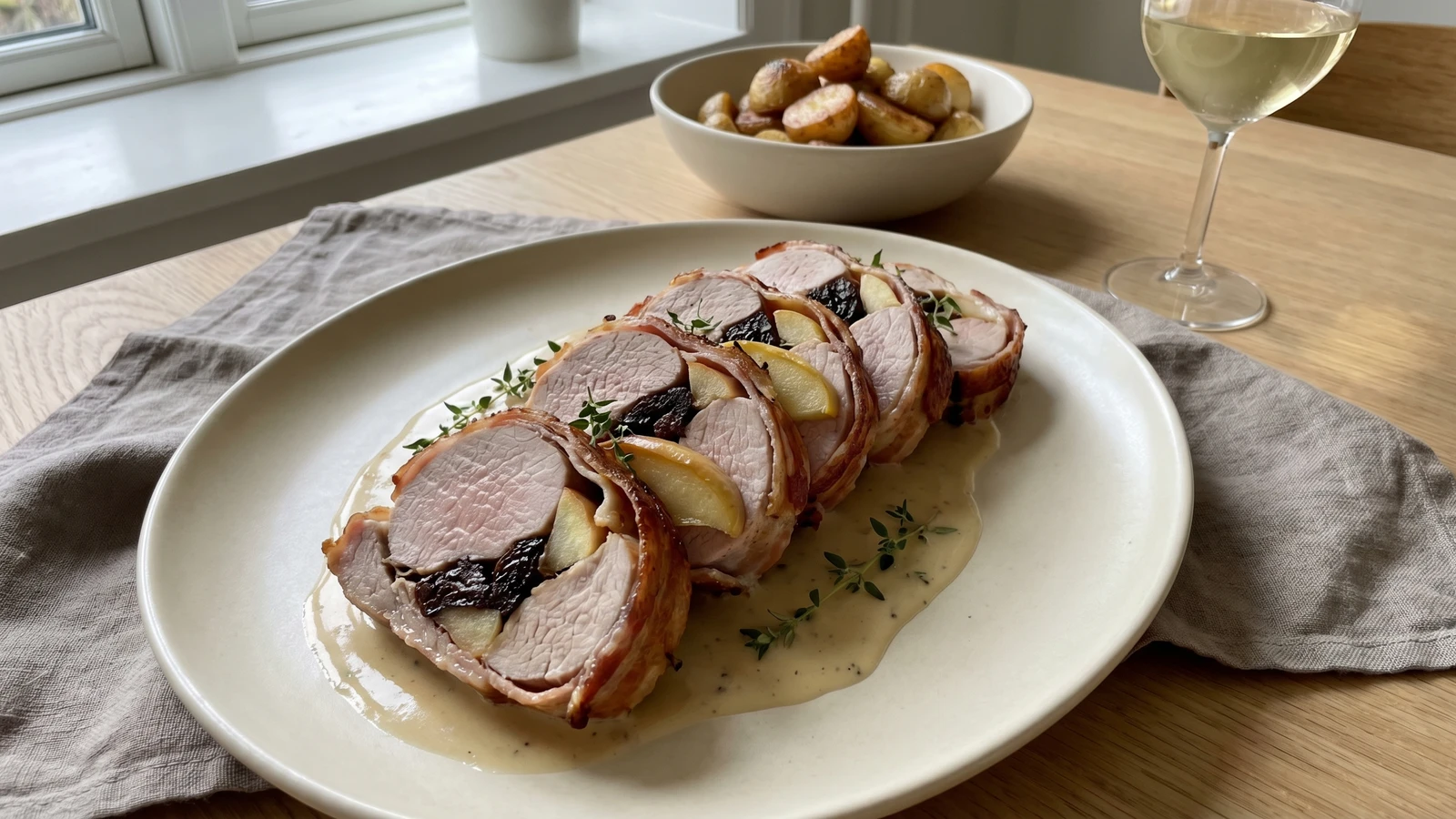
Svinemørbrad med Svesker og Æbler
Created by Chef Freja Lund
Pork tenderloin stuffed with prunes and tart apple, wrapped in bacon, roasted until the cross-section shows a mosaic of pink meat and dark fruit. The Fyn-tradition Sunday dinner that turns the simplest cut into something worth gathering around.
There's a Sunday in late autumn when the kitchen starts pulling you in a different direction. The apples are in from the orchards, firm and sharp. The air outside has turned. You want something that takes an hour, fills the house with the smell of roasting pork and warm fruit, and comes to the table looking like you spent the whole afternoon on it. This is that dish.
Svinemørbrad med svesker og æbler is a tradition rooted in Fyn, Denmark's garden island, where the orchards have always shaped the cooking. Pork tenderloin is butterflied, stuffed with soft prunes and tart apple wedges, wrapped in bacon, and roasted until the outside is golden and the inside is blushing pink with dark pockets of fruit. The sauce comes from the pan itself: wine, stock, cream, and the concentrated juices of everything that cooked together. It's a dish that looks generous and complex on the plate, but the technique is honest and direct.
Pay attention to two things. First, the apple. It must be tart, something with backbone. A sweet apple dissolves into nothing and you lose the contrast that makes this dish sing. Second, the temperature. Pork tenderloin is lean and unforgiving. Pull it from the oven at 63°C and let carry-over heat do the rest. That's the difference between pork that's succulent and pork that's a chore to eat. I'll walk you through every step, and by the time it reaches the table, you'll understand why the Danes serve this when they want the meal to feel like an occasion. Tak for mad.
The pairing of pork and dried fruit in Danish cooking dates to at least the 1700s, when prunes, imported through the Hanseatic trade networks, became a staple preservation fruit in Danish larders. On Fyn, where orchards have dominated the landscape since the Middle Ages, the local combination of prunes with the island's own tart apples became a regional signature, a way of making lean pork richer and more interesting without relying on heavy sauces. The dish rose to prominence as a festive Sunday dinner in the nineteenth century, when pork tenderloin was considered a cut fine enough for company, and the fruit stuffing signalled that the cook had both skill and a well-stocked pantry.
The technique, the tradition, and the story behind every dish.
Discover Culinary AdvisorIngredients
pork tenderloins
Quantity
2, about 400g each
trimmed of silverskin
soft pitted prunes
Quantity
12
tart apple
Quantity
1 firm
peeled, cored, cut into thin wedges
streaky bacon
Quantity
8 slices
unsalted butter
Quantity
30g
neutral oil
Quantity
1 tablespoon
dry white wine
Quantity
200ml
chicken stock
Quantity
200ml
double cream
Quantity
150ml
Dijon mustard
Quantity
1 tablespoon
fresh thyme
Quantity
2 sprigs
fine sea salt
Quantity
to taste
black pepper
Quantity
freshly ground, to taste
kitchen string
Quantity
as needed
| Ingredient | Quantity |
|---|---|
| pork tenderloinstrimmed of silverskin | 2, about 400g each |
| soft pitted prunes | 12 |
| tart applepeeled, cored, cut into thin wedges | 1 firm |
| streaky bacon | 8 slices |
| unsalted butter | 30g |
| neutral oil | 1 tablespoon |
| dry white wine | 200ml |
| chicken stock | 200ml |
| double cream | 150ml |
| Dijon mustard | 1 tablespoon |
| fresh thyme | 2 sprigs |
| fine sea salt | to taste |
| black pepper | freshly ground, to taste |
| kitchen string | as needed |
Equipment Needed
- •Heavy ovenproof pan or roasting tin
- •Meat thermometer
- •Sharp knife
- •Kitchen string
- •Meat mallet or heavy pan for pounding
Instructions
- 1
Butterfly the tenderloins
Lay a tenderloin on your cutting board and hold it steady with one hand. With a sharp knife, cut lengthwise along the side, about two thirds of the way through, so you can open it like a book. Don't cut all the way through. The hinge is what holds everything together once it's stuffed. Open it flat, lay a sheet of cling film over it, and use the flat side of a meat mallet or a heavy pan to pound it gently until it's an even 1.5cm thick. Even thickness is the only thing that matters here. Uneven meat cooks unevenly, and you'll get dry edges and a raw centre. Repeat with the second tenderloin.
If the tenderloin has a thin tail end, fold it under before pounding so the thickness stays uniform. You're building a flat surface to hold the filling. - 2
Season and stuff
Season the inside of each opened tenderloin generously with salt and pepper. Lay six prunes in a line down the centre of each one, then tuck the apple wedges between and alongside the prunes. The apple should be a tart variety, something with bite. A sweet apple disappears into the pork. A tart one holds its shape and pushes back against the richness of the meat and the sweetness of the prunes. That contrast is the whole point of this dish.
- 3
Roll and wrap in bacon
Roll each tenderloin back together, closing the filling inside. Lay four slices of bacon side by side on the board, overlapping slightly. Place the stuffed tenderloin across the bacon and roll the bacon around it so the slices wrap the outside. Tie the whole thing with kitchen string at three or four points along its length, snug but not crushing. The bacon does two things: it bastes the lean pork as it cooks, and it gives you a layer of crisp, salty fat on the outside that the tenderloin cannot provide on its own. Lean pork without protection dries out. This is the protection.
Tie firmly enough that the roll holds its shape when you turn it in the pan, but not so tight that the filling squeezes out the ends. You'll feel the right tension. - 4
Sear the pork
Heat the oven to 180°C. In a heavy ovenproof pan or roasting tin, heat the butter and oil over medium-high heat. When the butter foams and the foam begins to subside, lay the wrapped tenderloins in the pan. Sear for about two minutes on each side, turning carefully, until the bacon is golden and tightened all around. You're not cooking the pork through here. You're building the crust and rendering the first layer of bacon fat, which will baste the meat in the oven. The pan should sizzle steadily. If it's screaming, the heat is too high.
- 5
Roast
Tuck the thyme sprigsalongside the pork and transfer the pan to the oven. Roast for twenty to twenty-five minutes. The internal temperature should reach 63°C when you check with a probe. Pork tenderloin is lean, and every degree past that costs you moisture. Pull the pan at 63°C, not 70°C, not 75°C. Carry-over heat will bring it to a safe and perfect 65°C while it rests. Trust the thermometer, not the clock.
If you don't own a meat thermometer, now is the time. For lean cuts like tenderloin, a thermometer is the difference between succulent pork and something dry and grey. It's the single most useful tool in this recipe. - 6
Rest the meat
Transfer the tenderloins to a warm plate, cover loosely with foil, and let them rest for ten minutes. Resting is not optional. When meat cooks, the heat drives the juices toward the centre. If you cut immediately, the juices pour out onto the board. If you wait, they redistribute through the muscle and every slice is moist. Those ten minutes are where the dish goes from good to right.
- 7
Make the cream sauce
Set the roasting pan over medium heat on the stove. Pour in the white wine and use a wooden spoon to scrape up every golden bit stuck to the bottom of the pan. Those are called fond, and they carry concentrated flavour from the meat, the bacon fat, and the fruit. Let the wine bubble until it reduces by half, about two minutes. Add the stock and let it reduce by half again. Stir in the cream and the mustard. Let the sauce simmer gently for three or four minutes until it thickens enough to coat the back of a spoon. Taste it. Season with salt and pepper. The sauce should be rich and rounded, savoury with a gentle sweetness from the prune juices that escaped during roasting. If it's too thick, add a splash of stock. If it's too thin, let it simmer another minute. You'll know when it's right.
Strain the sauce through a fine sieve if you want it perfectly smooth. But at home, I leave it as it is. The small bits of thyme and fond give it character. - 8
Slice and serve
Remove the string from each tenderloin. Use a sharp knife to cut thick slices on a slight angle, about 2cm each. Arrange them on a warmed serving platter so the cross-section is visible: the ring of golden bacon, the pale pink pork, and the dark prunes and apple wedges nestled in the centre. Spoon the cream sauce around the slices, not over them. You want people to see the architecture of this dish before the first bite. Serve immediately with whatever belongs to the season: sugar-browned potatoes and red cabbage in winter, new potatoes and a green salad when the evenings are warmer.
Chef Tips
- •Use soft, moist prunes, not the dry leathery kind. If yours feel hard, soak them in warm water or a splash of port for twenty minutes before stuffing. The texture matters inside the pork.
- •The apple variety is not a suggestion. Belle de Boskoop, Ingrid Marie, or any firm tart apple will hold its shape and push back against the sweetness of the prunes. A soft, sweet apple collapses into mush and the balance disappears.
- •Don't skip the resting time. It's tempting to cut into the pork the moment it comes out of the oven. Resist. Those ten minutes are when the juices settle back into the meat, and the slices will be pink and moist instead of grey and dry.
- •This dish pairs beautifully with a glass of something Danish: a slightly chilled Riesling or, if the evening calls for it, a dark beer. The sweetness in the dish welcomes either.
Advance Preparation
- •The tenderloins can be stuffed, wrapped, and tied up to twelve hours in advance. Keep them tightly covered in the fridge and bring them to room temperature for thirty minutes before searing.
- •The sauce can be made up to an hour ahead and gently reheated. Add a splash of stock when rewarming to bring back its glossy consistency.
- •Sugar-browned potatoes and red cabbage, the traditional sides, can both be made the day before. The red cabbage actually improves overnight.
Frequently Asked Questions
Nutrition Information
1 serving (about 300g)
Where cooking meets culture.
Culinary mentorship, cultural storytelling, and the editorial depth that makes cooking meaningful.
Explore Culinary Advisor