Culinary Advisor
A cooking platform built around craft, culture, and the stories behind what we eat.
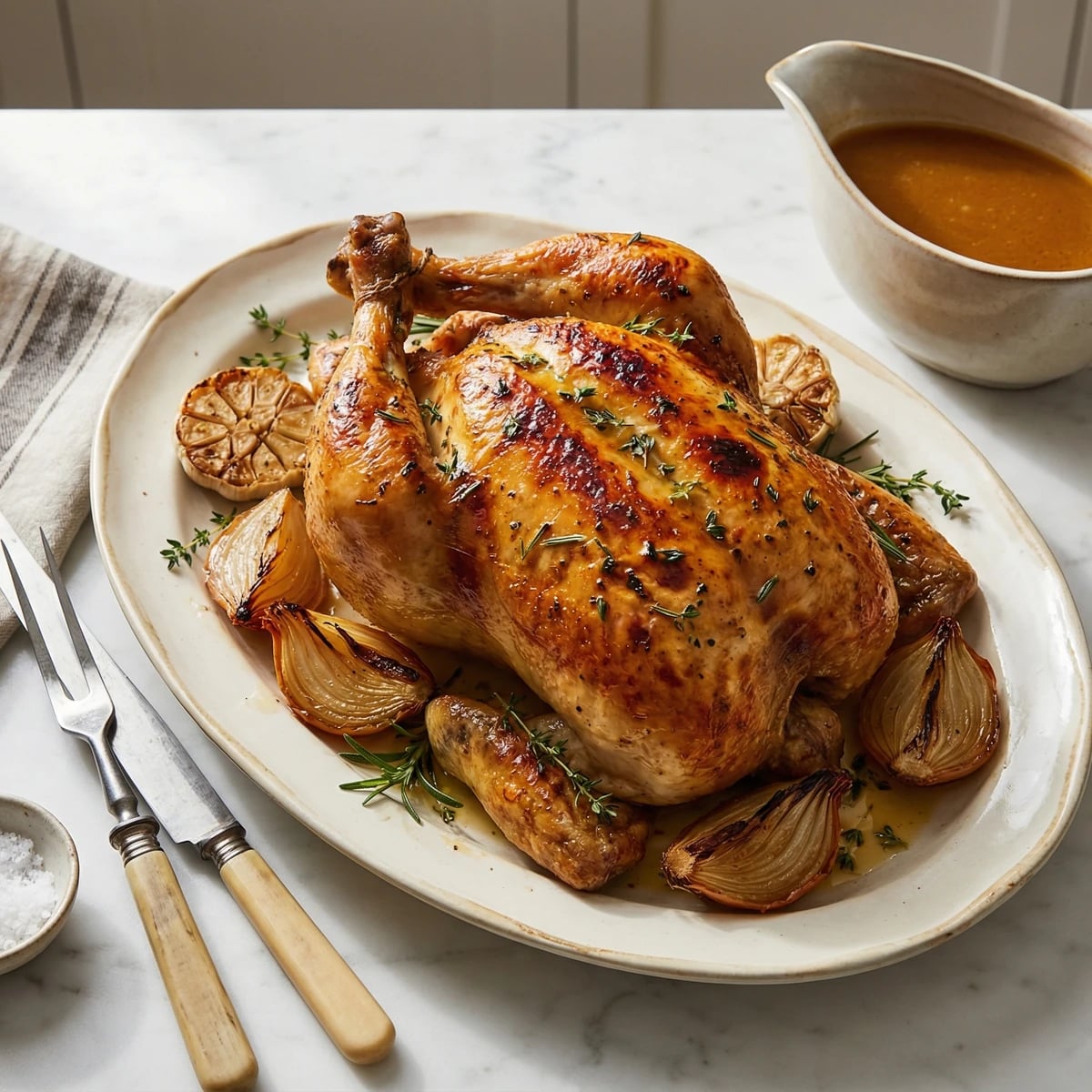
Sunday Roast Chicken with Pan Gravy
Created by Chef Dean
A whole bird roasted golden and honest, its skin shatteringly crisp, its meat succulent to the bone, served with a silky gravy built from nothing more than the pan drippings and a wooden spoon.
If you want to know whether someone can cook, ask them to roast a chicken. It sounds simple. It is simple. But simplicity reveals everything. There's nowhere to hide when your ingredients number five and your technique comes down to heat, time, and attention.
The Sunday roast chicken holds a sacred place in American home cooking. Generations of families have gathered around this bird, its golden skin the centerpiece of tables from farmhouses to city apartments. It arrived with European immigrants, adapted to American ovens and appetites, and became something uniquely ours. A roast chicken says you cared enough to plan ahead, to let something take its time.
The secret to great roast chicken lives in three places: a dry bird, a hot oven, and patience during the rest. Most home cooks rush that final step. They carve too soon, watch the juices flood the cutting board, and wonder why the breast turned chalky. Give the chicken its fifteen minutes. The juices redistribute. The carryover heat finishes the thighs. Everything comes together.
The gravy requires nothing fancy. Flour, stock, and the fond scraped from the roasting pan. Those brown bits stuck to the metal are concentrated flavor, the reward for roasting properly. Don't waste them. A good pan gravy transforms a simple roast into a meal people remember.
Ingredients
whole chicken, giblets removed
Quantity
1 (4-5 pounds)
unsalted butter, softened
Quantity
2 tablespoons
kosher salt
Quantity
1 tablespoon
| Ingredient | Quantity |
|---|---|
| whole chicken, giblets removed | 1 (4-5 pounds) |
| unsalted butter, softened | 2 tablespoons |
| kosher salt | 1 tablespoon |