Culinary Advisor
A cooking platform built around craft, culture, and the stories behind what we eat.
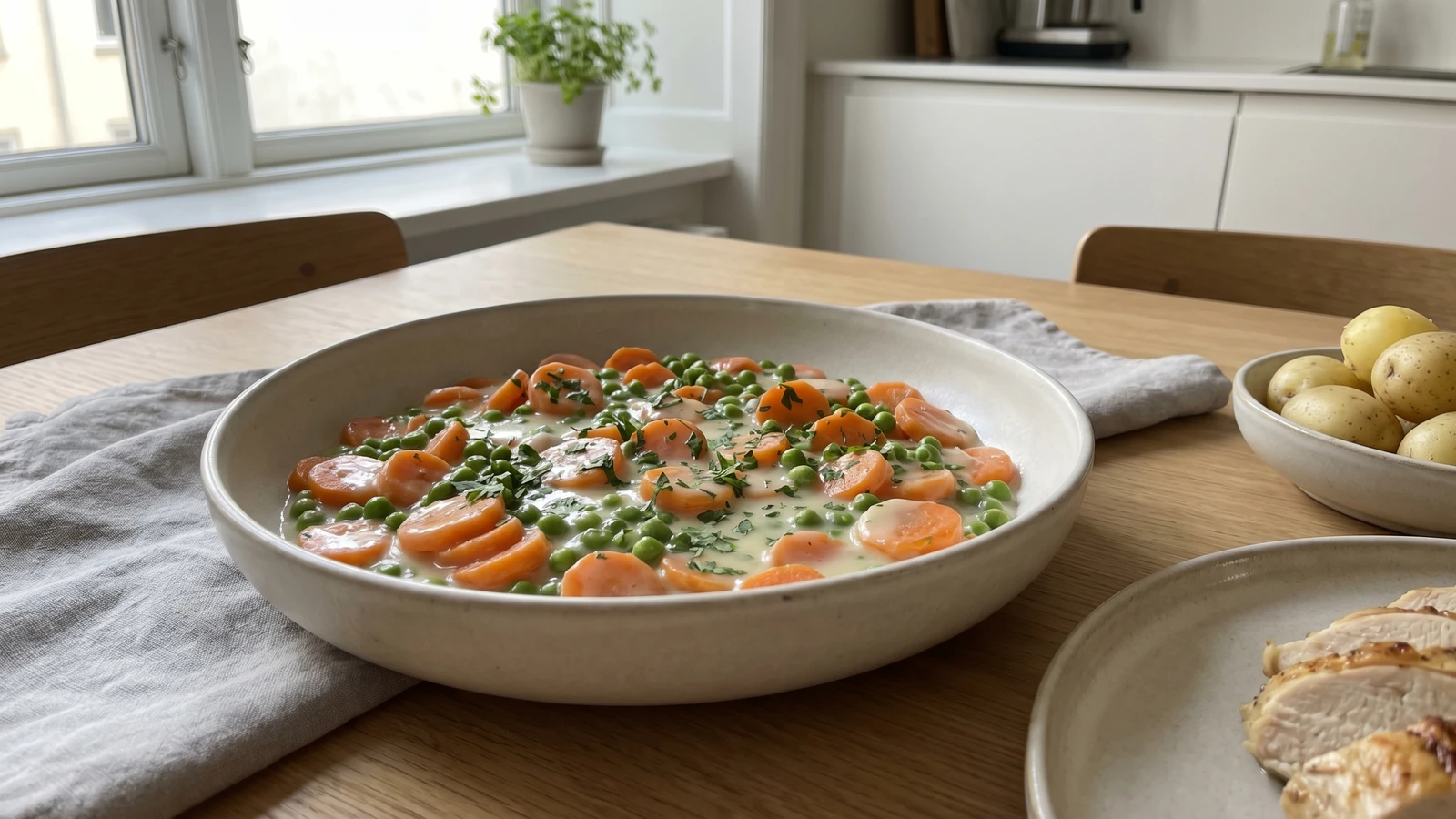
Stuvede Gulerodder med Aerter
Created by Chef Freja
Tender carrot coins and green peas folded into a parsley bechamel made with the vegetable cooking water. The quiet mormormad side dish that completes any Danish spring table.
Spring in Denmark arrives at the table before it arrives in the sky. The light is still grey and cautious, but the carrots at the market are young and bright, and somewhere in a freezer or a garden, peas are waiting. This is when stuvede gulerodder med aerter comes back: creamed carrots and peas in a gentle white sauce, made the way your mormor made them and hers before that.
Stuvede groentsager, vegetables in white sauce, is one of the pillars of the Danish home kitchen. It looks like nothing. A bowl of soft colors, orange and green in a pale coat of sauce. But it tastes like someone cared. The secret, and I use that word loosely because every Danish grandmother knows it, is that the sauce is made with the water you cooked the vegetables in. That water carries the sweetness and the flavor of the carrots and peas, and when you build the bechamel from it, the sauce tastes of the vegetables themselves, not just of milk and flour.
I want you to pay attention to two things. First, the roux. Cook it for a full two minutes, until it smells biscuity and warm, not raw. That patience removes the floury taste that ruins a white sauce. Second, the folding. When the carrots and peas go back in, be gentle. You want whole coins of carrot and bright peas held in a silky sauce, not a puree. This dish belongs next to a roast chicken or a plate of frikadeller, and it should look like someone made it with love, because you did.
The stuvet technique, folding cooked vegetables into a flour-thickened white sauce, has been a defining method of the Danish husmanskost kitchen since at least the 1800s. Nearly any vegetable could be stuvet: cauliflower, spinach, root vegetables, peas. The combination of carrots and peas became particularly associated with the Easter table, where it sits beside kogt hoene i peberrodssovs, boiled hen in horseradish sauce, one of the defining holiday meals of the Danish spring. The technique of building the sauce from the vegetable cooking water rather than plain milk is a hallmark of thrifty Danish home cooking, where flavor and economy were never considered opposites.
The technique, the tradition, and the story behind every dish.
Discover Culinary AdvisorIngredients
carrots
Quantity
500g
peeled, sliced into 1cm coins
green peas
Quantity
200g
fresh or frozen
unsalted butter
Quantity
40g
plain flour
Quantity
3 tablespoons
reserved vegetable cooking water
Quantity
300ml
whole milk
Quantity
200ml
flat-leaf parsley
Quantity
small bunch
finely chopped
caster sugar
Quantity
1 teaspoon
fine sea salt
Quantity
to taste
white pepper
Quantity
to taste
nutmeg (optional)
Quantity
pinch
freshly grated
| Ingredient | Quantity |
|---|---|
| carrotspeeled, sliced into 1cm coins | 500g |
| green peasfresh or frozen | 200g |
| unsalted butter | 40g |
| plain flour | 3 tablespoons |
| reserved vegetable cooking water | 300ml |
| whole milk | 200ml |
| flat-leaf parsleyfinely chopped | small bunch |
| caster sugar | 1 teaspoon |
| fine sea salt | to taste |
| white pepper | to taste |
| nutmeg (optional)freshly grated | pinch |
Equipment Needed
- •Medium saucepan, 2-3 litre
- •Sieve or colander set over a bowl
- •Whisk
- •Wooden spoon
Instructions
- 1
Simmer the carrots
Put the carrot coins in a medium saucepan and cover with cold water by about two centimeters. Add a good pinch of salt and the teaspoon of sugar. The sugar isn't sweetness for its own sake. It brings the natural flavor of the carrots forward, the way salt does for meat. Bring to a gentle boil, then lower the heat and simmer until the carrots are just tender, about twelve minutes. You want a knife to slide through without resistance, but the coins should still hold their shape. Overcooked carrots dissolve into the sauce and the dish loses its texture.
Start with cold water, not boiling. Carrots that start in cold water cook more evenly, center to edge. Dropped into boiling water, the outsides go soft while the cores stay hard. - 2
Cook the peas
If using fresh peas, add them to the carrots for the last three minutes of cooking. If using frozen, just tip them into the hot water for the final minute. Frozen peas are already blanched and need barely any time. Drain the vegetables through a sieve set over a bowl or jug. Keep that cooking water. It carries the flavor and the sweetness of both vegetables, and it's what gives the sauce its depth. You need about 300ml.
- 3
Make the roux
Wipe the saucepan dry and set it back over a medium heat. Melt the butter until it foams. Add the flour all at once and stir with a wooden spoon for a full two minutes. You're cooking the raw taste out of the flour. The roux should be pale gold and smell biscuity, not raw or pasty. If it darkens beyond pale straw, the sauce will taste toasted and that's not what this dish wants. Keep the heat moderate and keep stirring.
A wooden spoon works better than a whisk at the roux stage. You want to press the butter and flour together, not aerate them. The whisk comes next. - 4
Build the sauce
Switch to a whisk. Pour in the reserved cooking water in a slow, steady stream, whisking constantly. The sauce will seize up at first, turning thick and stubborn. Keep whisking and keep pouring. It will loosen and smooth out. Once all the cooking water is in, add the milk the same way, whisking until the sauce is silky and has the consistency of thick cream. Let it simmer gently for four to five minutes, stirring now and then. This extra time matters. A flour sauce that hasn't simmered long enough tastes of flour, and you'll notice it.
If the sauce goes lumpy, don't panic. Take the pan off the heat and whisk hard for thirty seconds. Most lumps surrender. For the stubborn ones, push the sauce through a sieve and carry on. - 5
Fold in the vegetables
Season the sauce with salt, white pepper, and a bare grating of nutmeg. White pepper is traditional here. It keeps the sauce clean-looking and has a gentler heat than black. Fold in the drained carrots and peas. Be gentle. You don't want to break the carrot coins or crush the peas. Let everything warm through together for a minute or two. The vegetables should be wearing the sauce, not swimming in it. If it seems too thick, add a splash more milk. If it's too thin, let it simmer uncovered for another minute.
- 6
Finish with parsley
Stir in most of the chopped parsley, saving a little for the top. Transfer to a warm serving dish and scatter the remaining parsley over the surface. Serve immediately alongside boiled chicken, fricassee, or frikadeller. This is a side dish that completes a plate, not competes with it. Tak for mad.
Chef Tips
- •Use the youngest carrots you can find in spring. Old storage carrots from winter work but they're drier and less sweet. If your carrots taste faint, the extra teaspoon of sugar compensates. Taste the cooking water before you build the sauce. It should taste like something.
- •White pepper, not black. This is a tradition with a reason. Black pepper leaves dark specks in the sauce and has a sharper bite that fights the gentle sweetness of the vegetables. White pepper dissolves into the background and lets the carrots and peas lead.
- •If you have access to fresh peas in season, use them. The difference is real. But frozen peas are perfectly honest here. Most Danish grandmothers used frozen peas, and the dish is no less cooked with love for it.
- •This keeps overnight in the fridge but the sauce thickens as it cools. Reheat gently with a splash of milk, stirring carefully to avoid breaking the vegetables apart.
Advance Preparation
- •The carrots and peas can be cooked and drained up to a day ahead. Keep the cooking water in a sealed container in the fridge. Make the sauce and fold them together when you're ready to serve.
- •The finished dish reheats gently on the stove with a little extra milk. Stir carefully. It won't be quite as bright as the fresh version, but it will still taste right.
Frequently Asked Questions
Nutrition Information
1 serving (about 275g)
Where cooking meets culture.
Culinary mentorship, cultural storytelling, and the editorial depth that makes cooking meaningful.
Explore Culinary Advisor