Culinary Advisor
A cooking platform built around craft, culture, and the stories behind what we eat.
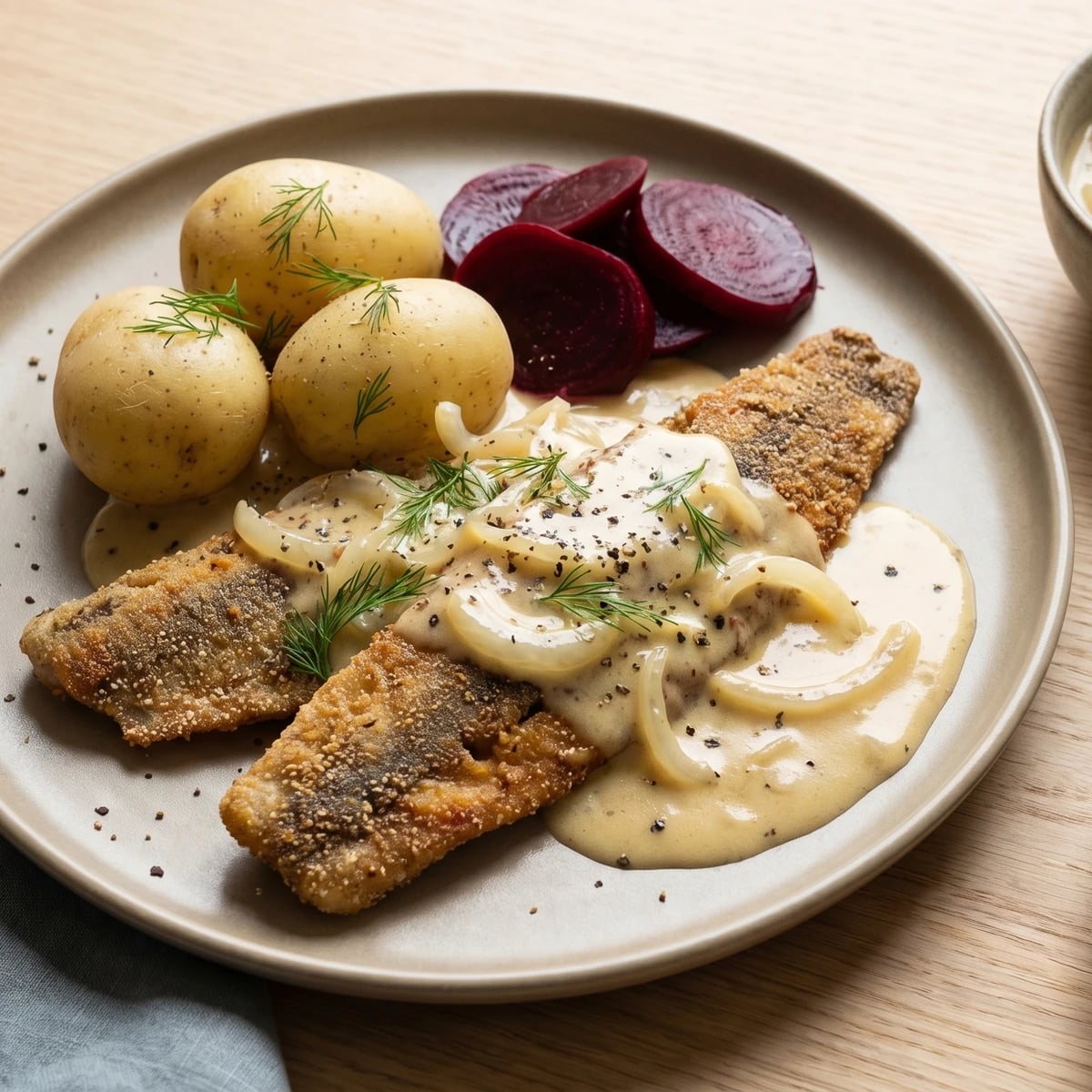
Stegte Sild med Bløde Løg og Kogte Kartofler
Created by Chef Freja
Rye-dredged herring fried in butter until the crust goes deep gold, smothered in a creamy løgsovs made from onions cooked so slowly they forget they were ever sharp, with boiled potatoes and pickled beets beside.
There are dishes that belong to Tuesday evenings. Not celebrations, not weekends, just the quiet end of an ordinary day when the kitchen light is on and the rest of the house is settling. Stegte sild med bløde løg is one of those dishes. It doesn't announce itself. It just appears, the way it has appeared in Danish kitchens for generations, because it's what the season and the budget and the clock were asking for.
The herring is dredged in dark rugmel, rye flour, and fried in butter until the crust crackles. The onion sauce is the kind your grandmother made whether she called it løgsovs or not: onions cooked so slowly in butter they turn translucent and sweet, then bound with flour and milk into something rich and mild that coats everything it touches. Beside it, plain boiled potatoes and a few slices of pickled beetroot, ruby-dark and sharp. Nothing competes. Everything belongs.
I want you to pay attention to two things. First, the onions. They need twenty minutes of low heat and a lid. You cannot rush them and you cannot skip this. Fast-cooked onions stay sharp and the sauce tastes raw. Slow-cooked onions dissolve into sweetness, and that sweetness is the backbone of the whole dish. Second, the rugmel. It dredges differently from wheat flour. It gives the herring a nuttier, darker crust with a faint bitterness that cuts the richness of the butter. That's not an accident. That's why it's there. You'll know when it's right.
Ingredients
fresh herring fillets
Quantity
8
scaled and pin-boned
dark stone-ground rugmel (rye flour)
Quantity
4 tablespoons
for dredging
unsalted butter (for frying)
Quantity
40g
| Ingredient | Quantity |
|---|---|
| fresh herring filletsscaled and pin-boned | 8 |
| dark stone-ground rugmel (rye flour)for dredging | 4 tablespoons |
| unsalted butter (for frying) | 40g |